Allgemein

Metal prices as an indicator of political change worldwide

Metal prices as an indicator of political change worldwide

 compressed AdobeStock 1516292821

Arndt Uhlendorff, CEO of the Institute for Rare Earths and Metals AG, explains why it is so important to track and analyse the fluctuations in metal prices


BY OBSERVING fluctuations in metal prices and understanding patterns established over decades and centuries, we can gain insights into global events, anticipate future developments, and make informed decisions – whether to buy, sell, and at what price.

Metal prices are highly volatile during times of anticipated or ongoing military conflicts. These fluctuations result from a combination of economic, geopolitical, and psychological factors.

Gold plays a pivotal role during periods of economic instability or geopolitical tension. Nations often increase their gold reserves because it serves as a ‘safe haven’ asset. Gold is not tied to financial systems (e.g., SWIFT), enabling countries to bypass international sanctions. During wars or major conflicts, gold can be used to pay for imported weapons, food, and other essential goods.

During world wars, many countries expanded their gold reserves, understanding that their currencies might 

lose value. For example, Germany and the United States heavily relied on gold during the First and Second World Wars to purchase resources.

In recent years, nations like Russia, China, and India have significantly increased their gold reserves. This move is linked to diversifying reserves and preparing for potential economic upheavals.

During global crises such as the COVID-19 pandemic or escalating geopolitical tensions, gold prices reached record highs, reaffirming its status as a ‘safe harbour.’ Monitoring gold prices can thus be a key to predicting geopolitical shifts and the prices of other metals and metal products.

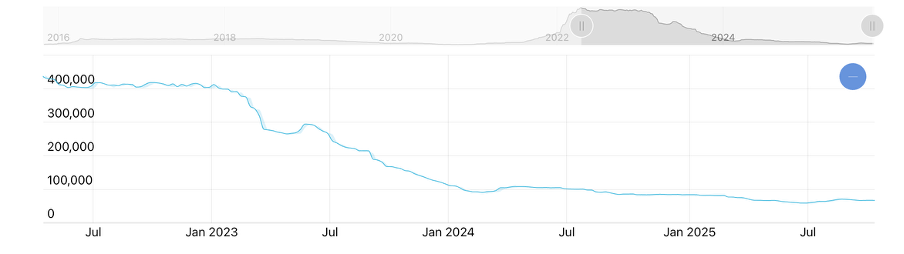
For example, sanctions imposed on Russia in 2022 after the outbreak of the war with Ukraine led to a sharp increase in palladium and nickel prices, as Russia is one of the largest producers of these metals.


Nickel Cathode

Gold wire price 

The rise in gold wire prices as an example of a reaction to the launch and active development of artificial intelligence (AI) technologies

The sharp rise in the price of gold wire in 2023 illustrates how technological innovations, such as the development of artificial intelligence (AI) technologies, can drive demand for specific metal products used in microelectronics and semiconductors.

Gold wire prices remained relatively stable at around €300 per 10cm until 2023, but the large-scale production of chips and high-performance computing systems that use gold (e.g., in conductors and microcircuits) caused a significant price surge, stabilising at around €400 per 10cm.

The rise in gold wire prices due to AI technology development 
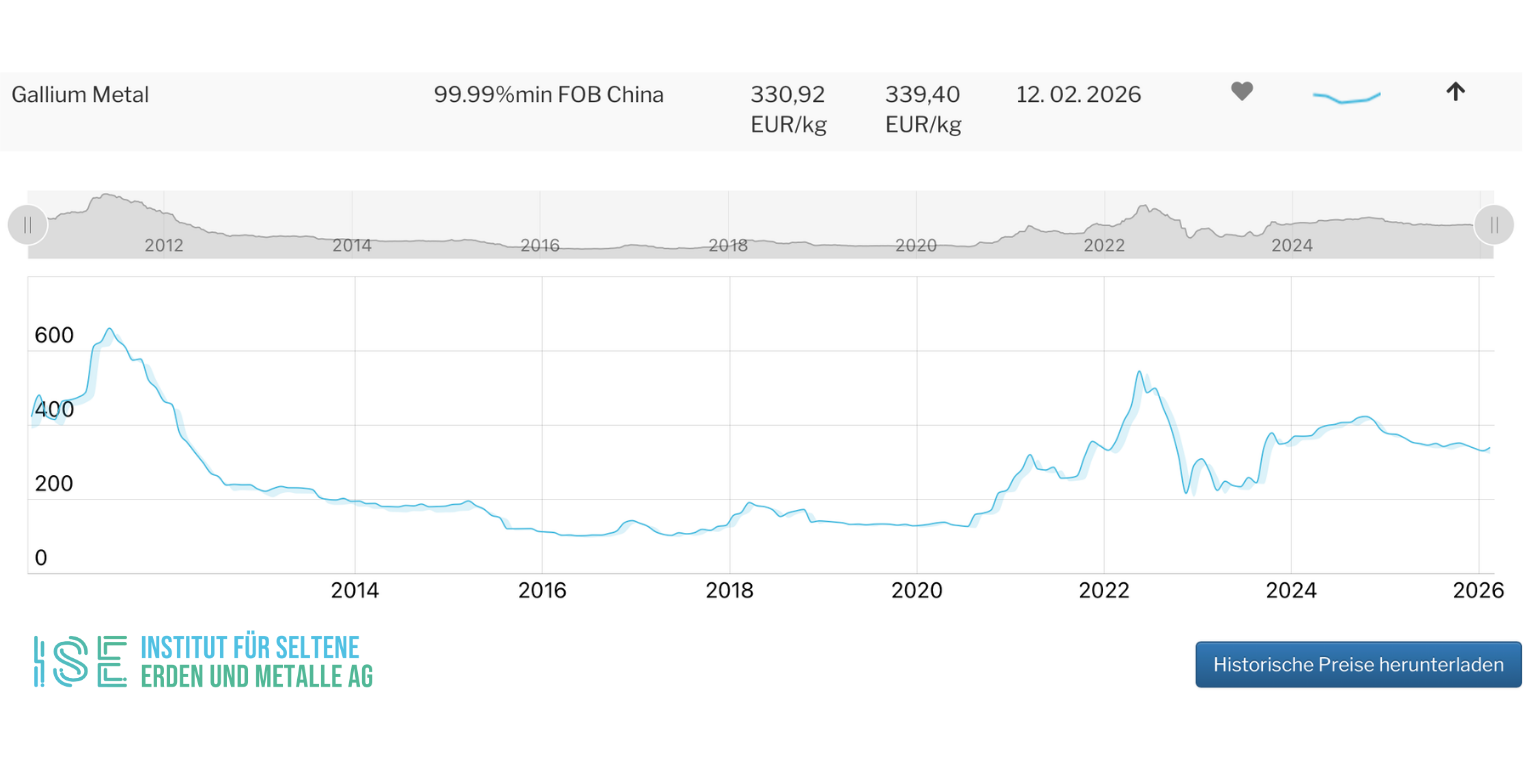
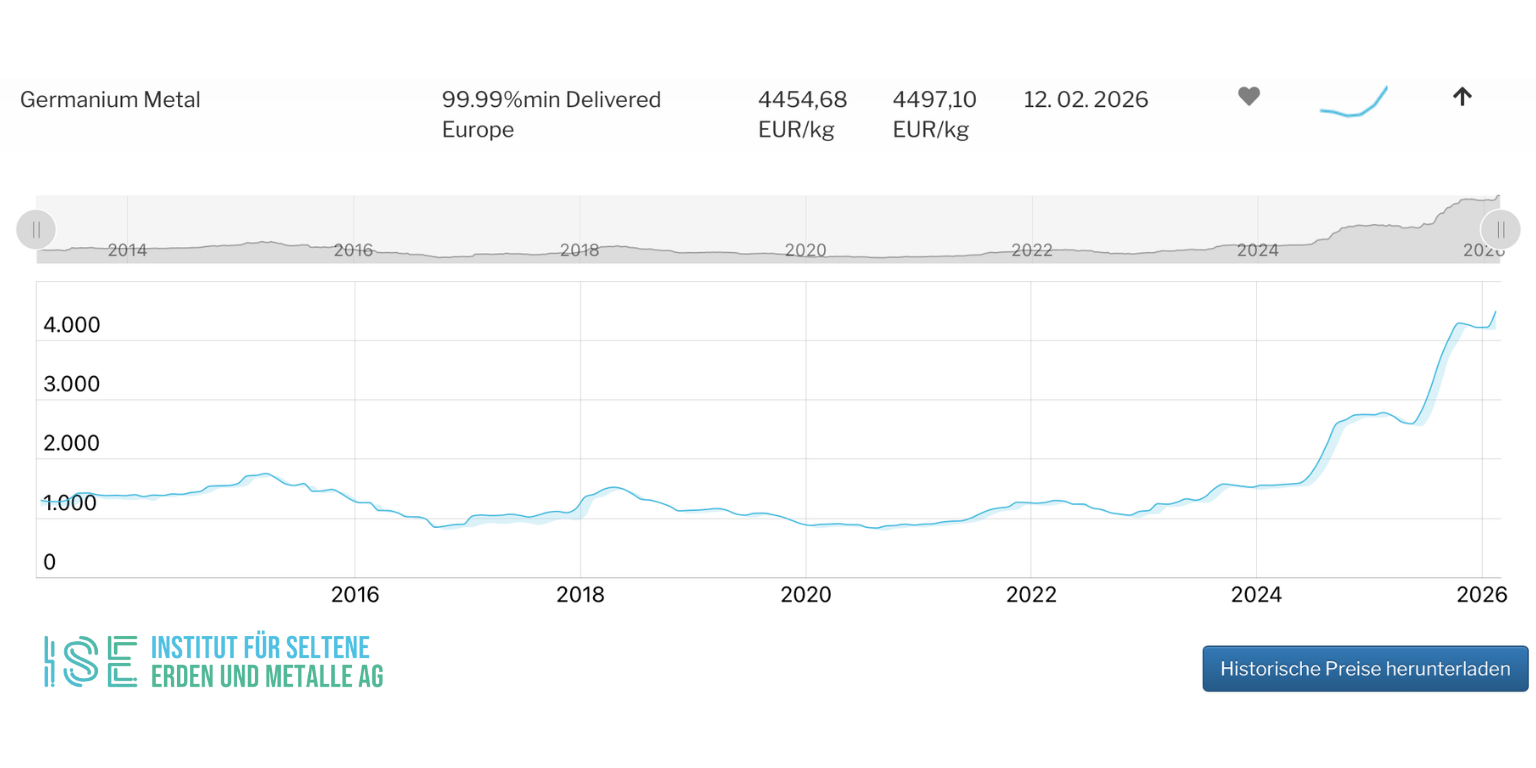
Another recent example of political actions impacting the global market is the sharp rise in prices for gallium, germanium, and antimony in the summer of last year. This coincided with China’s announcement of restrictions on the export of rare metals like gallium and germanium, essential for US microelectronics production. These restrictions were a response to US actions aimed at curbing China’s microelectronics industry.

The US ban on transferring cutting-edge technologies and next-generation microchips to China set the country back several years in AI development, including military AI technologies. With China controlling over 80% of global germanium production and US government gallium reserves running low, these measures had farreaching consequences.

Following stricter restrictions, China nearly ceased exporting gallium and germanium to the US, causing a sharp price increase: gallium prices rose by 80%, and germanium prices doubled. According to estimates by the U.S. Geological Survey, a total export ban on these materials could cost the US economy $3.4bn. While Washington is seeking to diversify supply chains, a quick resolution seems unlikely. 

The impact of Chinese government restrictions on antimony exports 

In addition to gallium and germanium, China banned the export of antimony-containing products to the US in 2024. China accounts for half of the world’s antimony production, widely used in the military industry for ammunition and nuclear weapons manufacturing. 

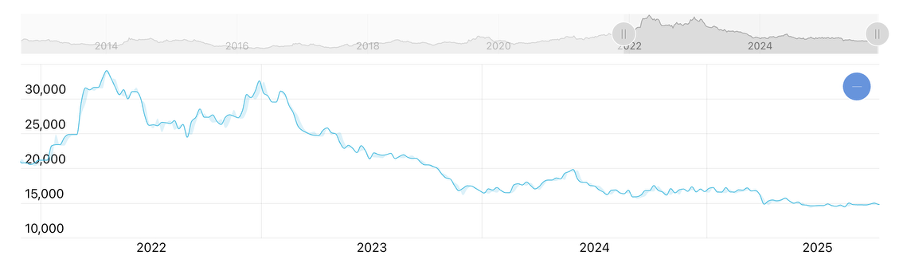
Germanium


Previously, antimony extraction was considered unprofitable, but by November 2024, the Rotterdam price for antimony reached $39,000 per ton, over three times its price at the start of the year. Canadian company Spearmint Resources announced plans to resume antimony mining in New Brunswick, signalling the potential exploration and development of new antimony deposits globally.

The role of rare earth and minor metals in the global green economy 

The global shift towards a ‘green’ economy has been a key factor driving up the prices of rare earth and minor metals. Countries aim to reduce carbon emissions and adopt renewable energy sources, significantly increasing demand for metals needed to produce solar panels, wind turbines, and batteries. Additionally, the rapid development of electric vehicles (EVs) requires large quantities of lithium, cobalt, nickel, and other rare earth elements for batteries and electric motors. Limited supplies, concentrated in a few countries like China, and the high costs of environmentally safe extraction have further pushed up prices. Moreover, these materials’ critical role in future technologies has spurred speculative market growth. As a result, the costs of rare and minor metals, central to the ‘green’ economy, have risen globally. 

Niche markets and pricing for rare commodities Beyond metals widely traded on exchanges, some rare minerals are difficult to price due to infrequent transactions, unique characteristics, and the lack of a standard market. For instance, osmium, especially its isotope osmium-187, is one of the rarest and most unique commodities in the global metal market. Kazakhstan is the primary exporter of osmium-187, making it extremely scarce.

Due to its rarity and specific mining requirements, osmium-187 is not traded on exchanges, and its market price is determined by laboratory assessments of quality, purity, and uniqueness, as well as previous transaction data. This pricing structure highlights the strategic importance of osmium-187 for high-tech and scientific applications, where it remains irreplaceable. 

Antimony

Metall prices 2025

ISE’s metal price database 

For over ten years, ISE has maintained its proprietary metal price database, which includes over 19,500 items. This database is built from diverse sources, including insider information about non-exchange-traded metals. Users of the monitoring system include individual clients, major electrical equipment manufacturers, international auditing firms, governmental institutions, and global research universities. Access to the system is available via the ISE AG website on an annual subscription basis, with a 24-hour trial period. Data is updated daily and can be exported in CSV format.

Monitoring metal prices helps identify key drivers of technological progress and their impact on the global economy, as well as anticipate economic changes. This makes it a crucial tool for businesses, policymakers, and researchers alike.

About the Institute for Rare Earth Elements and Metals 
The Institute for Rare Earth Elements and Metals AG (ISE AG), established in 2008, is a leading company specialising in high-precision metallurgical analysis and metal storage. Headquartered in Switzerland, the company operates offices in six countries and maintains a global network of 80 employees.   

ISE AG focuses on analysing precious and rare earth metals, as well as high-purity industrial products. The company offers highly secure storage facilities in modern warehouses spanning over 8,000m² in Switzerland, ensuring strict inspection and documentation protocols to preserve material integrity.

In its laboratories, ISE AG employs advanced technologies such as GD-MS, ICP-MS, and XRF to perform detailed analyses of a wide range of metals in compliance with ISO standards. Additionally, the company provides metal valuation services, offering reports and audits aligned with IFRS13 standards, and grants online access to real-time prices of over 19,500 metals and their products, enabling informed decisionmaking in a dynamic market environment. ISE AG is also actively involved in research, particularly in the field of metal recycling, collaborating with international universities to develop sustainable methods for recovering critical rare earth elements and minor metals. 

Combining cutting-edge technology with a commitment to quality and sustainable resource use, ISE AG is a trusted partner in the metallurgical industry.


kritische Rohstoffe, ISE AG Switzerland, Führung in der Metallindustrie, Experte für seltene Erden, Metallanalyse und Bewertung, Nachhaltige Ressourcennutzung, Internationale Metallmärkte, Metallpreis-Analyse, Metallpreis-Datenbank, High-precision metallurgical analysis, GD-MS, ICP-MS, XRF-Technologien, ISO-konforme Metallanalysen, IFRS13 Metallbewertung, Metallrecycling-Forschung, Nachhaltige Metallrückgewinnung, Metallpreisüberwachungssystem, High-purity industrial metals, Advanced metal analytics, Metalllagerung mit höchster Sicherheit, Seltene Erden und Metalle, Globale Metallpreise, Edelmetallmarkt, Gallium, Germanium, Antimon, Osmium-187, Rohstoffknappheit, Green Economy, Elektrische Fahrzeuge (EV) und Batteriemetalle, Geopolitische Einflüsse auf Metallpreise, Arndt Uhlendorff – Leadership in Rare Earths and Metals, Tracking global metal price trends – ISE AG Switzerland, Innovative metal analysis and storage solutions, Research and sustainability in rare earth elements, Trusted partner for high-precision metal analytics, Metallanalyse Schweiz (metal analysis Switzerland), Hochpräzise Metallanalytik (high-precision metallurgical analysis), Metallbewertung nach IFRS13 (metal valuation IFRS13), Metallpreis-Datenbank (metal price database), Edelmetalllagerung Schweiz (precious metal storage Switzerland), Forschung zu kritischen Rohstoffen (critical raw materials research), Nachhaltige Metallrückgewinnung (sustainable metal recycling), Arndt Uhlendorff CEO ISE AG, Einfluss geopolitischer Ereignisse auf Metallpreise, Gallium, Germanium und Antimon Markttrends, Osmium-187 Marktwert und Anwendungen, Künstliche Intelligenz und Metallnachfrage, Grüne Energie und Rohstoffbedarf, Recycling seltener Erden, Schweizer Labor für Metallanalyse, Sicheres Metalllager für Investoren, Preisentwicklung von Edelmetallen, High-tech metal analytics and sustainability

  • Hits: 1537

Rare earths: China firmly in the saddle despite millions invested by the Pentagon

Diagramme1 mit Logo 1536x1024
THE MOST IMPORTANT MINES IN PRODUCTION 2023 - Quelle: ISE AG 

CHINA STRICTLY GUARDS ITS DOMINANT POSITION IN RARE EARTH METALS AND THE MANUFACTURE OF PERMANENT MAGNETS, WHICH ARE RELEVANT FOR CLIMATOLOGY AND THE MILITARY. AN ASIA EXPERT WARNS THAT CHINA IS EXERCISING INFLUENCE OVER THE STILL BARELY EXISTING WESTERN INDUSTRY THROUGH HIDDEN CONNECTIONS.

Mike Pompeo Opens Rare Earth Industry Congress in Barcelona

At the end of June, Mike Pompeo traveled to Barcelona — not to admire the artistic works of Antoni Gaudí, but to open the annual congress of the Rare Earth Industry Association (REIA). The former CIA director now serves as special advisor to USA Rare Earth (USARE). Previously, he was Secretary of State under Donald Trump, who in September 2020 declared a national emergency, citing the “unacceptable dependence of the United States on foreign adversaries for critical minerals” — meaning China — as an “extraordinary threat.”

Although Trump is no longer president, his critical minerals policy is being continued by his successor, Joe Biden. Of the 35 materials deemed critical to the United States, the rare earth elements stand out most. These are also considered critical by the European Union. But why all the fuss over this group of 17 elements, usually found in tiny amounts in speakers, screens, glass, alloys, and hard drives? The reason is that, with the massive expansion of climate technologies, demand for rare earths is expected to increase exponentially — particularly for permanent magnets, which are essential components of electric vehicles and wind turbines.

Dangerous Dependence on China

China controls the global supply chain for rare earth mining and processing, right up to the production of permanent magnets. This dominance has become a growing problem for Western countries, as China frequently restricts exports— most recently in spring, in retaliation for export bans on semiconductor technologies imposed by the U.S., Japan, and several EU states. China has since also tightened export restrictions on gallium and germanium. (We will report on this in detail separately.)

This dependence is particularly frustrating for the United States. Until the 1980s, the U.S. was the world’s leading producer of rare earths. “But China pursued an aggressive economic policy, flooding the global market with rare earths to drive out competitors,” Trump’s 2020 decree stated. Today, the U.S. imports about 80% of its rare earths from China.

Even the know-how for permanent magnets originally came from the United States — and is now being painfully rebuilt after decades of outsourcing to China. One company working on this is Pompeo’s USA Rare Earth (USARE), which aims to establish a fully integrated production chain — from mining to finished permanent magnets — in Texas.

Tesla Moves Away from Rare Earths

Despite U.S. and EU efforts to regain control over rare earth production and downstream industries, more and more manufacturers are moving away from permanent-magnet-based electric motors. The reasons include extreme price volatilitypotential shortages, and the environmental damage caused by mining.

BMW, for instance, has eliminated neodymium-iron-boron magnets from its fifth-generation electric motorsNissanand Renault plan to reduce the share of motors using permanent magnets. Tesla, the market leader in electric vehicles, has gone even further — its next generation of electric motors will contain no rare earths at all.

In the wind energy sector, turbines using permanent magnets still make up only a small share of Germany’s installed capacity. However, in the offshore segment — where durability and efficiency are paramount — magnet-based modelsare gaining ground. Which generator type will ultimately dominate remains uncertain, but raw material security has become a major concern. Notably, German manufacturers of permanent magnets have recently scaled back their activities — with Enercon, the leading producer of onshore wind turbines, being a rare exception. These developments show that climate technologies are not necessarily guaranteed demand drivers for rare earth elements.

Neither Clean nor Transparent

Both the wind and electric vehicle industries promote an image of clean energy and mobility. Yet, the extraction of rare earths and the production of permanent magnets are often neither clean nor transparent. The origin of rare earth elements used in magnets cannot be reliably traced.

China’s monopoly over rare earths was built in part on decades of weak environmental standards, which made its products unbeatably cheap. The environmental hazards include the release of radioactive substances such as thorium and uranium, and highly polluting mining methods, especially for heavy rare earth elements.

Thousands of Toxic Ponds in Burma’s Conflict Zones

Across the southeastern Chinese province of Jiangxi, the landscape is dotted with thousands of small, round ponds filled with toxic water — remnants of the chemical leaching used to extract rare earths. Ammonium sulfate and ammonium chloride were injected directly into the ground to dissolve the desired materials. Environmental rehabilitation could take up to 100 years, with cleanup costs estimated by the Chinese government at USD 5.5 billion.

Since 2016, the Chinese government has tried to get these environmental problems under control — closing mines, curbing production, and cracking down on illegal operations. Yet, as domestic output decreasedglobal demand did not. To maintain its refinery capacity and export dominance, China began sourcing raw materials from neighboring Myanmar (Burma). Within a few years, Myanmar has become one of the world’s largest rare earth producers, with militias linked to the country’s military regime partnering with Chinese companies to control the mines.

In March 2022, the NGO Global Witness used satellite imagery to identify 300 mining sites containing 2,700 chemical leaching ponds in Myanmar. The resulting environmental destruction and human impact have been catastrophic.

Pentagon Invests Millions

Both the U.S. and the EU have recently elevated raw materials policy to the top of their political agendas. However, while the EU frames the issue in terms of the climate transition, the U.S. approach is driven by national security concerns.

To rebuild domestic rare earth production and processing, the U.S. government — through the Pentagon — has already committed over USD 100 million in public investment. The military’s interest is clear: fighter jets and nuclear submarines require large quantities of rare earths. An F-35 jet contains about 420 kilograms, while each Virginia-class nuclear submarine — five of which Australia ordered from the U.S. last year — uses more than four metric tons.

Even before Trump’s 2020 policy push, the U.S. company MP Materials had reopened the Mountain Pass mine in 2017. However, U.S. independence from China remains far off: in the first three quarters of 2022, nearly all of MP Materials’ revenue came from sales to Shenghe Resources, a semi-state-owned Chinese company that is also a minority shareholder in the U.S. firm.

China thus dominates the rare earth industry not only as a seller but also as a buyer. As Andy Mok of the Center for China and Globalization told, “What’s unique about this industry is China’s presence at every step of the value chain, which makes it extremely difficult for other countries to enter.”

Despite this, the Pentagon has granted MP Materials USD 35 million to build a separation facility for heavy rare earths — even though the company remains partly Chinese-owned.

Would you like me to make this sound more like a professional magazine article (e.g., or style) while keeping the same information?


RARE EARTH METALS - APPLICATIONS OF PERMANENT MAGNETS. SOURCE: ISE AG

 Separation Plants in Texas

Lynas Rare Earths is one of the few rare earth producers outside China. The company operates a mine in Mount Weld, Western Australia, and a separation plant for light rare earths in Malaysia. However, due to radioactive waste generated during the separation process, Malaysia has threatened to revoke the plant’s operating license. Lynas is preparing to shift operations to a new facility in Australia, which is almost complete.

In addition, Lynas — in partnership with U.S. chemical company Blue Line — is building its first heavy rare earth separation plant in Texas, supported by $120 million in funding from the Pentagon. Lynas is also receiving $30 million for another light rare earth separation facility in Texas.

Meanwhile, the Chinese government closely guards its monopoly over the rare earth market, built up over decades. Western efforts to regain control over rare earths have not gone unanswered. In 2009, the state-owned China Nonferrous Metal Mining Group attempted to acquire a majority stake in Lynas — a deal that was blocked by Australian authorities.

Today, according to the U.S. Department of Defense, Chinese actors are also engaging in disinformation campaigns. A hacker group called Dragonbridge, allegedly linked to Beijing, is said to have spread negative narratives about Lynas online.

In 1992, Chinese Party Secretary Deng Xiaoping famously declared, “The Middle East has oil; China has rare earths.” The long-term goal of the Communist Party has been to transition from a raw material supplier to a technological leader. Three years later, two state-owned Chinese firms, with help from the U.S. Sextant Group, acquired Magnaquench, the only American producer of permanent magnets, previously owned by General Motors. This gave China access to crucial patents.

Despite prior agreements, the new Chinese owners shut down all U.S. operations by 2000. Today, China controls over 90% of the global permanent magnet industry. According to Asia expert Frank Jüris from the Estonian Foreign Policy Institute, the close ties between China’s political leadership and industry are striking: one of the executives involved in the Magnaquench takeover was Zhang Hong, Deng Xiaoping’s son-in-law.

Hidden Connections with China

The second notable rare earth separation facility outside China is located in EstoniaSilmet, a remnant of the Soviet era, is now owned by Neo Performance Materials (Neo), a Canadian-listed company. Neo plans to expand the facilityand begin permanent magnet production.

Silmet previously belonged to Molycorp, founded in 2008 with the goal of rebuilding the entire U.S. rare earth supply chain — from mining to magnet manufacturing. Molycorp revived the Mountain Pass mine and repurchased Magnaquench from the Chinese. However, Molycorp collapsed in 2015 after China flooded the market with cheap rare earths, causing a price crash. The company went bankrupt, and Neo acquired Magnaquench and Silmet from the liquidation.

Jüris points out that both MP Materials and Neo are deeply intertwined with China. Neo’s majority owner, Tattarang(which is linked to Fortescue Metals Group), has longstanding business ties with China. Moreover, the fact that Neo is the only Western company allowed to process rare earths in China further underscores its close relationship with the Communist Party.

Additionally, Magnaquench’s R&D division is headed by Chen Zhongmin, who previously worked for companies connected to the Chinese military. Jüris warns that through such relationships, Beijing could theoretically exert influence over Western industry — unless strict regulatory safeguards are put in place.

Scandinavia Advances a China-Independent Supply Chain

At the beginning of the year, LKAB, Sweden’s state-owned iron ore company, made headlines by announcing the largest known rare earth deposit in the European Union. Since iron ore will remain its main extraction product, this makes rare earth mining less vulnerable to volatile global prices, according to Bo Krogvig, LKAB’s special adviser, in an interview with Tagesspiegel Background.

To separate the rare earths, LKAB acquired a majority stake in Norwegian company REEtec, which plans to launch its first separation plant in 2024. The ore will come from Vital Metals in Canada. A second plant, dedicated to LKAB, is expected to begin operations in 2026, although LKAB does not anticipate rare earth extraction in Kiruna before 2030.

REEtec is partly funded by Mercuria, in which the U.S. government also holds an interest. The German automotive supplier Schaeffler has reportedly signed a supply agreement with REEtec, according to Reuters. This could mark the first entirely China-independent rare earth value chain.

However, many experts remain skeptical. Since China still produces more than 90% of the world’s permanent magnets, it will likely remain the key buyer of rare earth oxides for the foreseeable future.

ISE AG, Institut für seltene Erden und Metalle AG, Uran, LKAB, Gallium, 17 Elemente, abhängigkeit von China, BMW, blue line, Bedrohung, Dauermagneten, Kiruna, Klimatechnologien, mount weld, pentagon, Nissan, Silmet, Wirtschaftsplotik, Thorium, USA Rare Earth, Zhang Hong, Tesla, umweltschutz

  • Hits: 518

Export Controls on Gallium and Germanium: "China wants to negotiate"

Chart Germanium metal 2013 bis 2023 

Germanium metal 99,99% delivered Europe - Source: ISE AG


China’s Export Controls on Gallium and Germanium Send Shockwaves Through Global Markets

The export controls imposed by China in the summer on the high-tech elements gallium and germanium sent shockwaves through the global economy. Yet, according to a China expert, the move was not meant as an escalation, but rather as a tactical maneuver to gain leverage in the ongoing technology war.

In 2022, global production amounted to just 430 tonnes of gallium and 225 tonnes of germanium. Despite these relatively small quantities, the export restrictions introduced by China in August caused widespread alarm — largely because of the critical role these elements play in high-tech applications and the extreme concentration of production in China.

The dominance is particularly striking for gallium:

“Of the 430 tonnes produced worldwide, only ten were made outside China. It is the strongest monopoly that exists for any element on the planet,”
explains Alastair Neill, China specialist and critical minerals expert at the North American Critical Minerals Institute.

As a result, China now accounts for nearly 98% of global primary gallium production and an estimated over 80% of primary germanium output.

Key Role in Semiconductors and Optoelectronics

Gallium arsenide is used in high-performance chips and semiconductors. Gallium also has the unique ability to convert electricity into light, which makes it indispensable for optoelectronics — crucial for 5G technology and ultrafast fiber-optic networks.

The element is also used in smartphones, solar cells, and satellites. Although much more expensive than the widely used semiconductor silicon arsenide, manufacturers such as TSMC and Compound Materials (based in Saxony, Germany) rely on gallium arsenide for its superior performance.

Bargaining Power in the Technology War

Beijing justified the export restrictions on the grounds of national security. According to Michael Harz, CEO of Compound Materials, Chinese authorities are now requiring end users and importers to specify details such as the intended use, final users, and applications of gallium products.

Harz does not believe that China seeks escalation, noting that China itself reimports processed gallium products.

Neill, who worked in China for seven years, supports this view:

“This allows China to effectively control where its gallium goes.”

He sees the move as strategic calculation, pointing to the U.S. ban on exporting chipmaking equipment to China, which has significantly slowed the development of China’s 5G infrastructure. With the gallium and germanium export controls, China is likely trying to create bargaining leverage in its tech standoff with the United States.

U.S. Caught Off Guard

The United States was caught off guard by the new export rules.

“While the U.S. government holds germanium reserves, it surprisingly has none for gallium,”
Neill notes.

By contrast, Compound Materials in Saxony reportedly has reserves sufficient for six months, according to German broadcaster MDR.

Economically, the pure gallium metal market is tiny — around USD 100 million annually — meaning a temporary drop in Chinese exports would have little macroeconomic impact. However, because of its small size and specialized nature, the market offers little incentive for companies to invest in new mining projects.

How Gallium and Germanium Are Produced

According to the German Mineral Resources Agency (Dera)germanium is mainly obtained during the smelting of zinc and copper sulfide ores, as well as from coalGallium, meanwhile, is a by-product of aluminum or zinc production, with bauxite being the most significant source, accounting for around 90% of global output.

In 2022China was the world’s second-largest bauxite producer, after Australia, and is therefore able to meet its domestic demand. The West African nation of Guinea, home to the world’s largest bauxite reserves, also ranks among the top three producers.


Gallium Metal 99,99% FOB China - Source: ISE AG


Resumption of Gallium Production in Germany

Among the five largest gallium importers are the United States, India, Japan, South Korea, and Taiwan. According to the German Mineral Resources Agency (Dera)Germany imported between 40 and 60 tonnes of gallium annually from 2020 to 2022, with 50 to 60 percent coming from China. The remainder was sourced mainly from Slovakia.

The Slovak company CMK, founded in the 1970s in the small town of Žarnovica, produces gallium and gallium arsenide using proprietary recycling processes.

Until 2015Ingal Stade GmbH, a Germany-based company, was the largest gallium producer outside China. Its facilities were located on the grounds of Aluminium Oxid Stade GmbH (AOS Stade). However, due to a sharp decline in gallium prices, Ingal Stade ceased production in 2016 and was subsequently dissolved.

When gallium prices rebounded in early 2021AOS Stade announced plans to resume gallium production alongside its aluminum operations by the end of 2021. Yet, this has not happened to date, and the company declined to comment on the current status when contacted by the Institute for Rare Earths.

Bauxite from Conakry to Stade

In 2022, the Neues Stader Wochenblatt reported that AOS Stade had applied to the Lüneburg Trade Supervisory Officeto raise the embankments of its red mud disposal site from 16.5 to 30 meters, although the current maximum permitted height is 21 meters.

The disposal site lies about four kilometers west of the Elbe River, near AOS Stade’s production and port facilities. The company sources its bauxite from Guinea, a country that has been under military rule since a coup in 2021 that ousted President Alpha Condé, who remains under house arrest.

AOS Stade’s parent company is Dadco, an aluminum group owned by British-Canadian businessman Victor Dadaleh, whose corporate headquarters are registered in the Channel Islands.

Dadco holds a 10 percent stake in Halco Mining, which in turn is a shareholder of the Compagnie des Bauxites de Guinée (CBG) — one of Guinea’s two largest bauxite producers.

Western Supply Still Uncertain

Although Canada, the United States, Belgium, and Russia also produce gallium and germaniumDera concludes that these countries cannot meet global demand, at least not in the short or medium term.

China’s export restrictions currently remain controls rather than outright bans, emphasizes Dera expert Maren Liedtke, who warns against unnecessary panic.

At the same time, the West lacks China’s ability to collect and process bauxite from multiple sources at centralized facilities — a key factor behind China’s dominance in gallium production.

“That kind of coordinated cooperation just doesn’t work as well here in the West, where every company tends to operate on its own,”
explains Alastair Neill.

Germanium, Gallium, 225 Tonnen Germanium, 430 Tonnen Germanium, 5-G Technologie, CMK, Bauxit, DERA, Exportverbot, Halco, TSMC, Slowakei, Solarzellen, Monopol, Halbleitern, Gallium Lagerbestände

  • Hits: 556

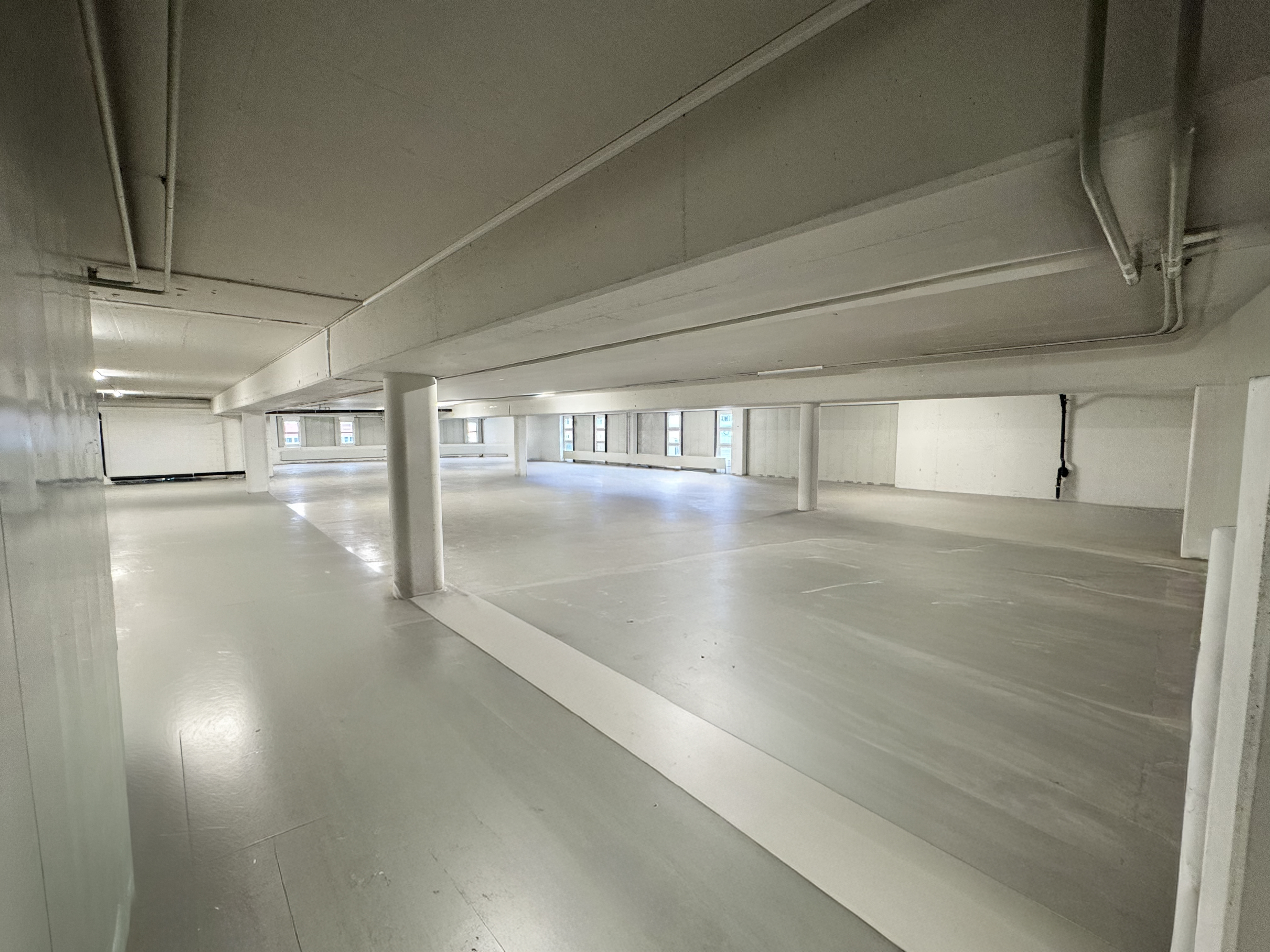
ISE AG opens open customs warehouse in Zurich/Embrach


Zoll Lager Embrach
Lucerne, June 26, 2024 – We are pleased to announce that, as of today, we are operating our own open customs warehouse in Embrach near Zurich.

In shared warehouses, individual storage units, and high-security vaults and rooms, we can store all types of metals and precious metals — provided they are non-toxic, non-flammable, and non-explosive.

We offer storage facilities both in closed bonded warehouses and open bonded warehouses. In closed bonded warehouses, the Swiss customs authorities record and regulate all goods and personnel entering and leaving. In open bonded warehouses, the warehouse operator reports all goods movements directly to customs.

Our closed bonded warehouse areas are GRASP-certified. With a distance of only 8 km from Zurich Airport (Kloten), our facilities are ideally located for convenient access. We are pleased to offer free transport between Kloten and Embrach as part of our customer service.

Safekeeping Receipts are issued directly by ISE AG, providing a direct reference to your documentation created by ISE AG. This ensures your documentation is complete and consistent.

Our storage facilities are open Monday to Thursday, from 8:00 a.m. to 5:00 p.m.

Comprehensive Logistics Services

As an additional service, we are now able to take care of your logistics needs worldwide.
No matter where your goods need to be collected or delivered, we are your reliable partner for specialized metal logistics.

We handle loading, import and export procedures, customs clearance, and storage.
If required, we can collect your goods, transport them to our facility, conduct inspections and sample taking, and return them to you afterwards.

At the end of the process, you will receive professionally recognized documentation, while your goods remain secure and within reach.

Metal Powder Reconditioning

In our own production facilities located directly next to our warehouse, we can recondition your metallic powders.
All metal powders share a common characteristic: after a certain time, they begin to oxidize and clump, which causes them to lose their original properties and value.

Metal powders stored in sealed containers under argon should be reprocessed every 10 years. Powders stored in sealed glass ampoules can last for several decades.

We are happy to advise you on how we can recondition your materials, enabling you to store them safely for another 10 years without concern.

Your Trusted Partner in Switzerland

The Institute for Rare Earths and Metals AG (ISE AG) in Switzerland is your reliable partner for metal transport, storage, analysis, evaluation, and reconditioning — ensuring that the value and integrity of your materials are preserved for decades to come.

Our Contact to ISE AG: This email address is being protected from spambots. You need JavaScript enabled to view it. or +41 41 5 11 11 20

ISE AG, Institut für seltene Erden und Metalle AG, Analyse, anerkannte Dokumentation, Bewertung, Edelmetallen, Embrach, Einzellagern, Flughafen Zürich Kloten, Freilager, geschlossenes Freilager, Glasampullen, GRASP, Hochsicherheitstresoren, Logistik, Offenes Zollfreilager, Preis, Produktionshallen, zertifiziert, Zürich

  • Hits: 639