
Rare Earths: EU Relies on Unprofitable Mines
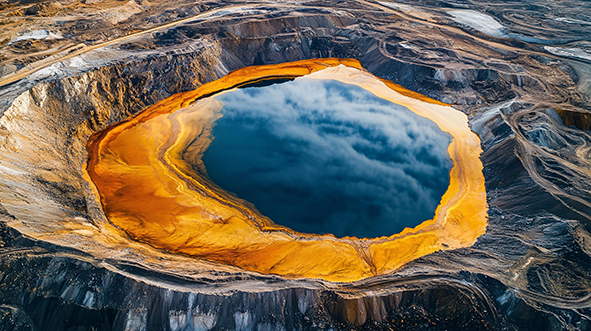
KIIRUNAVAARA (NORTH SAMIC: GIRONVÁRRI, MEÄNKIELI: KIERUNAVAARA) IS A MOUNTAIN IN THE MUNICIPALITY OF KIRUNA IN THE DISTRICT OF NORRBOTTEN, SWEDEN. IT CONTAINS ONE OF THE LARGEST AND RICHEST IRON ORE DEPOSITS IN THE WORLD.
In its haste to become independent from China for critical raw materials, the EU has agreed on a Raw Materials Act in record time.
The goal is to secure access to these coveted resources through partnerships with third countries, a stronger circular economy, and increased domestic extraction of critical raw materials within the EU. By 2030, domestic mining is expected to expand significantly, covering at least ten percent of the EU’s demand. According to Jan Moström, CEO of the state-owned Swedish iron ore company LKAB, the EU regulation could be a “game changer.” In 2023, LKAB made headlines when it revealed the discovery of rare earth deposits in Kiruna, Sweden.
Rare Earths as an Example
The case of rare earth elements (REEs)—a group of 17 elements on the periodic table that are critical for green technologies as well as military applications—illustrates how difficult it is for the EU to break China’s dominance in this field, even with targeted legislation. It also raises the question of whether the EU’s Raw Materials Act is truly the right strategy.
According to Eurostat, in 2022 the EU imported 18,000 tonnes of rare earths:
- 40% came from China,
- 31% from Malaysia, and
- 25% from Russia.
The U.S. and Japan each supplied about 2%.
The EU’s dependency is even more striking when it comes to permanent magnets, where 83% of imports come from China. In 2023, the EU imported around 25,000 tonnes of permanent magnets from China.
Small EU Deposits
According to Investing News Network, global rare earth production in 2022 totaled 300,000 tonnes, with China accounting for 210,000 tonnes. The United States ranks second, producing 43,000 tonnes from its reopened Mountain Pass Mine in California (operational since 2018). Australia is third with 18,000 tonnes, although its production dropped by a quarter compared to the previous year.
Another key player in global REE supply is Myanmar, a country torn by civil war. Although data are scarce, it is well established that Myanmar is a crucial supplier—particularly of heavy rare earths—to China. Other producers include Thailand, Vietnam, India, Russia, Madagascar, and Brazil. Brazil is said to hold the third-largest reserves in the world, at about 21 million tonnes.
In comparison, the Per Geijer deposit in Kiruna, Sweden, seems minuscule. With an estimated 1.3 million tonnes, LKAB nevertheless promotes Per Geijer as Europe’s largest rare earth deposit. However, experts such as Alastair Neillfrom the Critical Minerals Institute / ISE AG believe mining there is unrealistic, given the currently known rare earth content of only 0.18%.
“At such a low grade, only lateritic clays are worth mining. Any other mineralization is uneconomical,” Neill explained.
Moström emphasized in January that further exploration of the deposit is required—a process that will take years. Nevertheless, LKAB claims that Per Geijer could meet a significant portion of the EU’s demand for rare earths needed to produce permanent magnets for electric vehicles and wind turbines.
LKAB Seeks Faster Permits
Despite the currently unpromising economics of rare earth mining, LKAB’s CEO Moström suggested applying for strategic project status under the new EU law.
“If it’s classified as a strategic project, the process will move much faster,” Moström told Mining.com.
According to LKAB, mining rare earths under current Swedish permitting rules would take 10 to 15 years, meaning production could not begin before 2033 at the earliest.
The new EU regulation allows companies to apply for “strategic project” designation. A special EU panel—composed of representatives from the European Commission and member states—will select these strategic projects. Once approved, they will benefit from faster permitting procedures and easier access to financing.
On the ground in Kiruna, however, the Sámi—Europe’s only recognized Indigenous people—have voiced strong opposition to LKAB’s plans. Sámi reindeer herders have struggled for over a century with the environmental and cultural impacts of iron ore mining, which threatens their traditional way of life.
They suspect that LKAB’s true aim is to expand iron ore extraction, using rare earths as a political and regulatory argument to accelerate permits. LKAB does not deny that iron ore remains its primary focus, with rare earths expected only as a by-product.
By emphasizing iron ore, the company says it avoids exposure to the volatile global rare earth market, which suffers from unstable prices.
China Snatches Rare Earths Away from the EU
To strengthen its entry into the rare earth business, LKAB acquired a majority stake in Norwegian company REEtec in November 2022. The startup claims its separation technology produces up to 90% less CO₂ and is significantly more environmentally friendly than conventional processing methods.
REEtec—partly backed by the U.S. government through Techmet-Mercuria—currently operates a pilot plant in Herøya, southern Norway.
Within the EU’s Horizon 2020 research funding program, REEtec developed a process to extract and refine rare earths from apatite ores supplied by the Norwegian fertilizer company Yara. Between 2018 and 2022, REEtec received €2.8 million in EU funding, while Yara received €3.5 million.
In the second half of 2024, REEtec plans to launch its first industrial-scale facility, but without Yara’s apatite ores. An alternative supplier was to be Vital Metals of Australia—however, that option has also collapsed. The company, facing financial troubles, halted its operations in Canada in April 2025.
In mid-December, it was announced that Shenghe Resources from China had acquired a 9.99% stake in Vital Metals and purchased all rare earths produced to date.
As a result, REEtec now appears to be without a supplier, and the West’s effort to free itself from Chinese dominance in the rare earth sector has suffered yet another major setback.
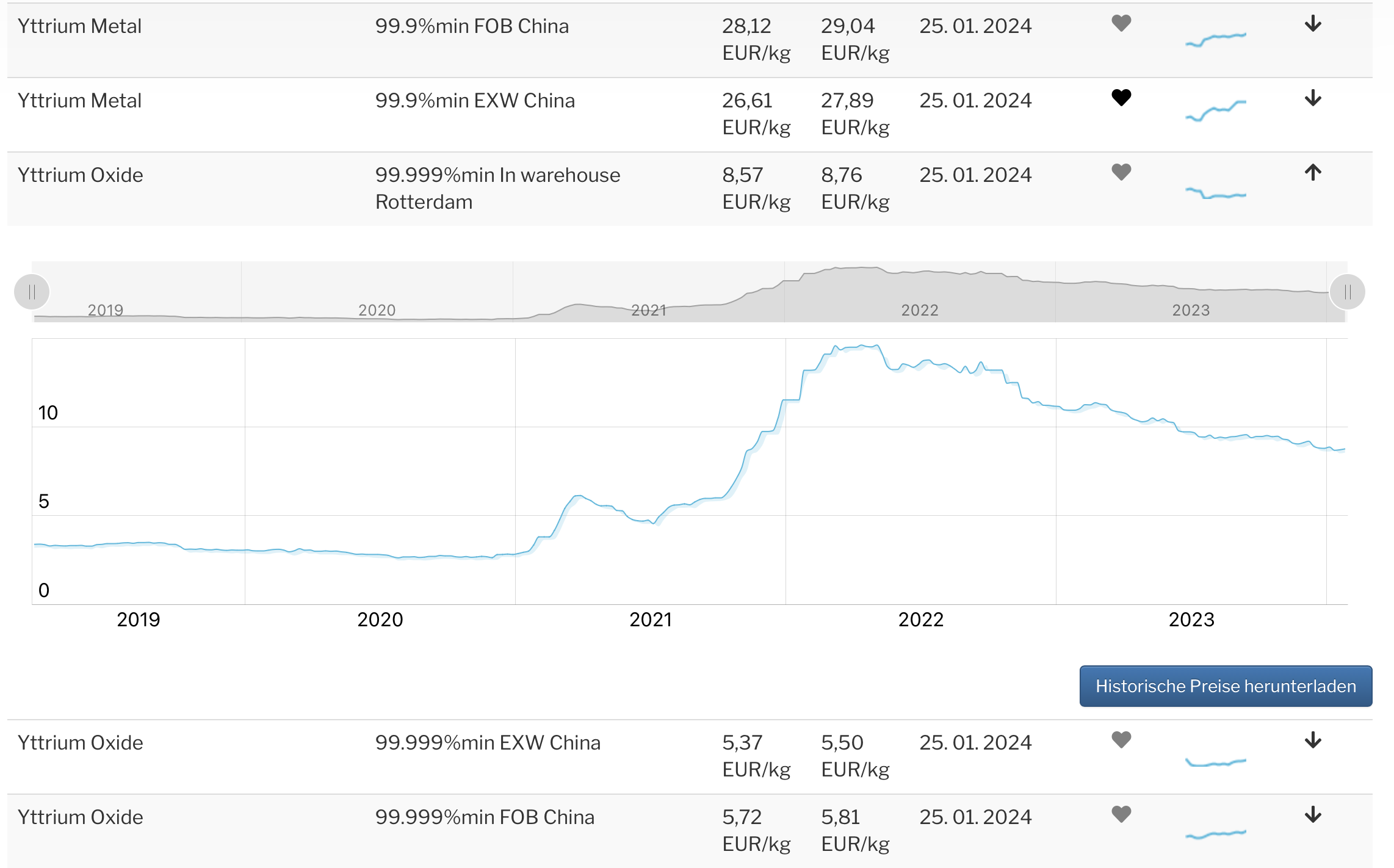
Real Time Preise für Seltene Erden, Minor Metals, Base Metals und deren Produkte bei https://ise-metal-quotes.com
Poor Prospects for Norra Kärr
In Sweden, there is another rare earth deposit called Norra Kärr, whose quality is considered higher than that of Kiruna. However, the challenge here lies in the mineral composition: the rare earth elements are embedded in eudialyte, a mineral from which rare earths have never been commercially extracted.
Nevertheless, Eric Krafft, CEO of Leading Edge Materials, the Canadian company that holds the concession for Norra Kärr, announced his intention to apply for EU strategic project status for the venture.
If, one day, rare earths are actually mined within the EU, another question arises: Who will buy them?
At present, no permanent magnets are produced in the EU. The result is paradoxical — China would likely become the main customer for EU-mined rare earths, since it is not only the largest producer but also the largest consumer of rare earths in the world.
Neo Performance Materials: First EU Magnet Production
There is, however, some hope in Neo Performance Materials, a Canadian company currently building a permanent magnet production plant in Narva, Estonia. The groundbreaking ceremony took place in summer 2023, and production is scheduled to start in 2025 with an annual capacity of 2,000 tonnes, later increasing to 5,000 tonnes per year — enough for around 4.5 million electric vehicles.
With Neo’s project, the EU could reduce its heavy dependence on China for permanent magnets by about 25%.
Neo Performance Materials already operates a rare earth separation facility in a former Soviet-era plant in Sillamäe, Estonia, processing material that comes, among other sources, from the United States. The company also plans to produce magnets from recycled materials, including used magnets and industrial scrap, aiming to establish Europe’s first “mine-to-magnets” supply chain.
ISE AG, Institut für seltene Erden und Metalle AG, Australien, Brasilien, EU, China, drittgrössten Reservern der, EU-Forschungsförderungsprogramm, grüne technologien, Laterittonen, LKAB, Myanmar, Madagaskar, Narwar, kritische Rohstoffe, Jan Moström, Nora Kärr, Vietnam, US-Regierung, Russland
- Hits: 897