Allgemein

The US Catch-Up Race in Rare Earths: Trump Brings Out the Bazooka

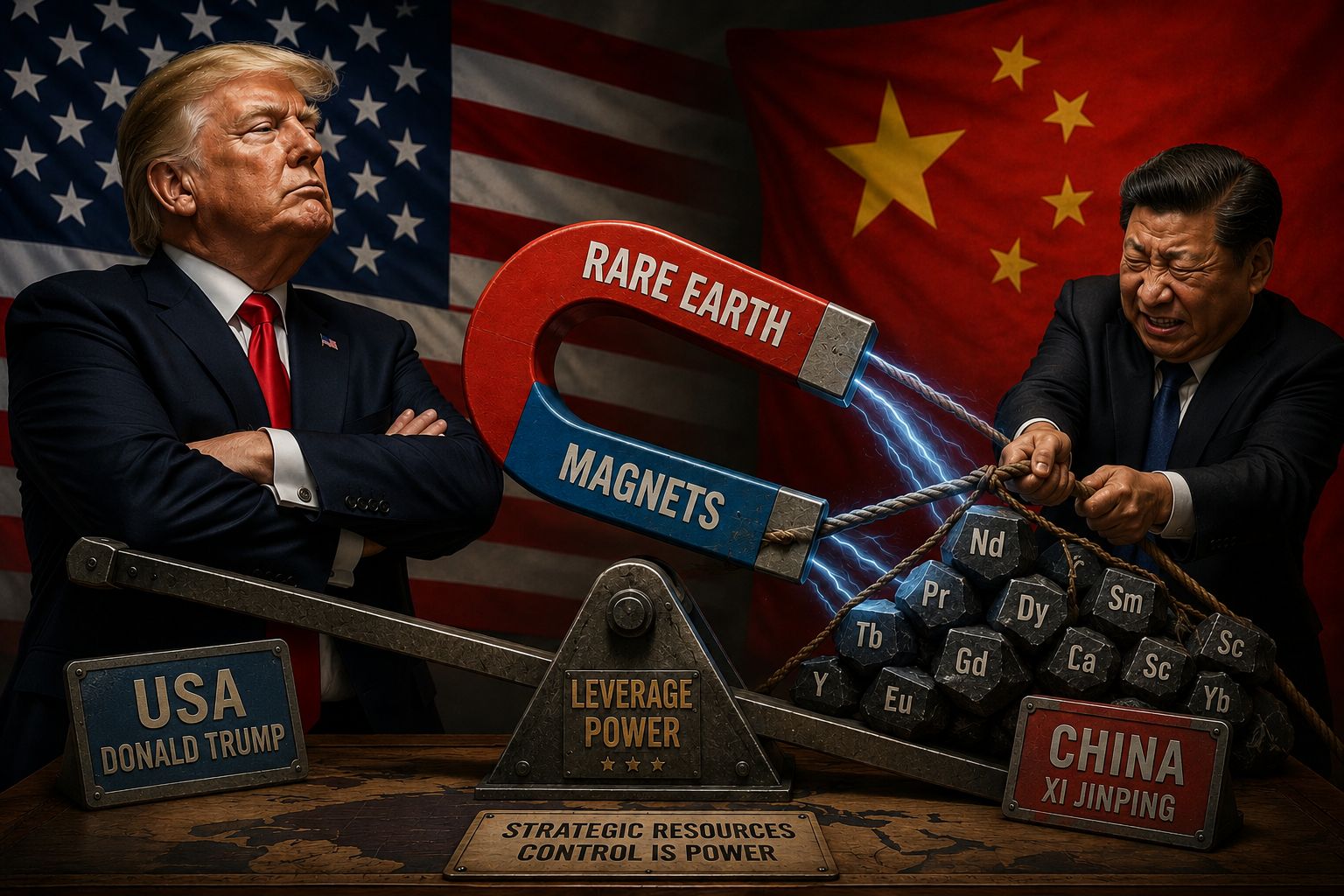
ISE AG - Chatgpt generiert
ISE AG - Lucerne

How much longer will China hold the upper hand?

James Litinsky believes that demand for heavy rare earths used in magnets will decline and that their prices will fall. His statements have caused considerable turmoil in the industry, as Litinsky is the CEO of MP Materials, operator of the largest rare earth mine outside China. The mining company pursues a fully integrated approach and does not intend to stop at raw material extraction. Refining and separation facilities for all rare earth metals are just as much a part of the company’s strategy as its own magnet factory. Thanks to MP Materials, the United States has become the world’s second-largest producer of rare earths. Of the approximately 51,000 tonnes of rare earth concentrate produced in the US in 2025, MP Materials alone supplied nearly 50,700 tonnes. Litinsky’s statements do not diminish the importance of critical minerals in the global balance of power, which is shaped by the rivalry between the US and China, the world’s two largest economies. [1]LINK

Although the gap to China’s dominance in rare earths is narrowing, it remains substantial: according to US data, China produced 270,000 tonnes in 2025 and holds an estimated 70 percent global market share. The main products from Mountain Pass, the California mine operated by MP Materials, are concentrates of the light rare earths neodymium and praseodymium. These are key elements in the extremely powerful permanent magnets used in electric vehicles and wind turbines. Litinsky’s remarks also caused surprise because MP Materials had announced plans to begin producing the heavy rare earths dysprosium and terbium from mid-2026 onward. These are typically added in small quantities to neodymium magnets to improve heat resistance.

Rare Earths in Exchange for Taiwan Concessions

However, the ore at Mountain Pass contains relatively small amounts of heavy rare earths. MP Materials states that it has produced and stockpiled more than 200 tonnes of heavy rare earth oxides (HREO+). Yet in order to supply enough material for its planned magnet factory in Texas, Litinsky must source material from other deposits as well. Here lies the problem: while China dominates light rare earths and Western countries such as the US are slowly beginning to break this dominance, the market for heavy rare earths remains almost entirely under Beijing’s control. In addition, the number of Western competitors vying for the few non-Chinese sources continues to grow.

It will likely take many years before the US and allied nations such as Australia and Brazil can independently produce significant quantities of heavy rare earths. Until then, Beijing holds the stronger position. Trump is well aware of this, as he is scheduled to visit Xi Jinping in Beijing on Thursday and Friday for a state visit. Critical raw materials will play a central role in these talks — and not to the US president’s advantage. Asia analyst David Sacks even considers it possible that Xi could extract concessions on Taiwan from Trump in exchange for raw material supplies.

Trump’s aggressive foreign policy has further exposed dependence on Chinese raw materials. The Iran war has depleted weapons arsenals. In just the first four days of the attacks, the US and Israel together expended over 5,000 units of ammunition, including extremely expensive interceptor missiles used against Iran’s low-cost drones. The US think tank Foreign Policy Research Institute (FPRI) estimates the value of the material fired in the first 100 hours of the war at between USD 10 and 16 billion.

The EU defense sector has also seen rising demand for a wide range of raw materials. The reason is the war in Ukraine and the broader military buildup intended to prepare for a potential Russian attack. The EU can no longer rely on the US as a protective power and NATO ally.

Replenishing Patriot Missiles Is Not a Matter of Money

Reports about empty US Army ammunition stockpiles may be exaggerated, but it can still take up to two years before the US defense industry is able to replenish certain strategically important weapons systems. This applies both to expensive high-tech defense systems such as Patriot and THAAD and to offensive long- and medium-range missiles. According to an FPRI analysis, money is not the problem.

Every warhead, guided missile system, drone, and radar contains small amounts of neodymium, terbium, dysprosium, samarium, or gallium. These account for only a fraction of total costs: in a USD 4.5 million Patriot interceptor missile, these materials represent merely USD 5,000 to 15,000, according to FPRI calculations. The greatest obstacle is access to these specialty metals — and Beijing holds the key, skillfully using it as leverage.

Gallium is another material that lies almost entirely under Chinese control: China accounts for 98 percent of the global market for this semiconductor-critical material. When the US, under Trump’s predecessor Joe Biden, attempted to cripple China’s chip industry, Beijing first responded with export restrictions and later even imposed an export ban on gallium. Germanium and superhard metals such as antimony were also affected. However, the gallium export ban did not hit the US particularly hard. Industry succeeded in switching to suppliers from Japan, Germany, and Canada, leading to a drastic reduction in direct imports from China.

But China escalated further and imposed export restrictions on the heavy rare earths holmium, erbium, thulium, europium, and ytterbium, as well as on technologies related to the mining, processing, and recycling of rare earths. At least Trump and Xi managed to agree on a temporary truce one year ago, although it will expire this November. China does not approve export applications for listed raw materials intended for military use.

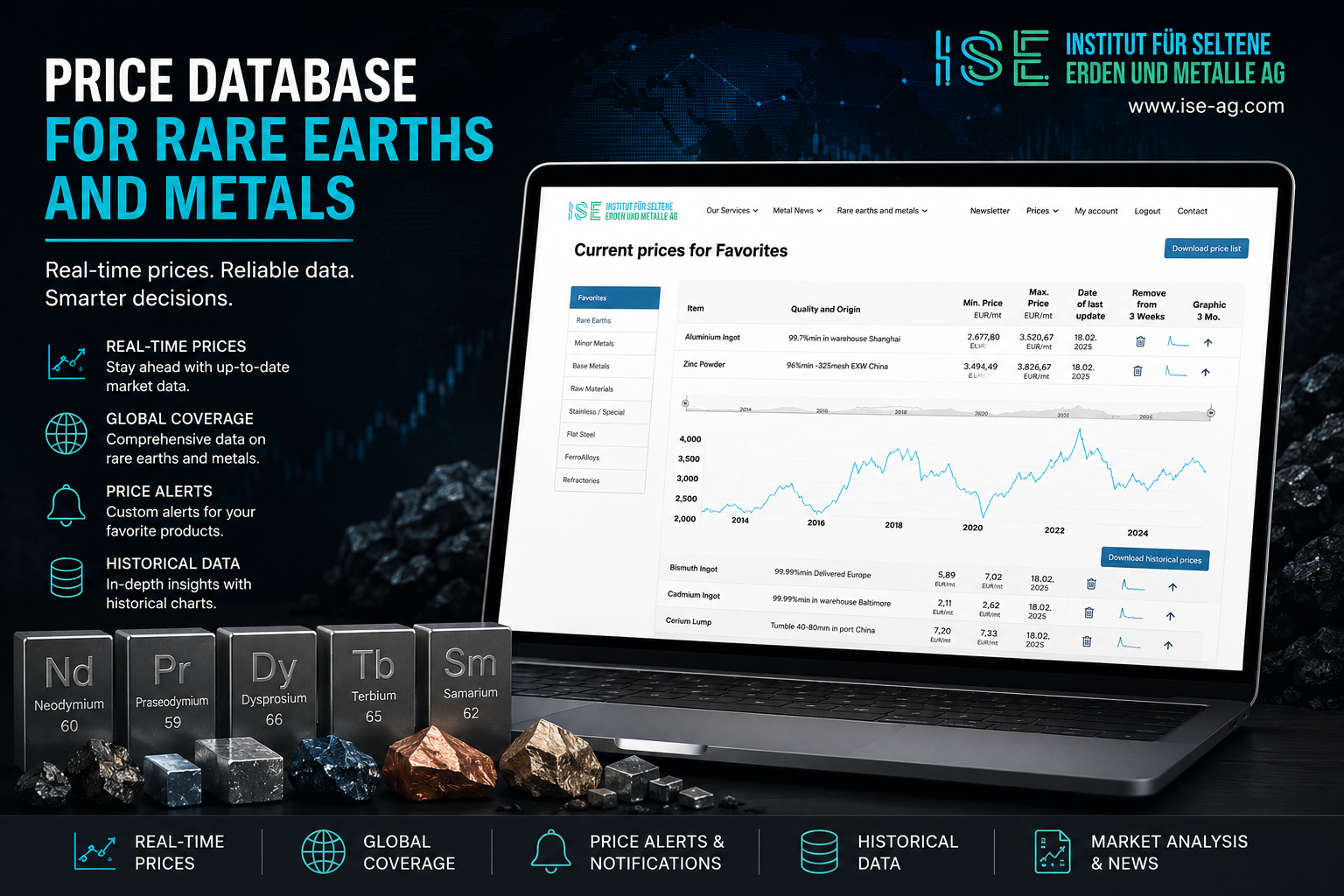
ISE AG Metal Quotes
ISE AG - Metal Quotes

USD 43 Billion for Securing Raw Materials

For America’s reduced weapons arsenal, this poses a major problem. Building reliable supply chains for rare earths and other specialty metals therefore ranks high on Trump’s agenda and is primarily geared toward military needs. Funding for raw-material initiatives has totaled approximately USD 14 billion since the start of Trump’s second term. However, securing raw materials had already gained substantial importance under Joe Biden. Since 2021, the US has invested an estimated USD 43 billion into raw-material-related sectors.

The stockpiling program “Project Vault,” announced in February alone, is worth USD 12 billion. The US Export-Import Bank (Eximbank) is providing USD 10 billion in direct loans, while the remainder is expected to come from the private sector. It is the largest financing package in the bank’s history. Project Vault is intended to shield domestic industry from supply bottlenecks, expand the production and processing of critical raw materials in the US, and fundamentally strengthen the raw materials sector.

Given their importance for a wide range of military equipment, the 15 rare earth elements enjoy the highest priority among the 60 minerals classified as critical by the government. This is also reflected in Project Vault: selected rare earths are given priority in stockpiling.

Gallium is a key element for semiconductors and military equipment. The material has not been produced in the US for four decades. It can be recovered as a byproduct of aluminum and zinc production. The challenge with gallium lies in the small market volume compared to other metals, making economic extraction highly difficult. China’s massive aluminum production enables economically viable gallium recovery there. In September, the US Department of Energy launched its own subsidy program called TRACE-Ga for gallium extraction, worth USD 6 million.

The Department of Energy has also allocated USD 140 million in funding for the construction of a demonstration facility for rare earth production. The aim is to prove the feasibility of a plant for extracting and separating rare earth elements, as well as a refinery. The funding is part of a USD 1 billion financing package for the raw materials sector.

US Government Relies on Market Intervention in the Rare Earth Industry

One of the Trump administration’s most extraordinary measures in raw materials policy is the Pentagon’s investment in MP Materials. Last October, the Pentagon spent USD 400 million to acquire a 15 percent stake in the company. The deal includes a ten-year purchase commitment and a controversial minimum price guarantee of USD 110 per kilogram of neodymium-praseodymium (NdPr) oxide. This means the Pentagon commits to covering the difference should prices fall below the USD 110 threshold.

Price guarantees are intended to protect industrial development from market distortions caused by China, which in the not-too-distant past already destroyed an entire generation of rare earth companies. The industry has therefore long demanded protective mechanisms of this kind. However, there are also critics of such measures.

The challenge lies in providing rare earth producers with investment security without creating new market distortions or trade barriers. Furthermore, not all rare earth companies can count on minimum price guarantees. Washington has moved away from offering them universally, largely due to the strained US budget situation.

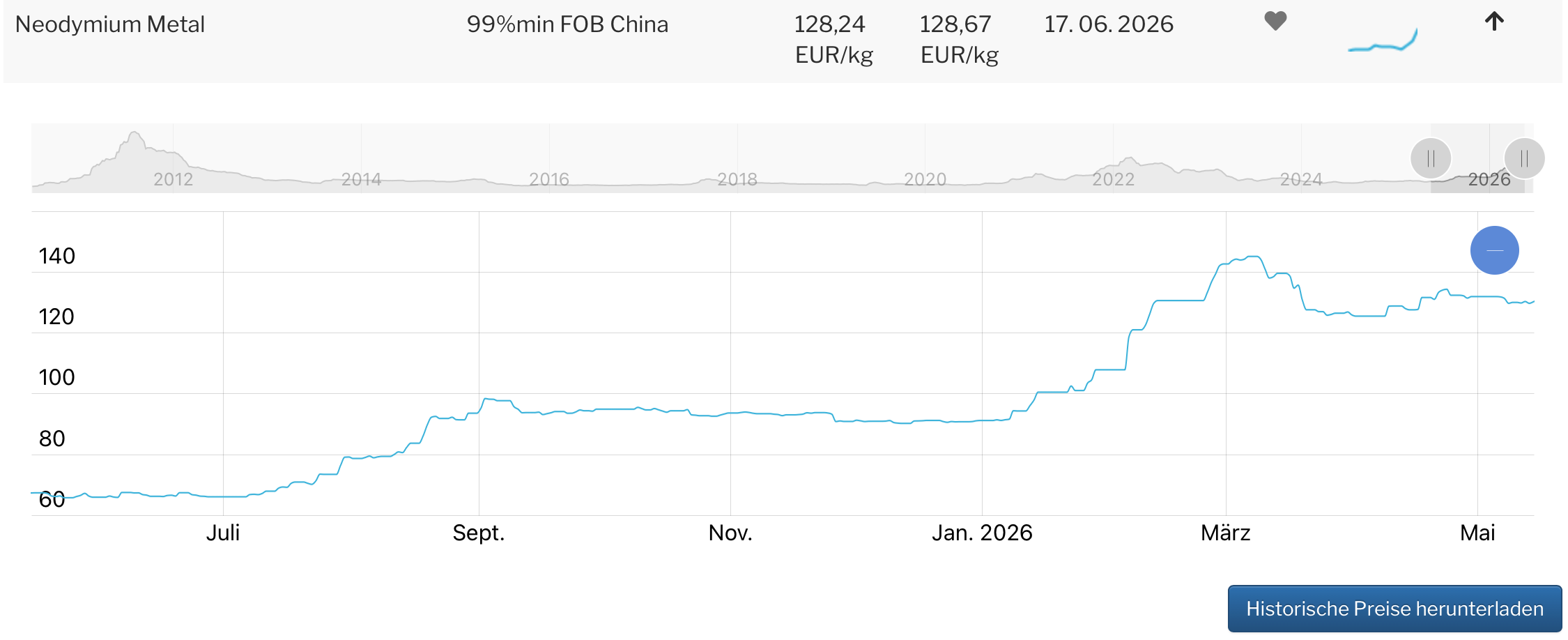
When the Pentagon announced its investment in MP Materials in July 2025, the guaranteed minimum price was nearly twice the market level. Currently, the market price stands at USD 112. Historically, the price of NdPr oxide exceeded the USD 80 mark only once between 2013 and 2020. Since then, the trend has been upward, but prices have generally remained well below USD 110. Exceptions occurred at the start of Russia’s invasion of Ukraine in February 2022 and at the beginning of the Iran war.

Permanent Magnets Without Heavy Rare Earths

MP Materials is also receiving a USD 150 million loan from the Pentagon to expand its heavy rare earth separation facility. Initially, dysprosium and terbium are to be produced there — precisely the two elements that MP Materials’ CEO stated last week could soon become obsolete for magnets. Litinsky emphasized that the company is capable of producing “magnets with the required specifications and with very little or no heavy metal content.”

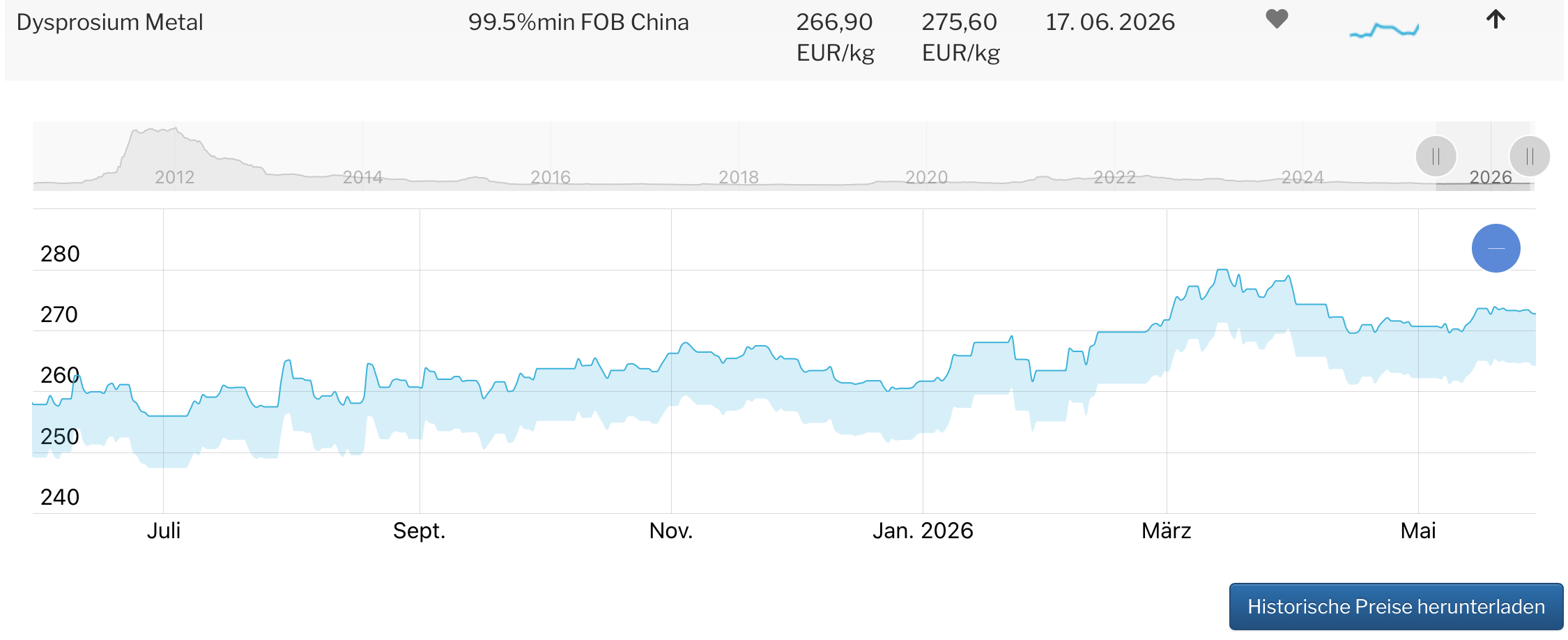
Prices for dysprosium metal have indeed trended downward for several years and currently stand at USD 260. Terbium metal, by contrast, currently trades well above USD 1,000. Its price has risen by roughly one-third since 2020. Some observers doubt that complete substitution of dysprosium and terbium in high-performance permanent magnets is possible. They interpret Litinsky’s remarks as an indication of difficulties in producing these elements. On the other hand, magnet manufacturers have genuinely managed to steadily reduce dysprosium and terbium requirements in magnets in recent years.

BMW demonstrates that powerful electric vehicle motors can function entirely without rare earths. The German automaker drew lessons from the 2010 rare earth crisis and deliberately opted for an alternative technology to protect itself against future geopolitical risks. Despite this, BMW still consumes several hundred kilograms of rare earths annually, as these are used in the many small electric motors operating everything from windshield wipers to power windows.

Full Integration Is the Trend: From Mine to Magnet Factory

MP Materials aims not merely to mine raw materials but to cover the entire value chain: from the mine to processing and separation facilities and ultimately to the magnet factory. The latter is planned for Texas. MP Materials is receiving further financial support from Washington for its construction. The private sector is also participating in financing: Goldman Sachs and JPMorgan Chase intend to contribute USD 1 billion.

The US also has an old ally in the Middle East: Saudi Arabia, which, facing peak oil concerns, is increasingly expanding into the metals sector. In November, MP Materials announced plans, together with the Pentagon and Maaden, the Saudi state mining company, to build a rare earth refinery in the Middle East. Material is expected to come from deposits in Saudi Arabia and other countries. However, these deposits still need to be discovered and developed.

In March, the White House additionally contracted Australian rare earth company Lynas Rare Earths for USD 96 million to supply light and heavy rare earth oxides over the next four years. Here too, a minimum price guarantee of USD 110 for NdPr oxide forms part of the agreement. Lynas Rare Earths, with its processing facility in Malaysia, is the largest processor of rare earths outside China. Recently, Lynas successfully managed to produce dysprosium and terbium.

The US Reaches for Brazilian Rare Earths

Then came the next move in January this year: as part of a USD 1.6 billion debt and equity financing package, the US Department of Commerce announced its investment in USA Rare Earth. The startup, founded in 2019, plans to begin mining rare earths in Texas from 2028 onward. The company also intends to open a magnet factory in Oklahoma later this year.

This deal, however, triggered severe criticism, especially from Democrats. The ties between US Commerce Secretary Howard Lutnick, the financial firm Cantor Fitzgerald, and USA Rare Earth cast a dubious light on the transaction. Doubts also exist regarding the economic viability of the Round Top Mountain deposit. The company itself admitted that ore grades are low compared to other rare earth mining sites. Additional uncertainty stems from the fact that a preliminary feasibility study will not be completed until the end of the year — typically a crucial decision-making tool for mining investors.

In April, USA Rare Earth announced plans to acquire Brazil’s Serra Verde Group for USD 2.8 billion. The US Development Finance Corporation had already pledged financing worth USD 565 million in February. Serra Verde owns the Pela Ema mine in Goiás state, where rare earths have been extracted from ionic adsorption clays since early 2024. Ionic adsorption clays are considered the most important source of heavy rare earths. This is the first deposit of its kind outside Asia.

Brazil possesses the world’s second-largest known rare earth reserves after China, estimated at 21 million tonnes. The potential is enormous, although mining activity remains limited. Thanks to Brazil’s raw material reserves, Trump recently lifted the exorbitant tariffs on Brazilian products. These tariffs had been intended as punishment for the prosecution of former President Jair Bolsonaro by Brazil’s judiciary. During a recent visit to Washington, relations between Trump and Brazil’s labor-friendly President Luiz Inácio Lula da Silva appeared positive.

US and France Plan Joint Magnet Factory

Europe is also involved: at the beginning of April, USA Rare Earth announced plans to invest in the French startup Carester. The company is building a rare earth processing and recycling facility in southern France. The agreement with USA Rare Earth includes the construction of a joint magnet factory in France. France still possesses significant expertise in the processing and separation of rare earths. In the 1980s, the country was one of the global leaders in the sector.

Perhaps things in the EU are not quite as bad as often portrayed by the White House. While Trump is acting decisively, the EU has also remained active. In April, the bloc concluded its 16th raw materials partnership — with the US. Relations therefore remain intact. However, these raw material partnerships have thus far contributed little to improving supplies of critical and strategic raw materials.

At least on paper, the EU has a systematic and long-term strategy. Here too, substantial funding is being allocated to secure industrial access to raw materials. However, the situation is far more complicated given the EU’s structure. Alongside EU-wide funds and programs such as the RESourceEU initiative, the Battery Booster Package, and strategic EU projects, individual member states are also launching their own programs.

In Germany, this takes the form of a EUR 1 billion raw materials fund, while France established the state-backed critical metals fund InfraVia in 2023 with EUR 500 million. Altogether, the EU is investing between EUR 4 and 5 billion in securing critical raw materials — significantly less than the US. Europe is primarily relying on a long-term strategy in which circular economy principles are intended to play a prominent role in securing raw materials.

Whether Trump’s aggressive approach will achieve results faster than the EU strategy focused on sustainability, circular economy, and rule of law — and burdened with many bureaucratic hurdles — remains to be seen. At least visually, the US appears better positioned.

In light of market-intervention measures such as minimum price guarantees — especially in a country strongly shaped by capitalism — the question arises whether the problem is also systemic in nature. Capital naturally flows most readily to where profits can be generated quickly. Industrialization — including the difficult work of developing raw materials at the beginning of the supply chain — requires major investments over long periods.

Institute for Rare Earths and Metals
Arndt Uhlendorff – May 2026

ISE AG, Institut für seltene Erden und Metalle AG

  • Hits: 131

Swiss Standards in Dubai ISE AG Opens New Warehouse Facility in the Dubai Airport Freezone

Dubai / Lucerne, May 2026 – Institut für Seltene Erden und Metalle AG (ISE AG) opened a new warehouse facility in the Dubai Airport Freezone (DAFZ) in February 2026. The facility is operated in cooperation with logistics partner Union Logistic and serves as a strategic hub for customers across the Middle East.

With the new warehouse, ISE AG responds to the growing demand from customers in the region who prefer to store their valuable metals closer to their own operations while still benefiting from the high Swiss standards in security, storage, handling, and documentation.

The Dubai Airport Freezone is one of the leading international logistics and trade hubs in the United Arab Emirates and offers ideal conditions for secure storage operations and efficient global connectivity.

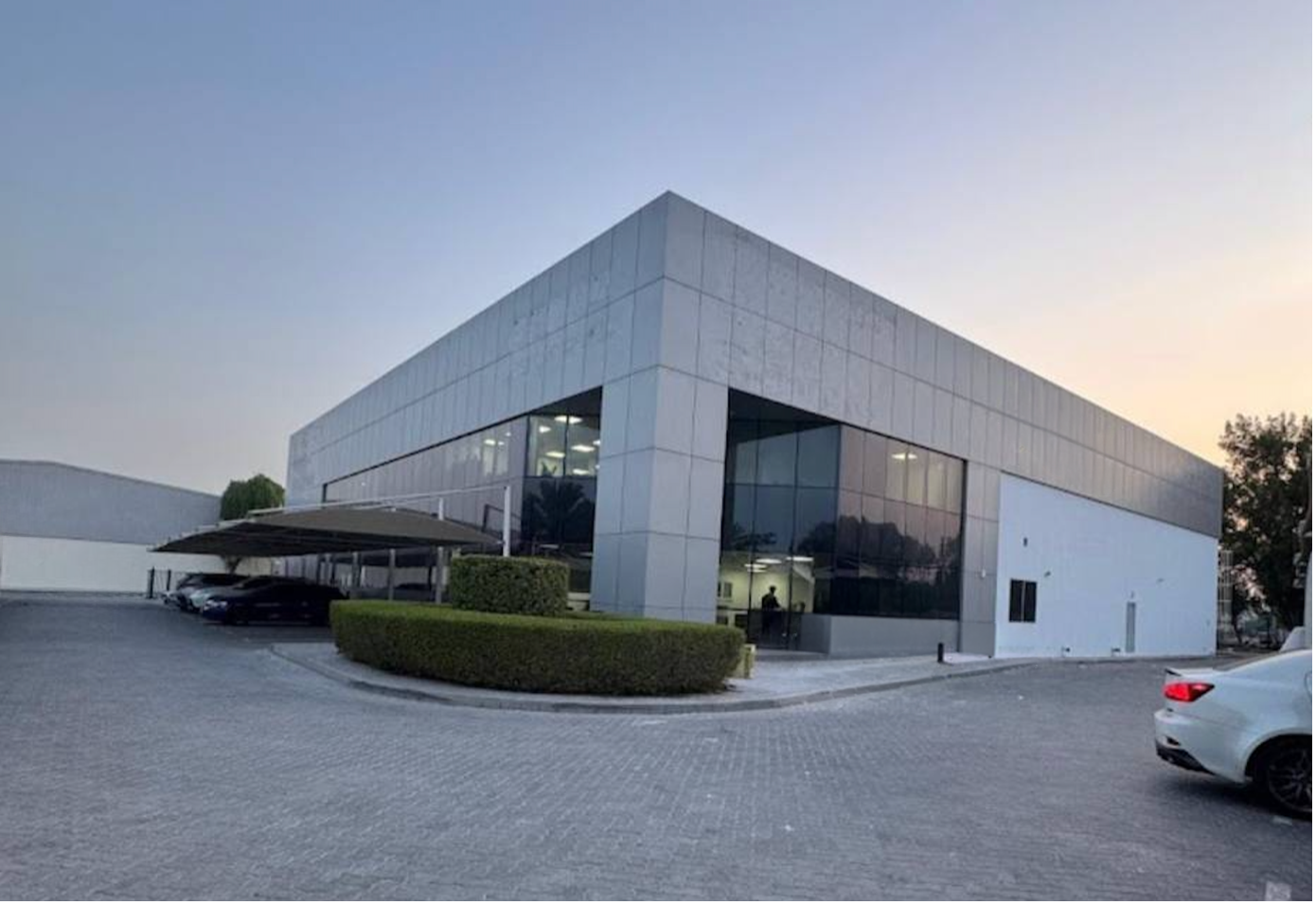
ISE Dubai Storage generatet by ChatGPT 2026

At the Dubai facility, ISE AG offers services including:

  • secure storage of valuable materials,
  • inspections and condition assessments,
  • sample taking,
  • analyses and material evaluations,
  • audits,
  • as well as independent certification and documentation services.

Through warehouse certificates issued by the Swiss-based ISE AG, materials can now be securely stored within the United Arab Emirates while still complying with the independent quality and certification standards of ISE AG.

“Many of our customers in the Middle East are looking for storage solutions closer to their own markets, but without compromising on the high Swiss standards for security, storage, handling, and documentation. With our new Dubai facility, we are combining exactly these requirements,” said the management of ISE AG.

The services of refilling and refurbishing will continue to be carried out exclusively at the company’s Embrach facility in Switzerland.

By expanding into Dubai, ISE AG continues to strengthen its international infrastructure and further establishes its position as an independent provider of premium storage, inspection, and certification services for strategic materials and valuable metals.

About Institut für Seltene Erden und Metalle AG (ISE AG)

Institut für Seltene Erden und Metalle AG (ISE AG), headquartered in Lucerne, Switzerland, is an independent company specializing in storage, inspection, sample taking, analysis, evaluation, and certification services for strategic materials and valuable metals. ISE AG supports customers worldwide with independent and neutral services throughout the storage and supply chain.

ISE AG, Institut für seltene Erden und Metalle AG, Swiss certified warehouse Dubai, precious metals storage UAE, strategic metals warehousing, independent inspection Dubai, Dubai Airport Freezone storage

  • Hits: 118

Rare Earths: Myanmar is China’s Achilles’ Heel — and Trump Has It in His Sights

In mid-March, India’s anti-terror police arrested U.S. citizen Matthew VanDyke along with six Ukrainians. Indian authorities accuse the men of illegally entering Myanmar via India and being involved in the import of large quantities of drones from Europe. The crucial tip reportedly came from Russia.

This is not the first time suspected mercenaries have been detained in India over activities linked to Myanmar. As early as 2024, police in the border state of Mizoram apprehended a high-ranking former British Army officer carrying a significant amount of live ammunition. Mizoram’s Chief Minister, Pu Lalduhoma, subsequently stated publicly that numerous Western mercenaries use the northeastern state as a transit route into neighboring Myanmar, which is ravaged by civil war. Notably, many of them are Ukrainians.

While the world is closely watching the conflict in Iran, another geopolitical powder keg is escalating in its shadow: Myanmar. Although the country has no significant oil reserves, it has nonetheless attracted the attention of Donald Trump. The U.S. president is likely interested in another resource found in the former British colony: rare earth elements.

Myanmar as the Largest Source of Dysprosium and Terbium

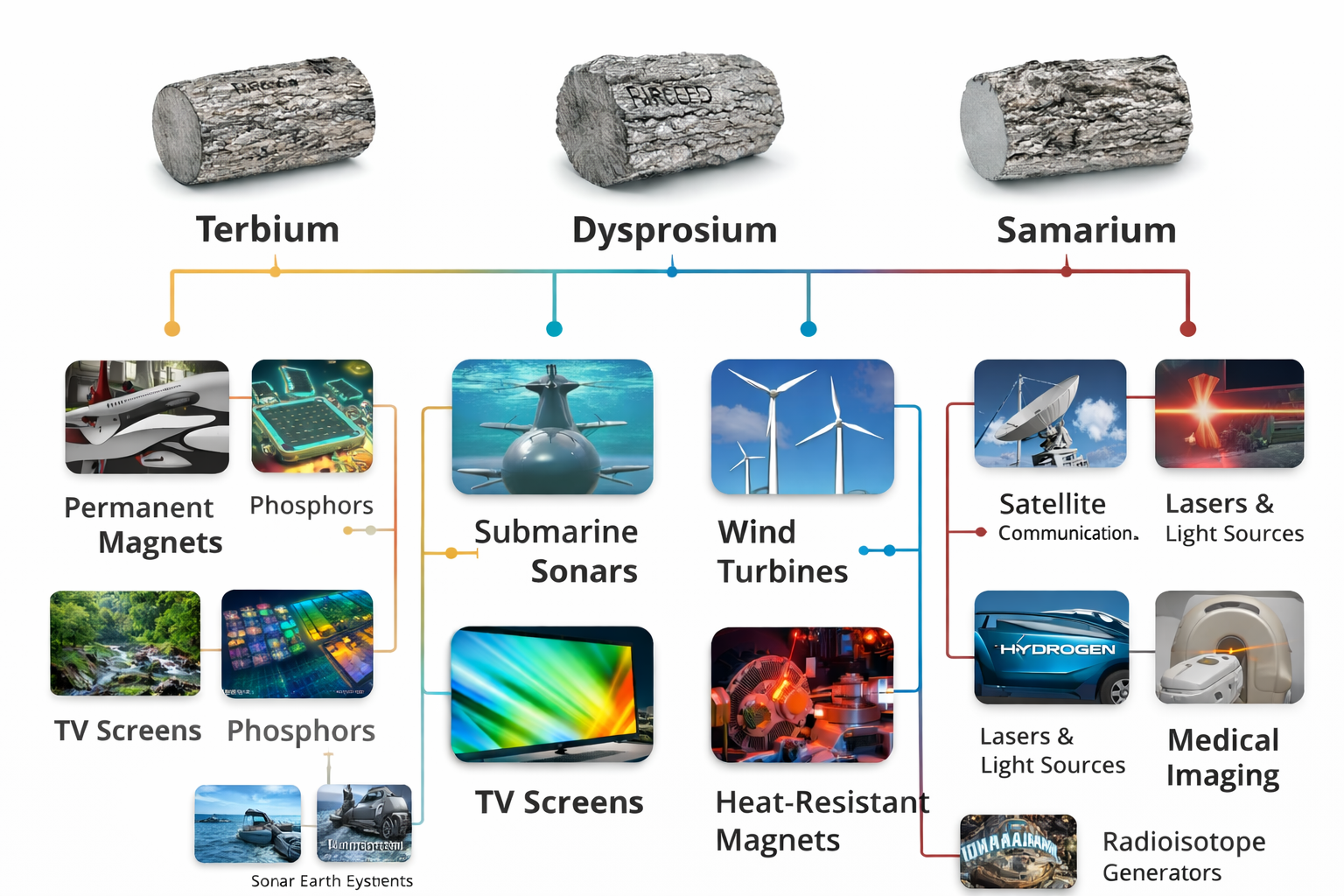
China is the global leader in the smelting and separation of rare earth elements, which is why the world is almost entirely dependent on China for these strategic raw materials and their downstream products. However, Myanmar also plays a crucial role, as China relies on the country for the supply of raw materials. This is especially true for dysprosium and terbium—both heavy rare earth elements and essential components for heat-resistant permanent magnets. Unlike light rare earths such as cerium or lanthanum, dysprosium and terbium are genuinely scarce.

Source: Institut für seltene Erden und Metalle AG

The global market for terbium and dysprosium is relatively small—estimated at only a few hundred tons. However, these elements are essential in key technologies: in permanent magnets, they ensure that magnetic strength is retained even at high temperatures. Terbium is also used in semiconductors, submarine sonar systems, and advanced weapons systems. In phosphors for TV screens, computer monitors, and smartphones, it provides a vivid green color.

Source: Institut für seltene Erden und Metalle AG

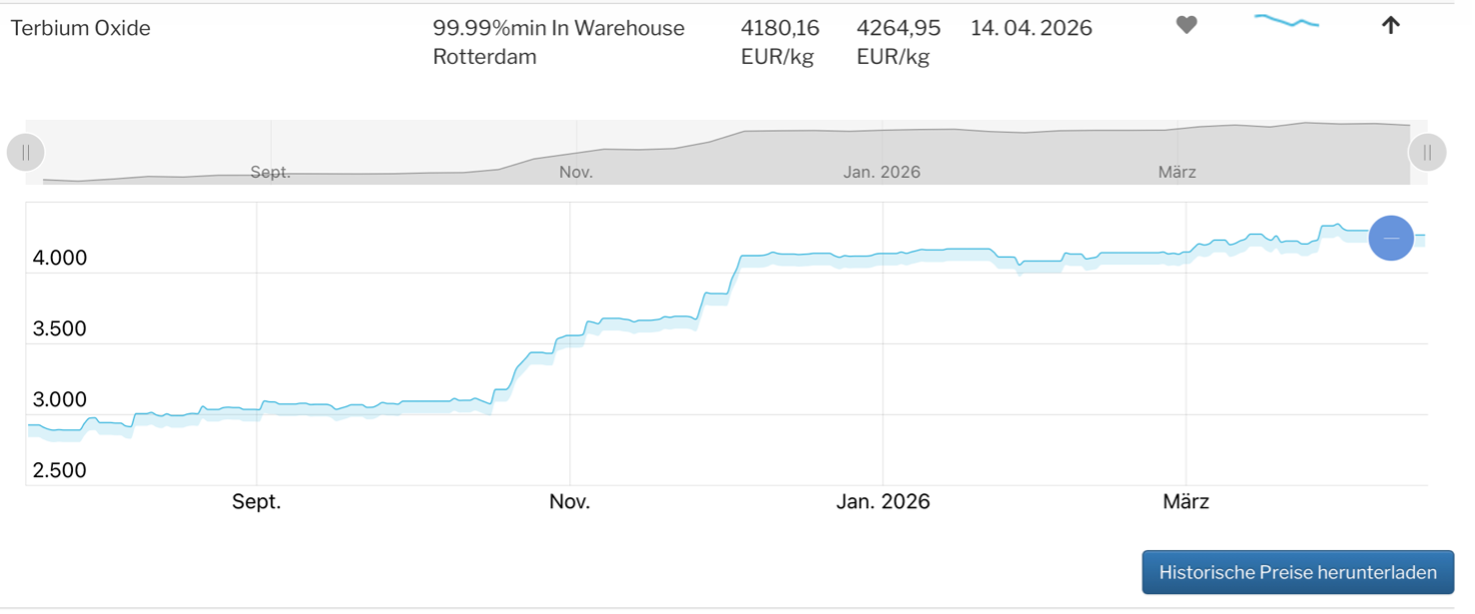
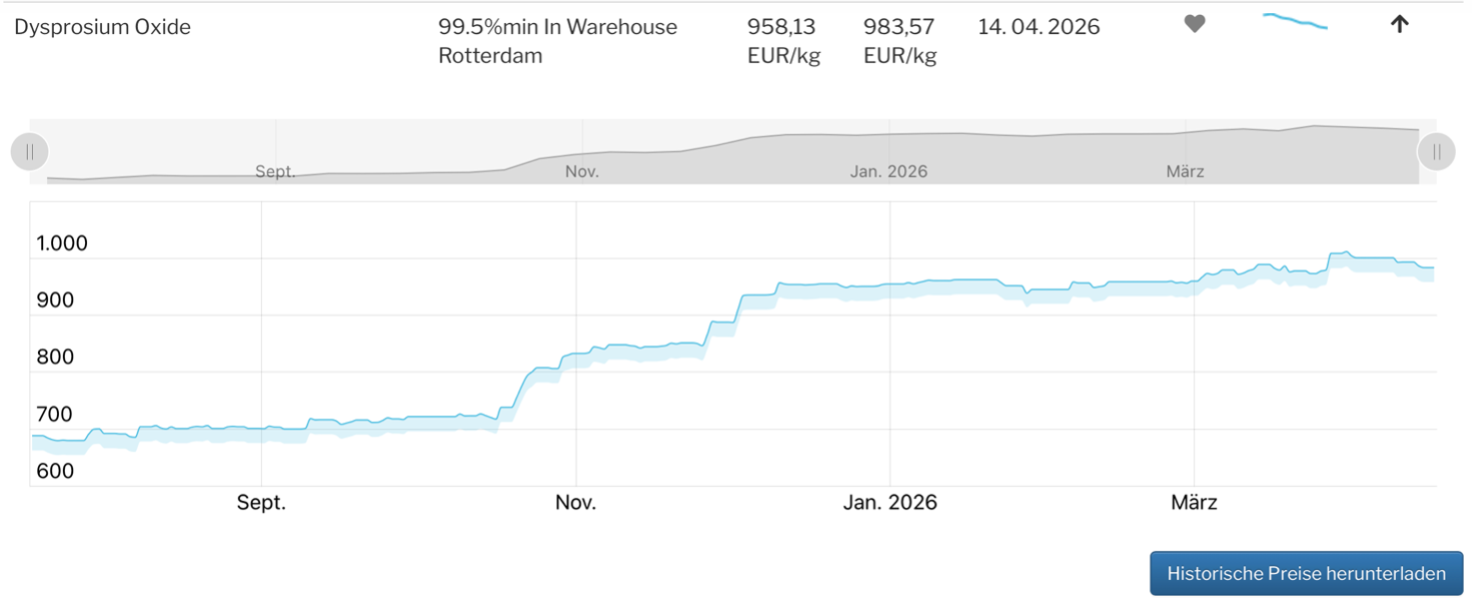
In 2023, China mined 255,000 tons of rare earth oxide equivalents (REO), accounting for nearly three-quarters of global production. However, these mixed rare earth oxides primarily consist of cerium and lanthanum—two elements that are abundant and inexpensive. As a result, one kilogram of lanthanum can be purchased for as little as €0.80. Heavy rare earth elements, by contrast, occur in much smaller proportions and are therefore significantly more expensive. Over the past twelve months, the price for one kilogram of terbium oxide (99.99% EXW EU) ranged between €2,840 and €4,330, while dysprosium (99.5% EXW EU) traded between €650 and €1,010 per kilogram.

China Outsources Environmental Problems

An indicator of the production volume of the more valuable heavy rare earth elements is the mining of ion-adsorption clays. These contain significantly higher concentrations than bastnäsite, monazite, and xenotime—the most commonly mined rare earth minerals. China therefore distinguishes between the extraction of light rare earth minerals and ion-adsorption clays. According to China’s Ministry of Industry, 19,150 tons of the latter were mined in 2023.

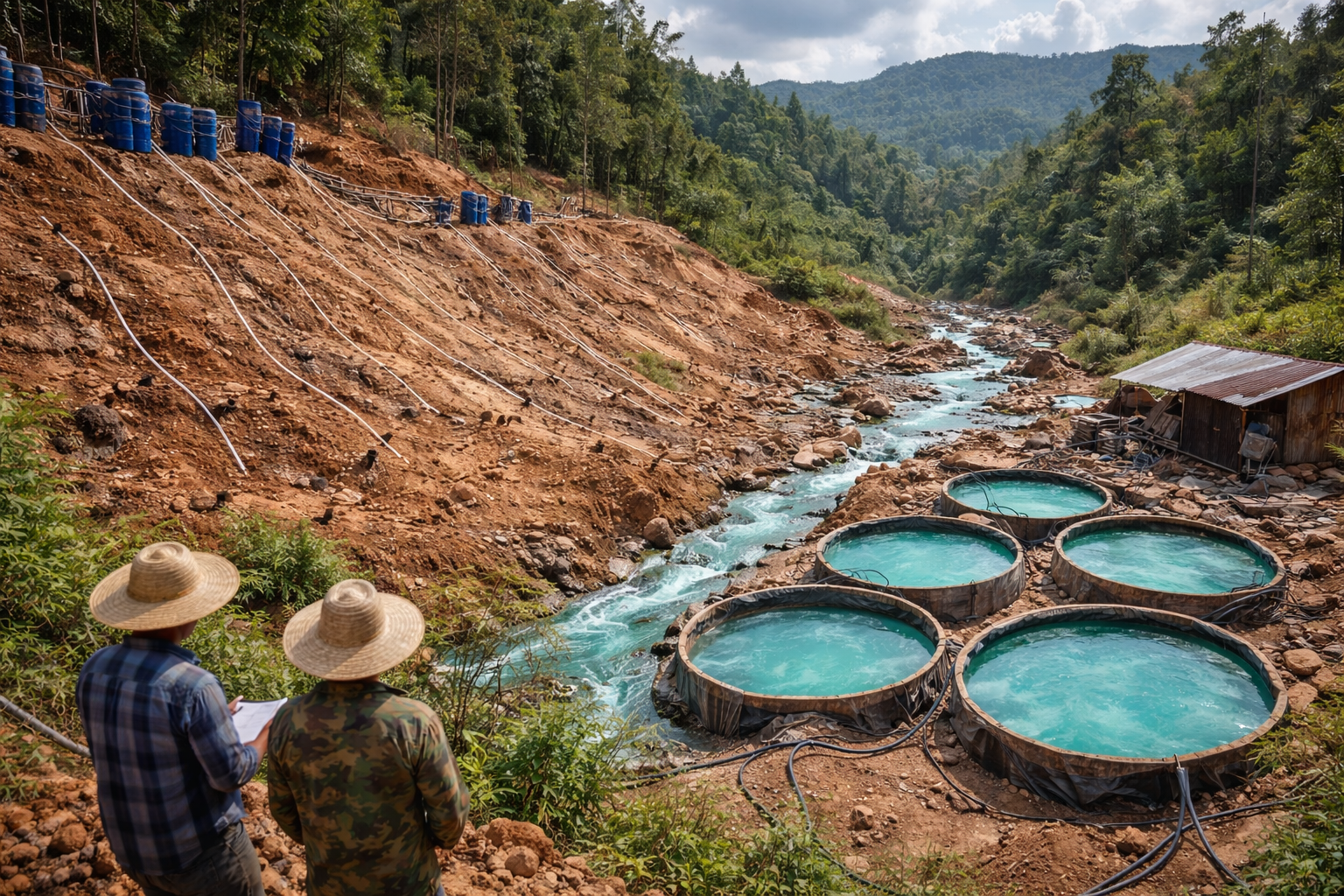
For a long time, China was able to meet its demand from its own deposits in the south. These deposits are not mined using conventional methods; instead, the material is extracted through in-situ leaching. This process involves first clearing entire hilltops of vegetation, then drilling holes into the slopes. A leaching solution—usually ammonium sulfate—is injected into these boreholes to dissolve the metals. At the base of the hill, the turquoise-blue solution that seeps through is collected in round basins for precipitation. The resulting material is then processed in smelting furnaces to produce a mixed oxide.

Although this method is less invasive than conventional open-pit mining, it poses significant environmental risks, particularly through contamination of soil and water with heavy metals such as arsenic, lead, and cadmium. As China’s domestic deposits became depleted and the government introduced stricter environmental regulations in response to increasingly evident negative impacts, mining activities gradually shifted to Myanmar from around 2010 onward. There, environmental regulations are weak and labor is inexpensive.

According to Chinese customs data, more than half of China’s rare earth imports currently come from its neighboring country. From Myanmar, China imports exclusively ion-adsorption clays—that is, heavy rare earth elements. In 2023, import volumes reached 41,700 tons, more than double China’s domestic production in the same year. According to an analysis by the Institute for Strategy and Policy–Myanmar, a Thai think tank, imports from Myanmar accounted for as much as two-thirds between 2017 and 2024.

Trump Considers Deal with Resistance Groups

This strategic vulnerability has not gone unnoticed in Washington. In late July 2025, Reuters reported that the U.S. government was exploring, in talks, ways to gain access to Myanmar’s rare earths and potentially cut China off from this key source, either partially or entirely. Could the activities of mercenaries such as U.S. citizen VanDyke and his Ukrainian associates—arrested in India—be connected to this?

Since the military coup in 2021, Myanmar has been engulfed in civil war. The junta, supported by China and Russia, overthrew the elected government of Nobel Peace Prize laureate Aung San Suu Kyi, ending a decade of tentative opening and democratization. Since then, the country ranks second to last in the global democracy index—behind even North Korea.

The junta now effectively controls only the regions of Yangon, Ayeyarwady, and the capital Naypyidaw. The rest of the country is affected by armed conflict involving more than 20 different groups, fighting with or against the military regime—and sometimes among themselves. The junta is largely isolated internationally. Russia is considered its most important ally and arms supplier, which may explain the increased presence of Ukrainian nationals.

China is also a key partner of the military junta. Myanmar plays a strategically important role in China’s Belt and Road Initiative. A central element is the China–Myanmar Economic Corridor, which provides China with the shortest route to the Indian Ocean. Equally important is the China–Myanmar pipeline, through which China imports oil and gas while bypassing the Strait of Malacca. Beijing has therefore adopted a pragmatic stance in the conflict—seeking not to endanger the pipeline while also maintaining access to Myanmar’s rare earth resources.

Between 2021 and 2024, rare earths worth approximately USD 3.6 billion were exported to China. The peak occurred in 2023, with exports totaling around USD 1.4 billion. Some observers suspect that China has been stockpiling these valuable metals. At that time, mining operations—concentrated in Kachin State and parts of Shan State along the Chinese border—were still largely controlled by the military junta or militias loyal to it.

Heavy Rare Earths Drive Conflict Dynamics

In October of last year, the balance of power shifted. The armed wing of the Kachin Independence Organization seized control of the entire mining region. The group now controls a significant share of global production of heavy rare earths. In the short term, this led to a shortage of terbium and dysprosium, nearly doubling their prices. China was forced to continue doing business with the resistance militias. Whether controlled by the military junta or ethnic groups, rare earth mining in Myanmar is linked to human rights abuses, and revenues from the sector are a major source of funding for the warring parties. This further fuels the civil war, destabilizing the entire region—including northeastern India, Laos, and northern Thailand.

The role of heavy rare earths in Myanmar’s conflict is reminiscent of Central Africa, where the extraction of tantalum, tin, tungsten, and gold in the border region between the Democratic Republic of the Congo, Rwanda, Burundi, and Uganda finances armed conflicts. However, while these so-called “3T” minerals are classified as conflict minerals and their direct import into the U.S. and EU is restricted, this is not the case for terbium and dysprosium. Although China is currently the sole buyer of Myanmar’s rare earth ores, a potential U.S. deal with armed groups could serve as leverage to improve mining conditions.

Given the widespread use of permanent magnets containing terbium and dysprosium, the question arises whether these metals should also be classified as conflict minerals. They are found in nearly all devices with electric motors—from washing machines and electronic toys to robots, fighter jets, and wind turbines.

Illegal mining activities have expanded rapidly since the 2021 coup. Using satellite imagery, the U.S. think tank Stimson Center has identified at least 549 irregular rare earth mining sites. Human rights organizations have raised alarms. According to Global Witness, there are reports of child labor in mining operations. The severe environmental pollution caused by illegal mining is also spilling over into neighboring countries. The Sai and Kok rivers flow into Thailand, where communities dependent on fishing and agriculture are already heavily affected. Their livelihoods are threatened by heavy metal contamination linked to rare earth and gold mining in Myanmar. Illegal mining is also spreading into Laos, where Chinese companies in particular are targeting rare earths and gold.

First Processing Capacities Outside China

Mining and processing of rare earths in China are tightly regulated by government production quotas. Recently, Beijing has significantly increased these quotas, lowering raw material prices and benefiting downstream industries—while rare earth producers are facing losses.

Rare earths from Myanmar are processed in China by the China Rare Earth Group (CREG), which now operates the country’s only smelter for heavy rare earths after acquiring facilities from Xiamen Tungsten Group and Guangdong Rare Earth Industry Group. Outside China, there are still no significant processing and separation capacities for heavy rare earths.

Initial steps in this direction are being taken by the Australian company Lynas Rare Earths. By mid-2025, its plant in Malaysia is reported to have successfully produced dysprosium and terbium oxides. In March of this year, the company also produced samarium oxide—a key material for military applications. Lynas is thus the first company outside China to produce heavy rare earths, although it has not disclosed production volumes.

Over the next two years, Lynas plans to expand its product range to include gadolinium (used as a contrast agent in MRI imaging), yttrium (for color displays, lasers, and high-temperature alloys), and lutetium (for cancer therapies and high-performance materials). Production will be supported by the expansion of its Malaysian facility, which is expected to reach an annual processing capacity of up to 5,000 tons of raw material. This material is sourced from Lynas’s Mount Weld mine in Australia, with plans to develop additional sources such as ion-adsorption clays in Malaysia.

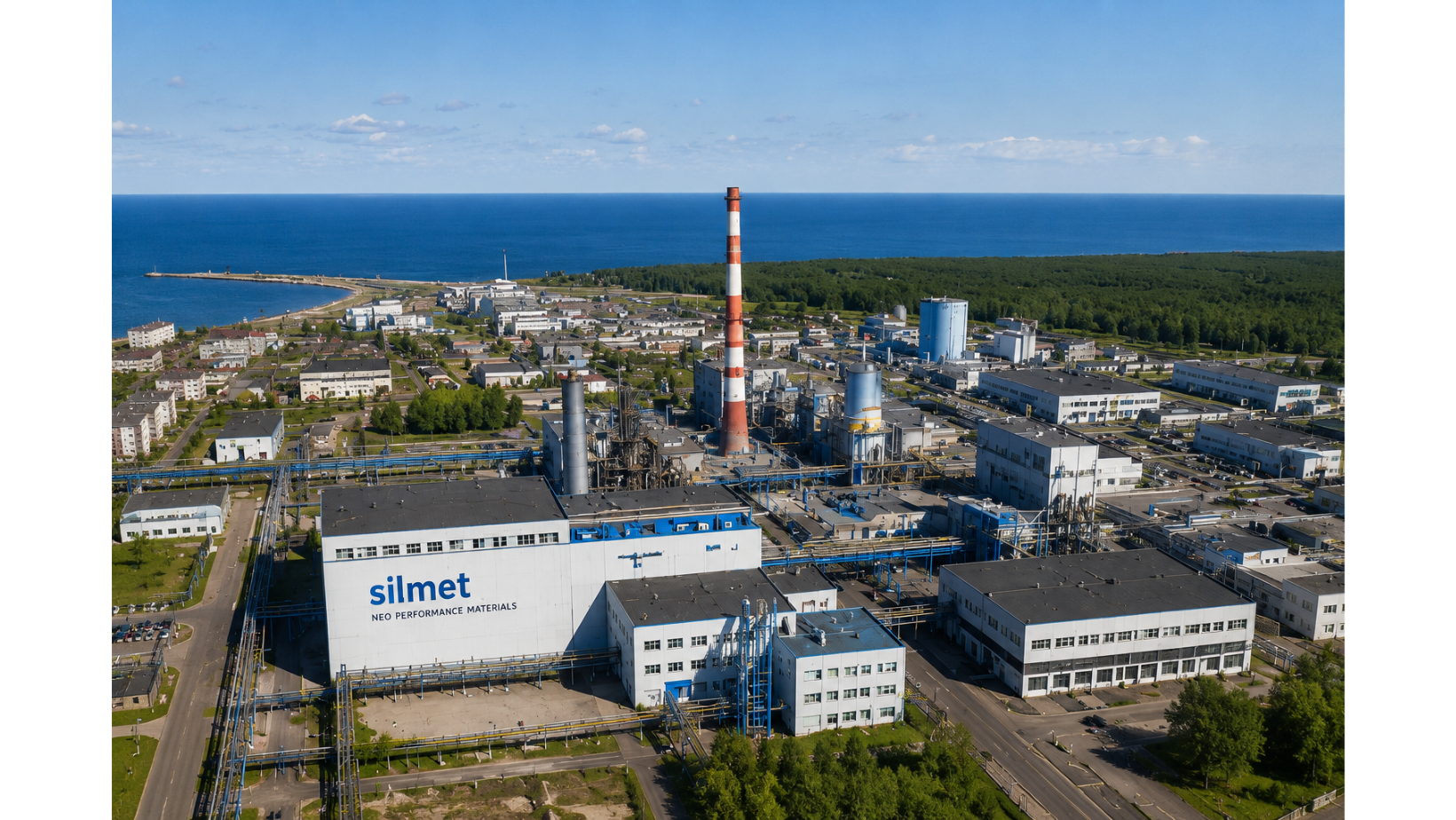
The Canadian company Neo Performance Materials is also entering the heavy rare earth space. On Friday, it announced that it had produced its first batch of dysprosium and terbium at its Silmet facility in Estonia. Neo has signed a supply agreement with the U.S.-based company Energy Fuels Resources for mixed rare earth carbonate feedstock, with the first delivery made in July 2021.

Radioactive Waste Burdens Native American Communities

Energy Fuels operates the only currently active uranium processing facility in the United States, located in Utah. In recent years, the company has also processed rare earths from monazite mined in Georgia by the chemical company Chemours. However, monazite is rich in radioactive thorium, which is generated as a byproduct during processing. These residues are weakly radioactive but long-lived, making their storage costly and associated with environmental and health risks.

Dependence on China for heavy rare earths is unlikely to change significantly in the near future—even if Trump were to strike the highly unlikely deal with Myanmar’s militias. It will take several years to build sufficient processing capacity in Malaysia, the United States, and Europe, and for these facilities outside China to prove economically viable. And even then, the issue of radioactive waste remains—one that particularly affects Native American communities in Utah, whose reservations border Energy Fuels’ White Mesa Mill refinery.

ISE AG – April 2026
Arndt Uhlendorff

ISE AG, Institut für seltene Erden und Metalle AG, Myanmar, China, United States, Trump, Mining, Environment, Civil war, Kachin, Raw materials, Exports, Imports, Magnet industry, High-tech, Defense, Supply chains

  • Hits: 132

The EU and Electromobility: An unfinished drama

**Image protected by ISE AG – Lucerne**

Europe’s indecisiveness on electromobility does not give its automotive industry any competitive advantage. What truly matters is access to raw materials—on which the energy transition equally depends. Control over these resources still lies far away: in China.

The global pioneer in electromobility is, of all countries, one that relies heavily on oil and gas revenues: Norway. But this is not the only peculiarity in automotive policy. In 2023, the EU effectively decided to phase out internal combustion engine vehicles by 2035—only to partially reverse course 19 months later under pressure from the automotive industry, together with Germany, Italy, and several Eastern European member states.

This is striking because maintaining parallel combustion and electric platforms increases costs for manufacturers. That hardly constitutes a competitive advantage over Chinese competitors. Moreover, the political U-turn undermines the predictable regulatory framework that industry and investors require for planning certainty. This is especially true for the automotive industry, which operates on long development cycles of up to 15 years.

But a more fundamental question arises: Is a one-hundred-percent transition to electromobility even possible? Theoretically yes, according to artificial intelligence. In practice, however, the answer currently appears rather negative—especially when considering the supply of necessary raw materials and clean electricity.

Toothless EU Raw Materials Policy

At the beginning of February, the European Court of Auditors published a report examining the EU’s raw materials policy. In 2023, the EU adopted the Critical Raw Materials Act outlining numerous measures intended to reduce its overwhelming dependence on China and a few other countries for materials such as lithium, cobalt, nickel, and rare earth elements. “Toothless and lacking a coherent plan” was the damning verdict of the auditors regarding Europe’s raw materials strategy.

The World Bank forecasts that the green transition will increase raw material demand fivefold by 2050. Based on 2020 levels, the European Commission estimates that demand for lithium will increase eighteenfold by 2030, while demand for cobalt will increase fivefold. Yet three-quarters of the EU’s raw material needs are imported.

https://ise-ag.swiss/index.php/en/gallium-en

Heavy Losses Due to Shortages of Rare Earths

Nevertheless, governments have failed to materially back up their ambitious climate targets. If China chooses to do so, it can simply throttle European industry—as demonstrated by export restrictions on rare earths (permanent magnets), gallium and germanium (used in computer chips) over the past two years.

Thomas Krümmer, a rare earth expert and author of the “Rare Earths Observer,” estimates that the direct and indirect economic losses resulting from China’s rare earth restrictions amount to at least ten percent of global economic output. This has been known since 2010, when China first tightened the screws and triggered the first rare earth crisis—an event that led to the founding of the Institute for Rare Earths and Metals.

https://ise-ag.swiss/index.php/en/germanium-en

Up to 240 Terawatt Hours More Electricity Required

What about the supply of clean electricity? In 2024, 260 million cars were on EU roads. Only three percent—about eight million vehicles—were purely electric. They consume around 16 terawatt hours (TWh) of electricity per year. Total electricity consumption in the EU-27 amounted to 2,732 TWh, of which about 1,000 TWh (40 percent) came from renewable energy sources.

A study by Fraunhofer ISI and the auditing firm PwC forecasts that by 2040, the share of electric vehicles will rise to 30 percent, requiring approximately 240 TWh of additional electricity. To generate this additional power from clean sources, about 120 to 160 gigawatts (GW) of new wind and solar capacity would need to be installed.

However, transport is not the only sector being electrified. Energy-intensive industries, residential heating systems (heat pumps), and data centers are also significantly increasing electricity demand. Overall consumption could rise by 30 to 50 percent—equivalent to an additional 800 to 1,350 TWh. To cover this entirely with renewables, between 470 and 790 GW of new renewable generation capacity would have to be installed over the next 15 years.

The Bottleneck: Grid Expansion

In 2025, according to initial estimates, 85 GW of new wind and solar capacity were added in the EU. If expansion continues at this pace, the EU could realistically achieve its targets.

But solar panels and wind turbines are not the only prerequisites for the green transition. Expanding grid infrastructure, storage capacity, and implementing intelligent control systems are essential to ensure that green electricity reaches where it is required and to guarantee supply security. The expansion of cross-border interconnections also plays a crucial role. The large-scale blackout in Spain—a frontrunner in renewable electricity generation—illustrates the severe consequences of delayed domestic and cross-border grid expansion.

More Raw Material Demand for Power Infrastructure

The investments required for electricity grids in the EU amount to €1.1 trillion by 2040, equivalent to €74 billion per year. Translated into material terms, this means vast quantities of steel and thousands of kilometers of copper cables. The massive expansion of wind turbines and solar panels requires large quantities of critical raw materials such as rare earths, silicon, indium, and selenium, while battery storage depends on lithium, graphite, cobalt, and nickel.

The argument thus comes full circle, returning to the EU’s dependency on raw materials and the auditors’ damning conclusion: “No solid strategy.” It therefore remains unclear how the EU intends to accomplish not only the transport transition but also the broader energy transition without securing the necessary raw materials. Perhaps the wavering course on the combustion engine phase-out reflects a quiet suspicion within political circles that the EU may no longer be able to catch up in the global race for critical minerals.

February 2026 – Arndt Uhlendorff
for the Institute for Rare Earths and Metals AG

Institut für seltene Erden und Metalle AG, Critical raw materials, ISE AG Switzerland, Energy transition, Rare earth elements, Electric mobility, EU industrial policy, 2035 combustion engine ban, Raw material dependency, Lithium supply, Cobalt demand, Nickel market, China supply dominance, Electricity demand, Renewable energy expansion, Grid infrastructure, Battery storage, Supply chain risks, Investment certainty, Industrial competitiveness, Wind and solar capacity, Energy infrastructure investment, Metall Quotes

  • Hits: 500