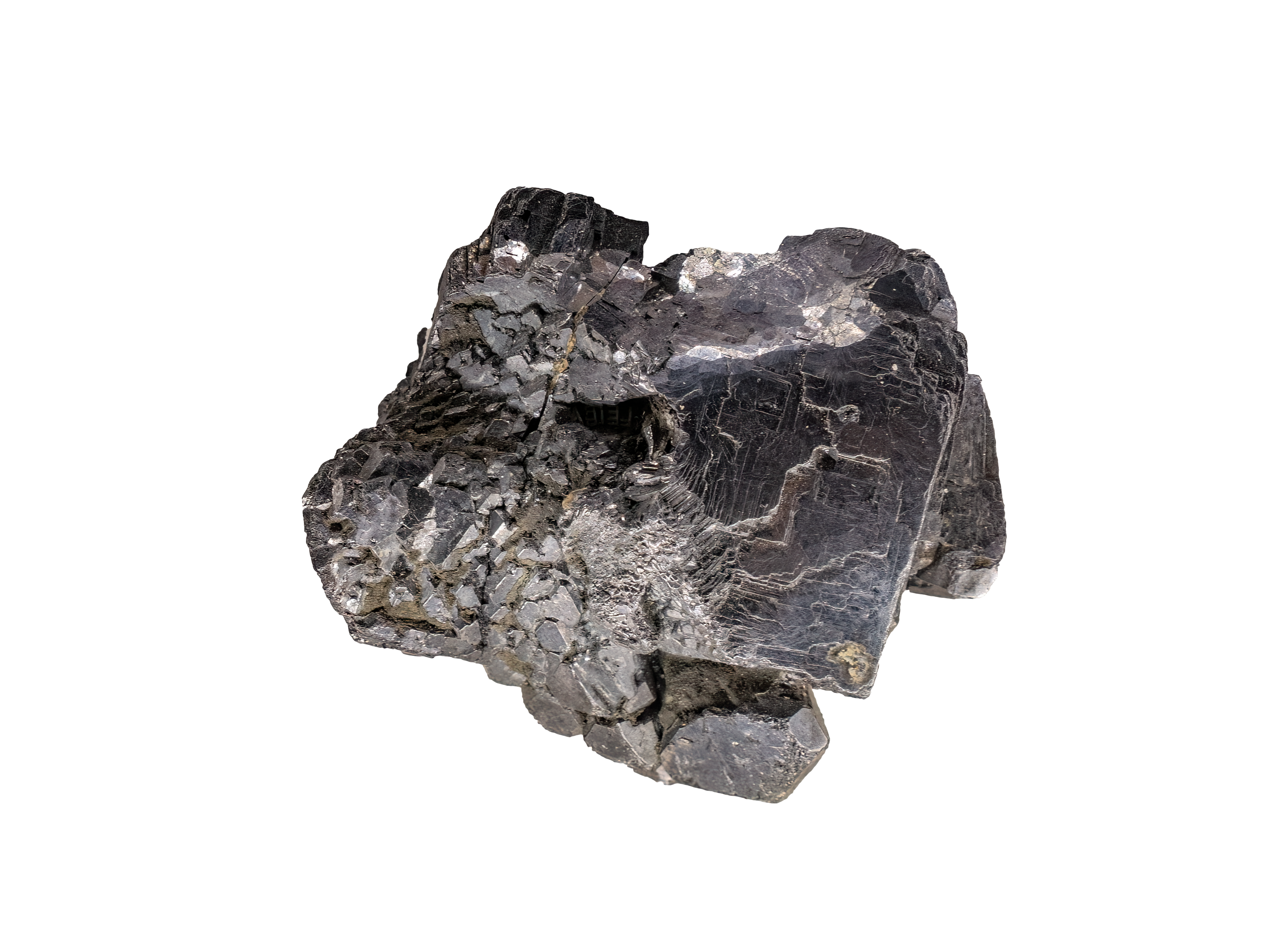
Lead

Pb • Atomic Number 82

Lead

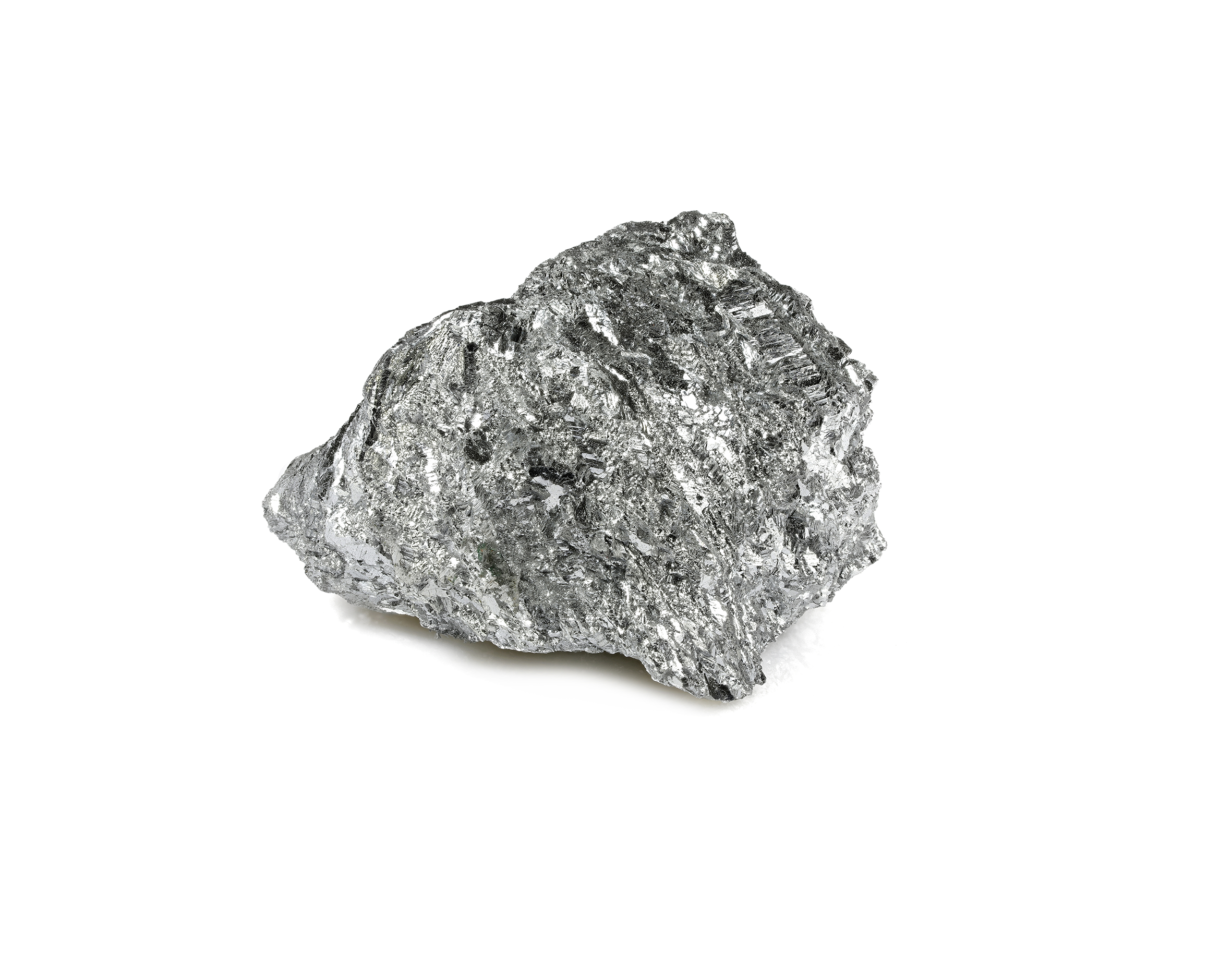
Lead is a bluish-white heavy metal that tarnishes to gray when exposed to air. It is soft, easily deformable, and has a relatively low melting point. It is one of the densest stable elements. The chemical symbol Pb comes from the Latin word "Plumbum."

The main application of lead is in automotive batteries (lead-acid batteries). Lead also plays a role in radiation shielding and special alloys.

Due to its toxicity, lead is increasingly being replaced by other materials.

Nearly half of the global lead supply is mined in China. Other important producing countries include Australia, the USA, and Peru.

The largest lead mine in the world is the Cannington Mine in Australia, owned by the mining company South32.

The largest lead producer in the world is the Chinese company China Minmetals Corporation (Minmetals).

  • History

    Lead has been known since prehistoric times because it can be easily extracted from ores. The earliest findings come from present-day Turkey, where lead was used for jewelry and weights.

    The Romans were the first to use lead on a large scale. They built water pipes with the metal and used it in tableware and jewelry. They also added lead sugar (lead(II) acetate) to sweeten wine. Due to its widespread use, it likely caused extensive health damage among the population.

    In the Middle Ages, lead played an important role in alchemy. Alchemists tried to turn lead into gold.

    With industrialization, the mass use of lead began. The raw material was used in printing, ammunition, the glass industry, batteries, and as paint (white lead).

    In the 20th century, lead was widely used as a fuel additive in gasoline. Tetraethyl lead acted as an anti-knock agent and prevented so-called engine knocking, an uncontrolled combustion of fuel in gasoline engines that damages engine parts and increases fuel consumption. The toxicity of leaded gasoline was known when its anti-knock effect was discovered. Nevertheless, it took until the late 1970s before some countries began banning leaded gasoline.

    Studies of ice cores from the Arctic show that lead pollution peaked in the early 1970s. It was 40 times higher than during the Roman Empire — mainly due to the widespread use of leaded gasoline in motor vehicles. Research indicates that lead exposure reduces intelligence.

  • Application

    80 percent of lead production is used for manufacturing lead-acid batteries for vehicles.

    Due to its high density, lead is well suited for shielding against X-rays and gamma rays.

    In the chemical industry, lead sheets are used for corrosion-resistant containers.

    Lead-tin alloys are used as solder in electronics. Lead ammunition is increasingly being replaced by other non-toxic alternatives.

    Special applications of lead include lead crystal glass, to improve optical quality, as well as counterweights in car wheels.

  • Occurrence, Mining, Extraction

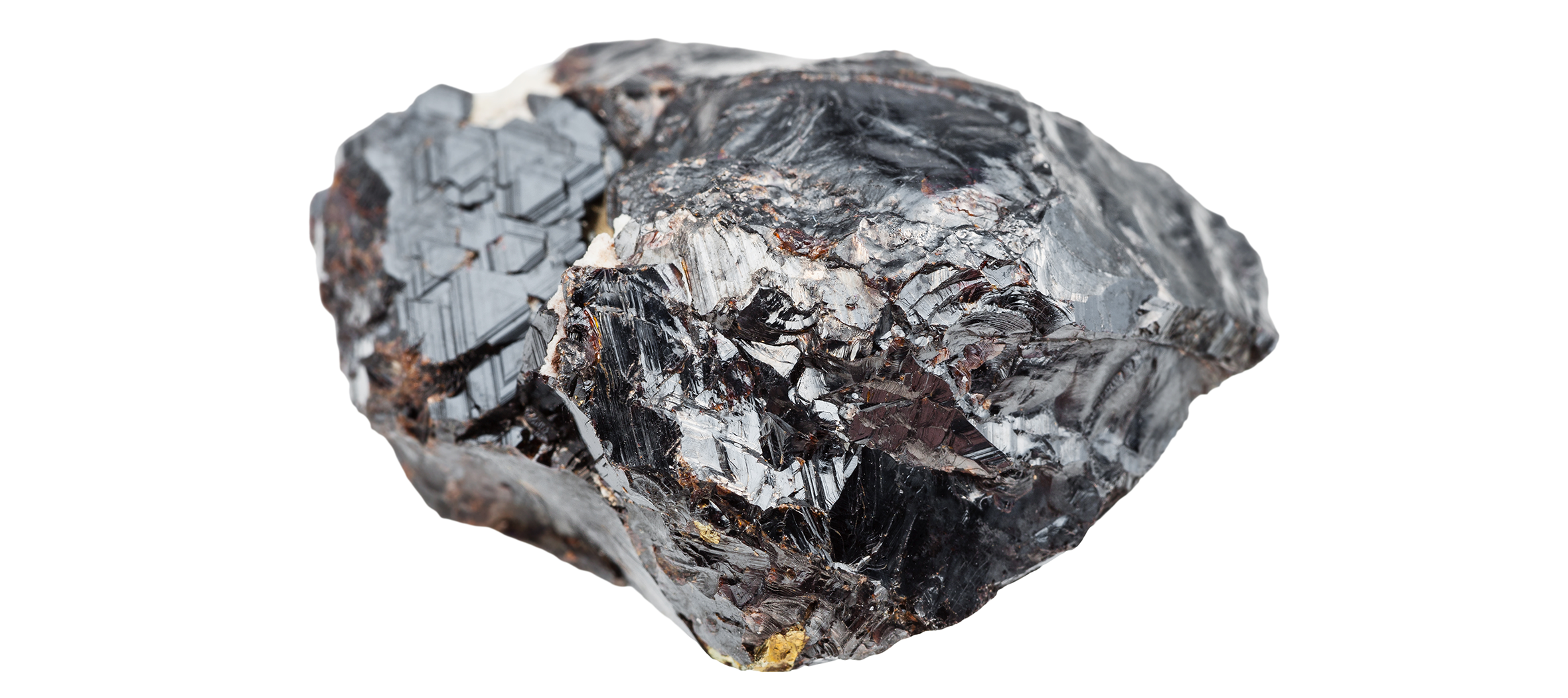
    The lion’s share of primary lead production comes from galena ores, which can contain up to 85 percent lead. Common accompanying elements in galena ores are zinc and silver. The precious metal silver increases the economic viability of mining.

    Galena is usually concentrated by flotation and then roasted to produce lead oxide (PbO).

    Almost half of the global lead production is mined in China. Other important producing countries are Australia, the USA, and Peru.

    The largest lead mine in the world is the Cannington Mine in Australia. It is owned by the mining company South32 and has been in operation since 1997.

    The world’s largest lead producer is the Chinese company China Minmetals Corporation (also known as Minmetals), which controls large lead production capacities through subsidiaries such as MMG Limited.

    Glencore operates, besides large lead mines in Australia, the world’s largest lead refinery in Port Pirie, also in Australia.

    Global annual lead production amounts to approximately 13 million tons.

  • Substitution

    The replacement by plastics has reduced the use of lead in cable sheathing and cans.
    Tin has replaced lead in solder used for drinking water systems.
    The electronics industry is increasingly using lead-free solders and flat screens that do not require lead shielding.
    Steel and zinc are common substitutes for lead in wheel weights.

Lead, Pb, heavy metal, transition metal, dense metal, battery plates, industrial uses, metal properties, toxic metal, metal alloy, lead production, raw material, ISE AG metals, ISE AG

Read more …Lead

  • Hits: 478

Copper

Cu • Atomic Number 29

Copper

Copper is a transition metal classified as a weakly reactive heavy metal and belongs to the semi-precious metals. It is relatively soft, ductile, and tough. After silver, copper has the highest electrical conductivity of all metals.

Copper is therefore the preferred material for cables, wiring, and pipes. Almost 70 percent of copper is used in electrical applications.

The most important copper-producing country is Chile. It is home to the Escondida mine, the largest copper mine in the world, jointly operated by the mining companies BHP and Rio Tinto.

The Chilean state-owned company Codelco is the leading copper producer, accounting for ten percent of global production.

China is the global leader in copper refining.

In the EU, copper is listed as a strategic raw material, although it does not meet the threshold values. Nevertheless, due to its strategic importance for electrification, the metal was added to the list in 2023.

  • History

    Copper has been in use for more than ten thousand years and has significantly shaped social and technological development.

    In prehistoric times, people discovered copper in its pure form in nature and fashioned tools from it. The first metalworking took place between 5500 and 2200 BCE in what is now Iraq, Iran, and Turkey. Ötzi, the mummy found in the Austrian Alps, was also equipped with a copper axe. Around 3000 BCE, the Bronze Age began. By adding tin, copper became harder, revolutionizing weapon-making. In Egypt, Mesopotamia, and China, bronze was also used for tools, jewelry, and coins.

    The Latin name for copper, "cuprum," is derived from Cyprus, which was an important trading hub for the metal.

    With the Industrial Revolution starting in the 18th century, copper was used for steam engines, telegraphs, generators, and motors. Europeans exploited copper mines in their colonies to meet demand.

    Today, copper remains a ubiquitous raw material found in coins, electrical and power cables, and in high-tech applications.

  • Application

    The primary use of copper is in electrical applications, accounting for nearly 70 percent of total copper consumption. It is the preferred material for power transmission cables and wiring in the energy industry. In electronics, copper is omnipresent in cables, connectors, printed circuit boards, and more.

    In the construction industry, copper is used in plumbing, electrical installations, and roofing.

    Demand for copper is expected to rise significantly due to increasing electrification. Key drivers include e-mobility—electric vehicles contain about three times more copper than internal combustion engine cars—and renewable energy technologies.

    Besides traditional sectors such as coinage, copper plays a crucial role in high-tech industries. It is used in transistors on chips and circuit boards. Copper cables are indispensable in high-speed data center networks, and copper is essential for wiring, generators, and transformers in wind and photovoltaic power plants.

    Copper foils are also used in lithium-ion batteries.

  • Occurrence, Mining, Extraction

    Copper minerals can be divided into sulfide and oxide ores, with over 80 percent of copper produced from sulfide ores. Chalcopyrite, a sulfide mineral, is the most common copper mineral, containing about 34 percent copper by weight. It is the primary source of copper production worldwide. Other important copper minerals include bornite, chalcocite, and malachite.

    The extraction process depends on the type of ore. Copper from sulfides is recovered through flotation, smelting, and refining. For oxides, only leaching and electrolysis are required, allowing for simpler and more energy-efficient processing.

    Copper deposits are often associated with gold and silver.

    A quarter of global copper production comes from Chile, home to the world’s largest copper mine: the Escondida Mine in the Atacama Desert, operated by the two largest mining companies BHP and Rio Tinto, along with the Japanese firm JECO. A major challenge is the high water demand in one of the driest regions on earth, which is sometimes met through seawater desalination plants.

    Peru and the Democratic Republic of Congo are other important mining countries. The mines are mostly owned by foreign companies.

    China is a key player. Jiangxi Copper is the world’s largest copper refiner. Chinese companies also control numerous mining areas in Africa and South America.

    The largest individual producer is the Chilean state-owned company Codelco, though it faces declining ore grades. Freeport-McMoRan from the USA operates the Grasberg copper-gold open-pit mine in Indonesia in partnership with the Indonesian government. BHP and Glencore are further major copper producers.

    Global annual copper production amounts to approximately 27 million tons.

    Copper is highly recyclable and has one of the highest recycling rates. About one-third of copper demand is met through recycling. One of the leading copper recyclers is the German company Aurubis.

  • Substitution

    Aluminum replaces copper in car radiators, cooling and freezing pipes, electrical appliances, and power cables.
    Glass fibers substitute copper in telecommunications applications.
    Plastics replace copper in drain pipes, plumbing fixtures, and water pipes.
    Titanium and steel are used instead of copper in heat exchangers.

Read more …Copper

  • Hits: 517

Aluminum

AI • Atomic Number 13

Aluminum

Aluminum is a silvery-white lightweight metal. It stands out due to its low weight, corrosion resistance, and good thermal conductivity. It is easily formable and non-magnetic. Aluminum has roughly one-third the density of iron. Its melting point is relatively low at 660 degrees Celsius.

It is the third most abundant element and the most common metal in the Earth's crust.

After iron, aluminum is the second most important metal for industry. Its primary uses are in the construction sector and lightweight engineering (automotive industry, aerospace).

The Weipa mine in Australia is the largest bauxite deposit in the world — bauxite being the mineral from which aluminum is extracted. Bauxite gets its name from its first discovery site, Les Baux-de-Provence in southern France, where it was discovered in 1822 by geologist Pierre Berthier.

The largest bauxite producer is Rio Tinto, followed by Winning International, which operates the Simandou mine in Guinea. Guinea holds the largest aluminum reserves worldwide.

China is the global market leader in aluminum production, holding a market share of nearly 60 percent. The leading companies are Chinalco and Hongqiao Group.

Aluminum can be recycled without any loss of quality, and the recycling process requires only a fraction of the energy needed for primary production.

  • History

    Alum (an aluminum salt) was already known in antiquity. In ancient Egypt and Rome, it was used in medicine and for dyeing purposes.
    In 1754, German chemist Andreas Sigismund Marggraf identified alumina (Al₂O₃) as a distinct substance. Later, the French chemist Antoine Laurent de Lavoisier was the first to suggest that the alumina Marggraf had derived from an alum solution was likely the oxide of an as-yet-unknown element.

    In 1808, British chemist Sir Humphry Davy made the first attempt to produce aluminum via electrolysis, but was unsuccessful. However, he introduced several name variants for the element – alumium, aluminum, and aluminium – two of which, aluminum and aluminium, continue to coexist in English today.

    Aluminum was finally successfully isolated in 1825 by Danish physicist Hans Christian Ørsted. Several chemists then worked to improve the production process, including Friedrich Wöhler, who in 1845 succeeded in producing tiny aluminum globules, allowing him to determine the metal’s density.

    In 1846, Henri Étienne Sainte-Claire Deville continued efforts to improve and, crucially, lower the cost of aluminum production. He persuaded Emperor Napoleon III to financially support the development of industrial aluminum production. Deville began production in the chemical factory of the Rousseau brothers, refining the Wöhler process by replacing expensive potassium with cheaper sodium as a reducing agent. This significantly reduced aluminum production costs: in 1854, 1 kg of aluminum still cost 3,000 francs, but by 1860, the price had dropped to 130 francs per kg.

    In 1886, Charles Martin Hall and Paul Héroult independently developed the Hall-Héroult process, the electrolysis method that remains the standard for aluminum production today.

    In 1889, Carl Josef Bayer invented the Bayer process to extract pure alumina from bauxite, laying the foundation for modern large-scale aluminum production.

    By the late 19th century, aluminum began to be used on an industrial scale. Production facilities were built next to hydroelectric power stations—such as those at Niagara Falls (USA) and along the Upper Rhine (Switzerland)—to take advantage of low-cost electricity. As a result, aluminum could be produced cheaply and became affordable for everyday consumer goods. The military was one of the first to adopt aluminum for practical use, seeking weight reduction in soldiers’ equipment. Aluminum was used to produce canteens, cooking utensils, and tent poles.

    Because of its low weight, aluminum was ideal for aviation. Its role in aerospace began with the Zeppelin, which took its first successful flight in 1900, launching aluminum’s career in the skies.

  • Application

    The construction industry is the largest consumer of aluminium, accounting for between one quarter and one third of total global production.
    
The packaging industry, automotive sector, and aerospace each consume around one fifth of the global output.

    Other important applications include electrical engineering and mechanical engineering. Electric vehicles require around 30% more aluminium than combustion-engine vehicles.

    China is the world’s largest consumer of aluminium, driven by government infrastructure projects both domestically and abroad.

  • Occurrence, Mining, Extraction

    Bauxite is the primary mineral used in aluminium production. It contains 50 to 60 Ppercent aluminium oxide and around 30 percent iron oxide.

    Aluminium is extracted from bauxite in a two-step process: The Bayer process is first used to produce aluminium oxide (also called alumina). In a second step, the Hall-Héroult process reduces the alumina to aluminium metal. A by-product of this process is iron-rich red mud.

    Guinea is the world's largest producer of bauxite and also holds the largest known reserves. Australia ranks second in extraction and has the second-largest alumina production globally. China is the third-largest bauxite mining country.

    The Weipa mine in Australia, owned by the Rio Tinto Group, is the largest bauxite mining site in the world. Rio Tinto is the global market leader in bauxite production, followed by the Winning International Group and the government of Guinea.

    Bei der energieintensiven Aluminiumherstellung ist China mit einem Marktanteil von fast 60 Prozent global führend. Russland, Kanada und die Vereinigten Arabischen Emirate sind weitere wichtige Aluminiumhersteller.

    Due to the high energy requirements of aluminium production, China dominates the global market with a share of nearly 60 percent. Other major producers include Russia, Canada, and the United Arab Emirates.Global annual bauxite production exceeds 400 million tonnes, yielding around 140,000 tonnes of primary aluminium per year.

    Because of the significantly lower energy demand, aluminium recycling plays an important role. Aluminium is one of the most recycled metals worldwide. North America has the highest aluminium recycling rate globally, at nearly 60 percent.

  • Substitution

    Composite materials can replace aluminum in aircraft fuselages and wings.
    Glass, paper, plastics, and steel can substitute aluminum in packaging. Composites, magnesium, steel, and titanium can replace aluminum in ground transportation.
    Composites, steel, vinyl, and wood can substitute aluminum in construction.
    Copper can replace aluminum in electrical and heat exchange applications.

Read more …Aluminum

  • Hits: 481

Audits

ISE real value audit

Evaluation audit

An audit is a 50-80 page report on your goods, market, market environment, occurrence, production, use, customers, and special features.

An audit calculates the total value of your lot of a specific commodity. We use the guidelines of IFRS 13 for the valuation of commodities.

In our audit, we also expressly point out that we accept no liability for transactions that are the subject of the audit.

The audit is conducted in German. However, it can be translated into any other language. Depending on the goods, we need 3-5 weeks to complete the audit. The audit is delivered as a PDF and in three bound copies.

The following documents are required for the audit:
  • 1. Order placement PDF

  • 2. ISE valuation

  • 3. Analysis(es)

  • 4. Sample collection protocol

  • 5. Warehouse receipt

  • 6. Import/export licenses (optional)

  • 7. Photos

  • 8. Proof of origin

  • 9. Manufacturer's data sheet

  • 10. Packing list

Read more …Audits

  • Hits: 5279

Microfinishing

Microfinishing of Ultrafine Powders

The Durability and Shelf Life of Micro- and Nanopowders

In modern times, there is an increasing use of ultra-fine powders and nanopowders. Despite the many advantages these materials offer, they also come with a significant drawback. Due to their enormous surface area, they are much more susceptible to oxidation compared to their counterparts in rod, ingot, or disk form. When powders are properly packaged in high-quality PET bottles, sealed with membranes, and stored under argon atmosphere, they can maintain their stability for 10 to 15 years when stored upright. However, factors such as moisture, light exposure, horizontal storage, inferior containers, missing or leaking membranes, and similar conditions can reduce this shelf life. The end of the shelf life is typically indicated by small signs of corrosion, which cause the usually very fine particles to agglomerate into larger clumps. Once corrosion is noticed, immediate action is necessary, as the process spreads rapidly and continuously. Irreversibly corroded powder often appears graphite-like in appearance.

Packaging of Ultrafine Powders

Some powders are stored in glass ampoules that maintain a constant internal atmosphere for years. This type of packaging has both advantages and disadvantages. For industrial use, these containers are unsuitable, as glass ampoules cannot be opened without breaking the glass inside. The industry therefore prefers PET bottles. PET bottles are also more practical for air transport, as they are significantly lighter than glass ampoules. However, some powdersare used as financial assets due to their value sometimes exceeding that of gold. In such cases, glass ampoules are favored because they allow the powder to be stored virtually indefinitely in a sealed environment without the need for maintenance.

Microfinishing of Ultrafine Powders

After a powder has been stored for ten years, an analysis test—including shape and size determination— should be conducted every two years thereafter. Using a scanning electron microscope, it can be quickly determined whether oxidation has begun. If oxidation is detected, prompt action is required to prevent further degradation.

The first step involves sieving the powder with an ultrasonic fine sieve to a specified particle size, typically ranging between 100 nanometers and 50 micrometers. In practice, this sieving process is usually repeated several times. Next, the particles are fragmented using an ultrasonic device, which reducesuheir size and rounds their shape. This fragmentation process is also repeated multiple times. The third step is tumbling the particles in an argon vacuum tumbler. Under a constant argon flow, the particles are mixed thoroughly. Argon attaches to each particle, forming a protective layer around them, which extends the powder’s shelf life by another 10 to 15 years. Finally, the processed powder is filled into high-quality PET bottles. The remaining approximately 10 cm of headspace at the top of the container is filled with argon gas—heavier than air—then sealed with a membrane to securely trap the argon inside. A safety cap protects the valuable contents in their new packaging. The bottles are then placed upright in their boxes inside an inlet to prevent tipping, and the boxes are resealed. All performed procedures are documented in a product report provided to the customer.

The Final Product

When it comes to the handling, processing, and packaging of high-quality powders, we don’t cut corners on the details. We use only branded bottles, caps, boxes, and inserts. Our machinery comes exclusively from reputable manufacturers. In the end, you receive a professionally and meticulously processed product, proudly made in Switzerland.


Microfinishing, ultrafine powders, powder stability, surface treatment, powder processing, nanopowders handling, packaging and storage, metal powders, high-precision materials, ISE AG services, ISE AG

Read more …Microfinishing

  • Hits: 714