Sodium

Na • Atomic Number 11

Sodium

Sodium is a common chemical element with the symbol Na and atomic number 11. In the periodic table of elements, it is in the third period and, as an alkali metal, in the first IUPAC group or first main group. Sodium is a pure element whose only stable isotope is 23Na.

Elemental sodium was first obtained in 1807 by Humphry Davy through molten salt electrolysis from sodium hydroxide and named sodium. This name is used in English and French, with derivatives in Romance languages and some Slavic languages. The German name Natrium is derived from the Arabic نطرون, DMG naṭrūn, natron, from the Egyptian netjerj. Sodium and derivatives thereof are used in Scandinavian, Dutch, and some Slavic languages, as well as in German. In Japanese, sodium has the German-sounding name ナトリウム Natoriumu.

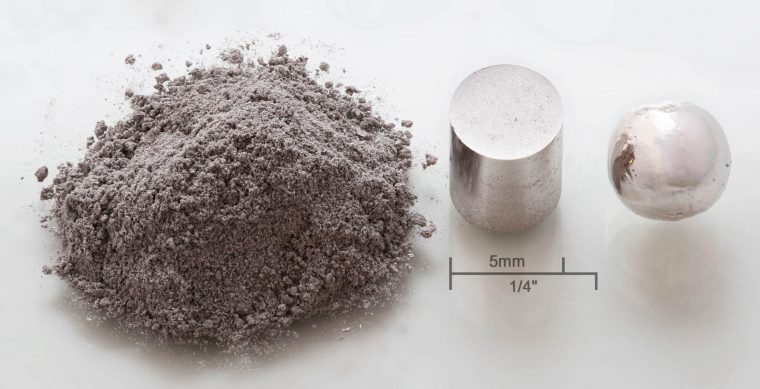
Under normal conditions, sodium is a soft, silvery-white and highly reactive metal. Due to its high reactivity, metallic (elemental) sodium is stored under inert conditions, usually in paraffin oil or petroleum, and in larger quantities in airtight steel drums.
Sodium is one of the ten most common elements in the Earth's crust and occurs in numerous minerals. Seawater contains a considerable amount of sodium in the form of sodium ions.

  • History

    The Egyptians in ancient times coined the term netjerj (neter) for soda obtained from soda lakes. The Greeks adopted this word as Greek νίτρον (nitron), the Romans as nitrium, and the Arabs as natrun. Sodium compounds, unlike the elemental metal, have been known for a very long time and were obtained from seawater or lakes, mined from natural deposits, and traded.

    The most important sodium compound, table salt (sodium chloride), was obtained from mines or by evaporating seawater or brine from salt springs in saltworks. Trade in salt was the foundation of wealth for many cities and even shaped their names (e.g., Salzgitter, Salzburg). The Germanic name for saltworks (Hall) is preserved in place names such as Hallstatt, Hallein, Halle (Saale), Bad Hall, Bad Reichenhall, Schwäbisch Hall, Schweizerhalle, and Hall in Tirol. Other naturally occurring sodium compounds, such as sodium carbonate (soda or natron) and sodium nitrate (Chile saltpeter), were also extracted and traded since antiquity.

    The production of elemental sodium was first achieved in 1807 by Humphry Davy, who electrolyzed molten sodium hydroxide (caustic soda) using Voltaic piles as a power source. As he reported to the Royal Society in London on November 19, 1807, he obtained two different metals: the one contained in soda he named sodium (a term still used in French and English today), and the other metal he called potassium. In 1811, Berzelius proposed the modern name natrium.

  • Application

    Large quantities of sodium chloride and other sodium compounds, such as sodium carbonate, are mined and processed. However, only a small portion of this is further processed into metallic sodium. The majority is used directly or converted into other compounds.

    Sodium is the most widely used alkali metal. It is employed for technical, industrial, and laboratory purposes. In school experiments and demonstration lectures, sodium can be used — often with a sodium spoon — to generate hydrogen gas when reacted with water.

    A portion of the sodium is used to produce various sodium compounds, such as sodium peroxide (used as a bleaching agent) and sodium amide, a strong base. These compounds do not occur naturally and cannot be obtained directly from sodium chloride. Sodium cyanide and sodium hydride are also synthesized from sodium. Because sodium influences the solidification structure of metals, it is used as an additive in aluminum–silicon alloys (a refinement process developed by Aladár Pácz).


    Catalyst

    Sodium catalyzes the polymerization of 1,3-butadiene and isoprene, which made it useful in the production of synthetic rubber. The synthetic rubber known as Buna (from Butadiene and Natrium) was the first artificial rubber in the world and was produced starting in 1937 at the Buna Works in Schkopau, Germany.


    Coolant

    Because sodium has a high thermal conductivity (140 W/(m·K)) — far higher than that of steel (15–58 W/(m·K)) — and combines a low melting point with a wide liquid temperature range, it is used as a coolant in several applications:

    • In internal combustion engines, sodium is used to cool exhaust valves. The valve stems are hollow and partially filled with sodium, which melts during operation and oscillates between the hot and cold ends, transferring heat away from the red-hot valve head.

    • Fast breeder reactors are cooled with liquid sodium. In these reactors, the fast neutrons produced during fission must not be slowed down, as water would do; therefore, sodium — which does not act as a moderator — is used instead. The heat is then transferred through a secondary sodium loop to a steam generator, which powers a turbine.


    Light Production

    Sodium vapor lamps utilize the characteristic yellow light emitted by sodium vapor in an electric discharge. Due to their high luminous efficiency, they are widely used for street lighting.


    Reducing Agent

    Some metals, such as titanium, zirconium, tantalum, and uranium, cannot be obtained by carbon reduction, as this would form stable, inseparable carbides. Instead, sodium is used as a reducing agent, along with aluminum and magnesium. Sodium is also used in the production of potassium, which cannot be extracted via carbon reduction or by electrolysis due to potassium’s high solubility in molten potassium chloride.

    In organic synthesis, sodium serves as an important reducing agent. For many years, its most significant industrial use was in producing tetraethyllead from chloroethane, an antiknock additive for gasoline. Due to environmental concerns, the use of tetraethyllead has been banned or severely restricted, leading to a decline in sodium consumption. Sodium is also used in reactions such as the Birch reduction and pinacol coupling, though these are primarily of laboratory significance.


    Drying Agent

    Because sodium reacts even with traces of water, freshly cut or pressed sodium wire can be used to dry organic solvents, such as diethyl ether or toluene. However, this method is not suitable for halogenated solvents (e.g., methylene chloride, chloroform) due to their violent reaction with sodium.

    Sodium–potassium alloys (NaK) are liquid at room temperature and serve as heat transfer agents or dehalogenation reagents in organic synthesis. NaK is also effective for final drying of already pre-dried solvents to achieve extremely low residual water content.


    Electrical Conductor

    In the 1960s, experiments were conducted using sodium cables encased in polyethylene insulation. However, due to its lower electrical conductivity, a sodium-based cable would need to be approximately 75% larger in diameter than a conventional copper cable.


    Detection
    Here is the English translation of your text about sodium (Na), including its detection, physiology, biological roles, safety, and compounds:


    Detection

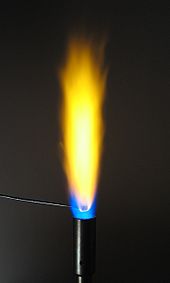
    The qualitative detection and quantitative determination of sodium are performed atom-spectroscopically via its intense yellow flame coloration, or more precisely, through its sodium D-doublet lines at 588.99 nm and 589.59 nm.

    The purely chemical detection of sodium is very difficult. Since nearly all sodium compounds are highly water-soluble, classical precipitation reactions and gravimetric determinations are hardly possible. Exceptions include yellow sodium magnesium uranyl acetate (NaMg(UO₂)₃(CH₃COO)₉·9H₂O) and colorless sodium hexahydroxoantimonate(Na[Sb(OH)₆]), both of which are sparingly soluble. A precipitation reaction using sodium–bismuth double sulfate(3Na₂SO₄·2Bi₂(SO₄)₃·2H₂O) is also possible.
    Since sodium ions in aqueous solution are colorless, color reactions are rarely used. Therefore, besides ion chromatography, spectroscopic methods are the only practical means of detection.


    Physiology

    Sodium is an essential element for all animal organisms. In animals, sodium—together with chlorine—is the ninth most abundant element and the third most abundant inorganic ion after calcium and potassium, making it one of the macroelements. In living organisms, sodium occurs exclusively as Na⁺ ions.

    In the human body, an average adult (70 kg) contains about 100 g of sodium as Na⁺ ions, with roughly two-thirdspresent as NaCl and one-third as NaHCO₃. As sodium accounts for 90% of the extracellular electrolytes, it determines the volume of interstitial fluid through its influence on the vascular volume.


    Recommended and Actual Sodium Intake

    According to D-A-CH reference values, the estimated minimum sodium intake for adults is 550 mg/day.
    Various organizations provide recommendations for maximum intake, such as:

    • WHO: 2 g/day

    • AHA: 1.5 g/day

    Actual sodium consumption often exceeds these limits due to high salt intake (2.5 g of salt ≈ 1 g of sodium).
    The German National Nutrition Survey II (NVS II) found median intakes of:

    • 3.2 g/day for men

    • 2.4 g/day for women

    However, actual intake may be even higher since questionnaire-based data are prone to error.
    The gold standard for determining sodium intake is measuring sodium excretion in 24-hour urine samples.
    According to the WHO, data from the INTERSALT study showed sodium excretion levels in Germany of:

    • 4.1–4.5 g/day for men

    • 2.7–3.5 g/day for women


    Regulation of Sodium Balance

    Sodium levels are tightly regulated and closely linked to water balance.
    Normal serum sodium concentration ranges between 135–145 mmol/L.

    • Hyponatremia (low sodium): causes cell swelling, potentially leading to seizures or coma.

    • Hypernatremia (high sodium): causes cell shrinkage, with similar neurological effects.

    Regulation involves:

    • the renin–angiotensin–aldosterone system,

    • antidiuretic hormone (ADH or vasopressin), and

    • atrial natriuretic peptide (ANP).

    The kidney is the key organ in sodium regulation.
    It retains water during sodium excess to dilute sodium, and excretes sodium when necessary.
    Conversely, during sodium deficiency, it conserves sodium and excretes more water.
    However, renal adjustment to sodium fluctuations takes time.


    Distribution in Cells

    Na⁺ ions are unevenly distributed across cell membranes.
    Outside the cell, Na⁺ and Cl⁻ predominate; inside, K⁺ and organic anions are dominant.
    These gradients generate the membrane potential, which is vital for cell survival.

    To counter ion diffusion, the sodium–potassium pump (Na⁺/K⁺-ATPase) actively restores ion gradients by pumping Na⁺ out and K⁺ in, consuming energy in the process.


    Functions in Nerve Cells

    Na⁺ ions play a key role in the generation and propagation of nerve impulses.
    At the postsynaptic membranes of neurons and at neuromuscular junctions, neurotransmitters bind to receptors that open sodium channels, allowing Na⁺ influx.
    This causes depolarization, making the cell interior less negative.
    If the depolarization threshold is reached, voltage-gated sodium channels in the axon open, producing a traveling action potential.
    Afterward, the sodium–potassium pump restores resting potential.


    Sodium in Plants

    In plants, sodium plays a minor role.
    While potassium is essential for all plants and most microorganisms, sodium is required only by certain C₄ and CAM plants, but generally not by C₃ plants.

    However, some plants, called halophytes, thrive in saline environments (e.g., coasts or salt flats) and benefit from sodium uptake.
    Examples: sugar beet, cabbage, and many C₄ grasses.
    They can transport sodium into vacuoles of leaf cells, where it acts as an osmotic ion, maintaining turgor pressure and promoting cell elongation and leaf growth.

    Plants that cannot compartmentalize sodium (e.g., bean and maize) are natrophobic.
    If sodium accumulates in their cytosol, it displaces potassium, leading to potassium deficiency, photosynthesis inhibition, and reduced water transport.

    Since most plants contain only small amounts of sodium, herbivores must obtain additional sodium chloride from natural salt deposits.


    Safety Precautions

    Small amounts of sodium are stored under petroleum, while larger quantities require handling systems under inert gas.
    Even with protection, sodium surfaces are often covered by a layer of sodium hydroxide and sodium oxide.

    Sodium fires can be extinguished with metal fire powder (salt), potassium chloride, cast-iron shavings, or, in emergencies, dry sand or cement.
    However, sand and cement can react with sodium, reducing effectiveness.
    Water, foam, CO₂, or halons must never be used, as they react violently with sodium, causing explosions or intensified fires.


    Compounds

    In compounds, sodium always occurs in the +1 oxidation state.
    All sodium compounds are strongly ionic and mostly water-soluble.
    Sodium salts represent some of the most important industrial chemicals, as they are cheap to produce.

    Halides

    Sodium chloride (NaCl) — commonly known as table salt — is the most important and abundant sodium compound.
    It serves as a primary raw material for producing sodium and other sodium compounds, and is essential for human nutrition.
    It is also used for food preservation and as road salt.
    NaCl crystallizes in the rock-salt (NaCl) structure, typical of many salts.
    Other stable halides include sodium fluoride (NaF), sodium bromide (NaBr), and sodium iodide (NaI).

    Oxygen Compounds

    Five sodium oxides are known:
    Na₂O, Na₂O₂, NaO₂, Na₂O₃, and NaO₃.

    • Sodium oxide (Na₂O) is present in many types of glass and forms during glassmaking from sodium carbonate.

    • Sodium peroxide (Na₂O₂) is the most important oxide, used as a bleaching agent and oxygen source in diving and submarines.
      The other oxides are unstable and decompose quickly.
      Sodium hydroxide (NaOH), or caustic soda, is a major industrial base used in soap and dye production and in alumina extraction from bauxite.

    Sulfur Compounds

    Sodium forms sulfides (Na₂S, NaHS) with hydrogen sulfide, used for heavy metal precipitation.
    Sodium sulfate (Na₂SO₄) is used in detergents and the Kraft paper process.
    Sodium thiosulfate (Na₂S₂O₃) serves as a photographic fixer.

    Hydrides

    In sodium hydride (NaH) and sodium borohydride (NaBH₄), hydrogen is in the −1 oxidation state.
    NaH acts as a strong, non-nucleophilic base, while NaBH₄ is used for reductions of carbonyl compounds, such as ketones (selectively enhanced in the Luche reduction).
    Both release hydrogen gas upon contact with water.

    Other Compounds

    Sodium carbonate (Na₂CO₃) and sodium bicarbonate (NaHCO₃) are major sodium salts of carbonic acid.
    They are vital for glassmaking and baking powder production, respectively.
    Sodium nitrate (NaNO₃), or Chile saltpeter, serves as a fertilizer and preservative.

    Organic sodium compounds are highly reactive and unstable, unlike lithium analogs.
    Stable forms, such as sodium cyclopentadienide, serve as reducing agents.

    Soaps are sodium or potassium salts of fatty acids produced by saponification—boiling fats with lye.
    Typical fatty acids used include lauric, myristic, palmitic, stearic, oleic, and ricinoleic acids.

  • Occurence

    n the universe, sodium ranks 14th in abundance, comparable to calcium and nickel. In the emitted light of many celestial bodies—including that of the Sun—the yellow sodium D-line can be clearly detected.

    On Earth, sodium is the sixth most abundant element in the Earth’s crust, making up 2.36% of its composition. Due to its reactivity, it does not occur in its elemental form but always in compounds known as sodium salts. A major reservoir of sodium is seawater: one liter of seawater contains, on average, 11 grams of sodium ions.

    Common sodium minerals include albite (also called soda feldspar, NaAlSi₃O₈) and oligoclase ((Na,Ca)Al(Si,Al)₃O₈). Besides these rock-forming minerals, which belong to the feldspar group, sodium also occurs in large salt deposits. The most significant are halite (sodium chloride, commonly known as rock salt) deposits, which formed through the evaporation of seawater. These deposits represent the most important sources for obtaining sodium and its compounds. Well-known German salt mining sites include Salzgitter, Bad Reichenhall, Stade, and Bad Friedrichshall.

    In addition to common sodium chloride, several other naturally occurring sodium compounds exist. For instance, sodium nitrate, or Chile saltpeter (NaNO₃), is one of the few naturally occurring nitrate minerals. However, because it is highly soluble in water, it is only found in extremely dry regions, such as the Atacama Desert in Chile. Before the invention of the Haber–Bosch process, it was the primary raw material for many fertilizers and explosives.

    Sodium carbonate (Na₂CO₃) also occurs naturally in several minerals. The best known is soda (Na₂CO₃·10H₂O), which is mined in large quantities and used primarily in glass manufacturing.

    In addition, there are many other sodium minerals (see also Category: Sodium minerals). One notable example is cryolite (ice stone, Na₃[AlF₆]), which, in molten form, serves as a solvent for aluminum oxide in aluminum production. Since the only known natural cryolite deposit in Greenland has been depleted, synthetic cryolite is now produced industrially.

  • Extraction & Presentation

    Sodium is mainly obtained from sodium chloride, which is usually acquired through mining or by evaporating saline solutions, such as seawater. Only a small portion of sodium chloride is processed into elemental sodium; the majority is used as table salt or for the production of other sodium compounds.

    The industrial production of sodium is carried out by molten-salt electrolysis of dry sodium chloride in a device known as the Downs cell (patented in 1924 by James C. Downs). To lower the melting point, a eutectic salt mixture of 60% calcium chloride and 40% sodium chloride is used, which melts at 580 °C. Barium chloride may also be added as an additional component. A voltage of approximately seven volts is applied. During electrolysis, the production of one kilogram of sodium consumes about 10 kWh of electricity, and roughly 12 kWh for the entire production process.

    Formation of Sodium at the Cathode

    At the cathode, molten sodium ions are reduced to elemental sodium.

    Formation of Chlorine at the Anode

    At the anode, chloride ions are oxidized to form chlorine gas.

    Overall Reaction

    2NaCl(l)→2Na(l)+Cl2(g)

    The cylindrical electrolysis cell contains a central graphite anode and a cylindrical iron cathode surrounding it. Above the cell is a bell-shaped hood that collects and removes the chlorine gas produced. The sodium accumulates above the cathode and is drawn off through a cooled riser tube. Any calcium formed crystallizes and sinks back into the molten mixture.

    This process replaced the Castner process, in which sodium was obtained by electrolysis of molten sodium hydroxide. Although the lower melting point of sodium hydroxide (318 °C) was advantageous, it required more electrical energy. Since the introduction of the chlor-alkali molten-salt electrolysis, the price of sodium has dropped significantly. As a result, sodium has become the cheapest lightweight metal by volume. However, its cost still depends heavily on electricity prices and the market value of the chlorine produced as a byproduct.

  • Properties

    Physical properties

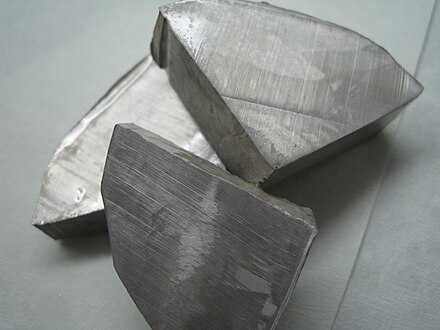
    odium is a silvery-white, soft, lightweight metal. In many of its properties, it lies between lithium and potassium. For example, its melting point of 97.82 °C is between that of lithium (180.54 °C) and potassium (63.6 °C). The same relationship applies to its boiling point and specific heat capacity. With a density of 0.968 g · cm⁻³, sodium is one of the least dense elements. Among the elements that are solid at room temperature, only lithium and potassium have a lower density. With a Mohs hardness of 0.5, sodium is so soft that it can be cut with a knife.

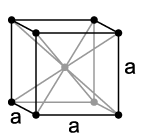
    Sodium crystallizes, like the other alkali metals, in a body-centered cubic lattice with the space group Im3m (No. 229) and two formula units per unit cell. Below 51 K, it transforms into a hexagonal close-packed structure with lattice parameters a = 376 pm and c = 615 pm.

    Sodium vapor consists of both individual metal atoms and dimers (Na₂). At the boiling point, about 16 % of the atoms are present as dimers. The vapor appears yellow, but when viewed through it, it shows a purple hue.

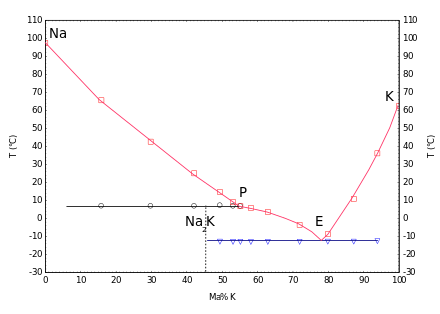
    When mixed with potassium, sodium forms liquid alloys over a wide range of compositions at room temperature. The phase diagram shows an incongruently melting compound, Na₂K, which melts at 7 °C, and a eutectic point at −12.6 °C with a potassium content of 77 % (by mass).

    Chemical properties

    Like the other alkali metals, sodium is a very base (highly reactive) element, with a standard electrode potential of −2.71 V. It reacts easily with many other elements and, in some cases, with compounds. Its reactions with nonmetalssuch as chlorine or sulfur are particularly vigorous, producing bright yellow flames.

    Oxygen, however, represents a special case. Sodium and oxygen do not react directly at room temperature or upon heating in the absence of water. In a completely moisture-free oxygen atmosphere, sodium can even be meltedwithout undergoing any reaction. However, if traces of moisture are present, sodium burns readily, forming sodium peroxide (Na₂O₂).

    Reaction of Sodium with Oxygen

    2Na+O2Na2O2

    The Strongly Exothermic Reaction of Sodium with Water

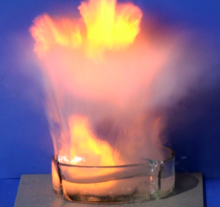
    Sodium reacts violently and exothermically with water, producing sodium hydroxide (NaOH) and hydrogen gas (H₂). The reaction releases so much heat that the hydrogen ignites, often burning with a yellow-orange flame:

    2Na+2H2O2NaOH+H2

    This reaction vividly demonstrates sodium’s high reactivity and the strong reducing power typical of alkali metals.

    Sodium reacts with water to form sodium hydroxide (NaOH) and hydrogen gas (H₂). High-speed recordings of the reaction of alkali metals with water suggest that the process involves a Coulomb explosion—a rapid electrostatic disintegration caused by charge buildup.

    Reaction of Sodium with Water

    2Na+2H2O2NaOH+H2

    In alcohols, sodium reacts to form sodium alkoxides while releasing hydrogen gas. Because the reaction is highly exothermic, the sodium often melts during the process. When sodium is finely divided, providing a large reactive surface area, the reaction can become explosive and may ignite the released hydrogen.

    Reaction of Sodium with Ethanol

    2Na+2C2H5OH2C2H5ONa+H2

    When sodium comes into contact with chlorinated compounds such as dichloromethane, chloroform, or carbon tetrachloride, it reacts rapidly and exothermically, forming sodium chloride (NaCl) and other decomposition products.

    Sodium Dissolved in Liquid Ammonia

    Sodium dissolves in liquid ammonia, producing a deep blue solution. This color is caused by free electrons released from the sodium atoms into the solution. As a result, the solution conducts electricity and, in dilute form, is paramagnetic.

    In a similar way, the sodium anion (Na⁻) can be isolated, for example as potassium(2.2.2-cryptand)sodium (K⁺(C222)Na⁻). This compound contains the natrid ion and acts as an extremely powerful reducing agent.

  • Isotopes

    A total of 19 isotopes and 3 additional nuclear isomers of sodium are known, ranging from ¹⁸Na to ³⁷Na. Of these, only one isotope, ²³Na, occurs naturally. This makes sodium one of the 22 monoisotopic elements (elements that occur in nature with only a single stable isotope).

    The most long-lived artificial isotopes are ²²Na and ²⁴Na.

    • ²²Na has a half-life of 2.602 years and decays by beta-plus decay (β⁺) into ²²Ne (neon).

    • ²⁴Na has a half-life of 14.957 hours and decays by beta decay into ²⁴Mg (magnesium).

    Both isotopes are used as tracers in nuclear medicine. ²²Na can be produced by irradiating magnesium or aluminum targets with protons from a cyclotron for several weeks.

    All other isotopes and isomers of sodium have only very short half-lives, ranging from seconds to milliseconds.

Sodium, Na, alkali metal, highly reactive metal, soft metal, element 11, industrial sodium uses, sodium compounds, metal properties, ISE AG metals, chemical element, ISE AG

Read more …Sodium

  • Hits: 471

Molybdenum

Mo • Atomic Number 42

Molybdenum

Molybdenum is a silvery-white, shiny transition metal that resembles tungsten. With a melting point of 2,623 degrees Celsius, it has one of the highest melting points of any metal, but at the same time has low thermal expansion and high thermal conductivity. It is very hard and tough, but easily malleable at lower temperatures. These properties make molybdenum useful in numerous industries.

Molybdenum is an important alloying metal that gives steels and superalloys heat resistance and strength. It is used in electronics, petroleum processing, and lubricants.

The element is also biologically important: it is an essential trace element for plants, animals, and humans.

Molybdenum does not occur in its pure form in nature. The most important mining countries are China, followed by the USA. The Climax Mine in the US state of Colorado is the largest molybdenum mine in the world and is operated by Freeport-McMoRan. The US company is also the world's largest molybdenum producer. Molybdenum is often a by-product of copper mining.

In the EU, molybdenum is on the list of critical raw materials.

  • History

    In ancient times and during the Middle Ages, molybdenum-containing minerals such as molybdenite were used to make swords and black pigments. Molybdenite resembles lead, which is where its name comes from: “molybdos” is the Greek word for lead.

    In 1778, Swedish chemist Carl Wilhelm Scheele discovered that molybdenite was neither graphite nor lead. Four years later, his colleague Peter Jacob Hjelm succeeded in producing molybdenum metal.

    From the mid-19th century onwards, molybdenum was used in small quantities for special steels and pigments. Demand for molybdenum increased during World War I. Germany in particular used molybdenum as an alloy additive for armor-piercing shells and hard steels. This period also saw the start of industrial molybdenum mining at the Climax Mine in the USA.

    In the post-war period, its areas of application expanded to include space travel, the petroleum industry, and electronics.

  • Application

    The most important application of molybdenum is in alloys for high-performance steel, for example in turbines and rockets. As an alloying metal, molybdenum increases strength, corrosion resistance, and heat resistance, which is particularly important in the defense industry and in aerospace.

    In petrochemicals, molybdenum sulfide is used as a catalyst for sulfur removal.
    Molybdenum sulfide is also used as a lubricant.

    In the electronics industry, it is used as a conductive metal layer in thin-film transistors. Molybdenum is not a semiconductor itself, but it serves as a substrate material and component in semiconductor devices.

  • Occurrence, Mining and Extraction

    The most important molybdenum-bearing mineral is molybdenite. The majority of commercial production comes from molybdenite.

    In terms of quantity, China is the number one molybdenum producer, followed by the USA, where the two largest molybdenum mines, Climax and Henderson, are located. The operator Freeport-McMoRan is considered the largest single producer of the raw material.

    About 60 percent of molybdenum production comes from copper mines, where it is a by-product. The Chilean mining company Codelco is the second largest molybdenum producer. Molybdenum is a by-product of its Chuquicamata and El Teniente copper mines.
    
Other important producers include China Molybdenum, which operates the Tenke Fungurume mine in the Democratic Republic of Congo, and Grupo Mexico.

    Annual production is just under 300,000 tons. The trend is rising due to the expansion of copper production.

  • Substitution

    Molybdenum is virtually irreplaceable in its main application in steels and cast iron. Due to the good availability and versatility of molybdenum, industry has attempted to develop new materials that benefit from its alloying properties.

    Possible substitutes include boron, chromium, niobium, and vanadium in alloy steels, tungsten in tool steels, graphite, tantalum, and tungsten for refractory materials in high-temperature electric furnaces.

Molybdenum, Mo, transition metal, refractory metal, high-melting metal, alloying element, steel strength, corrosion resistance, thermal conductivity, industrial uses, high-temperature applications, metal properties, ISE AG metals, ISE AG

Read more …Molybdenum

  • Hits: 489

Mangan

Mn • Atomic Number 25

Manganese

Manganese is a silvery-white, hard, very brittle transition metal. Its physical and chemical properties are similar to those of iron, but it is harder and more brittle. The element is of great biological importance. In plants, manganese plays a role in oxygen production in photosynthetic bacteria, algae, and plants.

Manganese is characterized by a wide variety of oxidation states.

It is a key raw material for the steel industry and is becoming increasingly important in lithium-ion batteries for electric cars.

Manganese occurs naturally mainly as pyrolusite and is mined in large quantities.
The most important producing countries are South Africa, Gabon, and Australia.

The most significant player is South32 from Australia.

  • History

    The name is derived from the Latin term for brownstone, “magnesia nigra,” and thus shares with the element magnesium the geographical reference to the district of Magnesia in the eastern Greek region of Thessaly, where deposits of minerals of both elements have been known since ancient times.

    Manganese dioxide, also known as brownstone, was used as a pigment in prehistoric cave paintings because of its color. Since ancient times, this mineral has also been used as an additive in glass production, as it helps to remove the green tint from natural glass caused by traces of iron ions.

    It was not until 1740 that the Berlin physician and chemist Johann Heinrich Pott was able to show that pyrolusite does not contain iron, as originally assumed, but another, as yet unknown element.

    It was not until a quarter of a century later that the Swedish chemist Johan Gottlieb Gahn succeeded in producing elemental manganese by reducing pyrolusite with carbon.

    In 1839, it was discovered that manganese improves the malleability of iron. In 1856, Robert Forester Mushet showed that the addition of manganese enabled the mass production of steel using the Bessemer process. This led to manganese being used in large quantities for steel production within a short period of time.

    From the mid-18th century onwards, manganese oxide was also used in the production of chlorine.

  • Application

    90 percent of mined manganese goes to the steel industry in the form of ferromanganese as an alloy component. It removes oxygen and sulfur from the steel and at the same time improves hardening. While normal steel contains about one percent manganese, the proportion in manganese steel is around 13 percent. This extremely hard alloy is used in railroad tracks, safes, and bearings, among other things.

  • Occurrence, Mining and Extraction

    Annual production in 2023 was around 20 million tons per year.

    Manganese is found in many deposits around the world. With estimated global reserves of more than 3 billion tons, a shortage of manganese is not expected.

    The most economically important minerals are pyrolusite, manganite, and hausmannite.

    Manganese occurs in large quantities in so-called manganese nodules in the deep sea.

    South Africa is by far the leading mining country for manganese ores. Its market share is around 60 percent. Several mines are located in the very resource-rich Kalahari Basin, where the Australian company South32 operates several mines.

    South32, which was formed in 2015 through a spin-off from BHP Billion, operates Gemco in Australia, one of the most cost-effective manganese mines in the world, and is one of the largest manganese producers in the world.

    Gabon ranks second in manganese production, where Eramet (France) operates the Moanda mine.

  • Substitution

    There is no suitable substitute for manganese.

Manganese, Mn, transition metal, silvery-white metal, brittle metal, steel alloy, battery metal, manganese properties, industrial uses, raw material, natural occurrence, ISE AG metals, iSE AG

Read more …Mangan

  • Hits: 442

Magnesium

Mg • Atomic Number 12

Magnesium

Magnesium belongs to the alkaline earth metals and is one of the ten most abundant elements in the Earth’s crust. It occurs in numerous minerals and is essential for all cellular life. The human body contains about 24 grams of magnesium, half of which is stored in the bones, a quarter in the muscles, and the rest in the blood and intracellular spaces. In plants, magnesium is found in the cell walls.

Magnesium is chemically inert at room temperature, neither reacting with oxygen nor water, but it is attacked by acids. When burned, magnesium produces an intensely bright white flame and forms magnesium oxide.

Magnesium shares many properties with aluminum but is about one-third lighter and has a significantly lower density.

It is the lightest structural metal and is used in construction, aerospace, and medicine.

In finely divided form, magnesium burns in air with an intense white light.

The largest magnesium producers are China, Russia, Turkey, and Austria.

Key players in China include Magontec Xinguang and Shanxi Yinguang Huasheng Magnesium. Outside China, Dead Sea Magnesium from Israel and VSMPO-AVISMA in Russia are significant.

Magnesium is considered a critical raw material by the EU and South Korea. The USA and Japan classify magnesium as strategic.

  • History

    The first indications of magnesium date back to the 17th century when English farmers encountered bitter-tasting water. It was later found to contain magnesium sulfate, also known as “Epsom salt.”

    Magnesium was first identified in 1755 by Joseph Black in Edinburgh. The first synthesis of metallic magnesium was achieved by Sir Humphry Davy in London in 1808. In 1831, Antoine-Alexandre-Brutus Bussy (École de Pharmacie in Paris) isolated metallic magnesium.

    The name magnesium is derived from Magnesia, a region in Thessaly, Greece, where the mineral magnesia alba was first discovered.

    The first commercial production of magnesium by electrolysis began as early as 1866 at the German Chemical Factory Griesheim-Elektron. The military build-up during World War I significantly increased demand for magnesium for flares, incendiary bombs, and lightweight metal alloys.

    The Dow Chemical Company (USA) became a pioneer in extracting magnesium from seawater (brine).

    During World War II, magnesium production surged dramatically as demand for aircraft, ammunition, and incendiary bombs skyrocketed.

    Pidgeon Process (1941): Canadian scientist Lloyd Pidgeon developed the thermal reduction process (using dolomite and ferrosilicon), which was later adopted by China.

    By the end of the 20th century, China expanded the use of the Pidgeon Process, leveraging inexpensive coal energy. The Chinese province of Shanxi became the center of low-cost magnesium production.

    Today, China dominates global magnesium production, supplying over 85 percent of worldwide demand.

    In 2021, production cuts in China caused prices to surge by 400 percent and sparked numerous diversification initiatives in Western industrial countries.

  • Application

    The global annual consumption of magnesium is about one million tons and is steadily increasing. Magnesium is the easiest structural metal to work with.

    Since pure magnesium has low structural strength, it is mainly used in the form of alloys—typically containing ten percent or less of aluminum, zinc, and manganese—to improve its hardness, tensile strength, as well as casting, welding, and machinability.

    Magnesium alloys have diverse applications. About half of the global magnesium demand comes from the automotive and aerospace industries. With the rise of electromobility, magnesium demand could increase significantly due to its potential for substantial weight savings. Weight reduction is also a key factor in aerospace.

    Additionally, magnesium is a strong reducing agent used in the production of other metals such as titanium, zirconium, and hafnium from their compounds.

    Magnesium is also used in explosives and pyrotechnics.

  • Occurance, Mining and Extraction

    The raw materials for magnesium production are usually the minerals dolomite, magnesite, and carnallite, as well as seawater.

    Most magnesium is produced via the Pidgeon process. In this method, calcined dolomite is heated with fluorspar and ferrosilicon under vacuum to temperatures above 1,000 °C. The resulting gaseous magnesium condenses and is further purified by vacuum distillation.

    The second process is molten salt electrolysis, where magnesium chloride extracted from seawater is heated with the addition of salts (such as sodium chloride). Magnesium collects on the molten salt surface.

    Magnesium is found in minerals like serpentine, chrysotile, and meerschaum. Seawater contains about 0.13 percent magnesium, mainly as dissolved chloride. As carbonate, it occurs in the form of magnesite and dolomite, as well as in many common silicates such as talc, olivine, and most types of asbestos.

    Magnesium is commercially produced by the electrolysis of molten magnesium chloride (MgCl₂), primarily obtained from seawater, and by direct reduction of its compounds with suitable reducing agents.

    China dominates global production with an 85 to 90 percent share. Following China is Russia, where VSMPO-AVISMA produces magnesium from magnesite in the Ural region.

    Austria plays a smaller yet strategically important role for the EU in magnesium supply, being active in magnesium scrap recycling.

    About 30 percent of the global magnesium demand is met through recycling.

  • Substitution

    Aluminum and zinc can replace magnesium in cast and forged products.

    The relatively low weight of magnesium is an advantage over aluminum and zinc in most applications of cast and forged products; however, its higher cost is a disadvantage compared to these substitutes.

    Calcium carbide can be used instead of magnesium for desulfurizing iron and steel. Magnesium is preferred for desulfurization because calcium carbide produces acetylene in the presence of water.

    Aluminum oxide, chromite, and silicon dioxide replace magnesium oxide in some refractory applications.

Magnesium, Mg, alkaline earth metal, light structural metal, magnesium properties, elemental magnesium, magnesium uses, aerospace, construction metal, magnesium production, magnesium alloys, critical raw material, strategic metal, ISE AG metals, ISE AG

Read more …Magnesium

  • Hits: 449

Lithium

Li • Atomic Number 3

Lithium

Lithium is a chemical element belonging to the group of alkali metals. It is the lightest metal with the lowest density under standard conditions.

Lithium is highly reactive and therefore occurs naturally only in compounds. In moist air, elemental lithium reacts upon contact with skin moisture, causing severe burns.

As a trace element, lithium can also be found in mineral water. Small amounts of lithium are present in the human body.

In its metallic form, lithium is a soft, silvery-gray metal with good thermal and electrical conductivity, enabling it to store and transmit energy. This makes the metal highly valuable for battery applications.

The largest lithium-producing country is Australia. The Greenbushes Mine (Albemarle, Tianqi Lithium) in Western Australia is the largest active mine, followed by the Salar de Atacama (SQM) in Chile.

The three largest lithium producers in 2025 are Albemarle, SQM, and Ganfeng Lithium.

  • History

    The Swede Johan August Arfwedson discovered lithium in 1817 while analyzing mineral samples collected by the Brazilian José Bonefácio de Andrada e Silva from the island of Utö in Sweden. In 1818, the German chemist Christian Gottlob Gmelin discovered that lithium salts produce a red flame coloration — lithium is responsible for the red color in fireworks.

    The first industrial lithium production began in 1923 by the German company Metallgesellschaft AG.

    One of the earliest uses of lithium was in medicine. As a pharmaceutical agent, lithium salts are used in psychiatry to treat bipolar affective disorders, mania, depression, and cluster headaches.

    Around 1940, lithium-based lubricants were developed, which continue to be widely used today.

    In the 1950s, lithium was needed for the development of the hydrogen bomb. This led to large-scale lithium mining in the USA, especially at Kings Mountain, North Carolina.

    Later, lithium found industrial applications as an additive in aluminum smelting as well as in glass and ceramics production.

    The most significant application of lithium today is in the battery industry. It is used in lithium-ion batteries, rechargeable batteries found in electric vehicles, energy storage systems, laptops, smartphones, tablets, and other consumer electronics.

    Starting in the 1970s, researchers began using lithium to develop rechargeable batteries. Building on the work of Stanley Whittingham and John Goodenough, Japanese chemical engineer Akira Yoshino achieved a breakthrough in 1983. His research ultimately led to the commercialization of the lithium-ion battery, first utilized by Sony. In 2019, Whittingham, Goodenough, and Yoshino were awarded the Nobel Prize in Chemistry for their battery research.

    From the 2000s onward, this new battery technology triggered a global lithium boom: between 2000 and 2020, lithium production increased sixfold.

  • Application

    Batteries are by far the most important application for lithium. In 2024, around 87 percent of lithium was used in the battery industry. The main drivers of demand for this lightweight metal are the automotive industry and energy storage systems. An electric vehicle battery contains on average six kilograms of lithium, used in the form of lithium carbonate or lithium hydroxide as anode material. Additionally, rechargeable lithium-ion batteries are widely used in laptops, smartphones, and a variety of other electronic devices.

    Lithium is also used as a lubricant and in the glass and ceramics industry. The amounts of lithium used in pharmaceuticals are very small compared to other sectors.

    Lithium is used in small quantities in nuclear energy, where it is needed for the safe operation of cooling systems in pressurized water reactors.

  • Occurence, Mining and Extraction

    Lithium is widely distributed on Earth, but only in very low concentrations. The most relevant lithium-containing minerals are spodumene, petalite, and lepidolite. Other lithium-bearing minerals that are not yet commercially mined for lithium extraction include zinnwaldite and jadarite.

    Significant lithium deposits are also found in salt lakes and geothermal deep waters.

    The largest lithium resources are located in the salt lakes of the South American Lithium Triangle, which includes Argentina, Bolivia, and Chile. Economically relevant lithium concentrations are also present in geothermal waters, such as those in the Upper Rhine Graben.

    In 2024, the global lithium production was 240,000 tons, with consumption estimated at 220,000 tons.

    The most important producing countries are Australia, Chile, China, Zimbabwe, and Argentina. The globally proven and probable resources total 115 million tons, distributed as follows: Argentina and Bolivia each have 23 million tons; Chile 11 million tons; Australia 8.9 million tons; China 6.8 million tons.

    In the USA, one of the largest lithium deposits in the world is located at Thacker Pass in Nevada. Lithium Americas plans to start mining there in 2027. The only active lithium mining in the USA is also in Nevada: Silver Peak, a salt lake deposit operated by Albemarle.

    Lithium is not mined in Europe except in Portugal, where small quantities are extracted as a by-product for the ceramics and glass industries. However, there are larger deposits and numerous mining projects underway, including in northern Portugal itself.

    In Spain, two lithium deposits in the Extremadura region have been known and developed for several years.

    In Serbia’s Jadar Valley, one of Europe’s largest known lithium deposits is located, which the mining company Rio Tinto plans to develop. The mineral jadarite, discovered only in 2004, is not yet commercially mined for lithium.

    At the German-Czech border, probably Europe’s largest lithium deposit is located. Mining on the Czech side is being advanced by the state energy company ČEZ together with the Australian-British firm European Metals. This project has been classified as a strategic project by the European Commission.

    On the German side, the company Zinnwald Lithium is working on mining efforts. Here too, zinnwaldite is the mineral, which has not yet been commercially exploited for lithium.

    In Finland, the company Keliber could begin lithium mining in western Finland as early as 2026. The project, backed by the South African company Sibanye-Stillwater, has received a €150 million loan from the European Investment Bank.

    In addition to hard rock mining, there are projects in Germany and France for lithium extraction from geothermal deep water. The European Commission has granted strategic project status to initiatives by Vulcan Energy Resources in the Upper Rhine Graben and Eramet in the Alsace region.

    The so-called borehole mining is still a young technology that must be adapted individually to each brine due to its different chemical composition. Once developed, however, this extraction method is considered more efficient and environmentally friendly than traditional mining. Market observer Benchmark Minerals expects the growing importance of these lithium deposits in the future.

    In addition to primary mining, lithium recycling will play an increasingly important role in the future. However, current recovery rates are still low because many large lithium-ion batteries have yet to reach the end of their life cycle, and recycling costs in Western industrial countries remain high. China is by far the global leader in recycling lithium and other battery materials, followed by South Korea and Japan.

  • Substitution

    In the near future, lithium in batteries could be replaced by simple salt: The Chinese battery manufacturer CATL already launched the first sodium-ion batteries for electric vehicles in 2021. Competitors such as BYD and Huawei are also following this trend.

    On Earth, sodium is the sixth most abundant element. This means significantly lower procurement costs compared to lithium, as well as better environmental compatibility in production.

  • Sources

    https://lithium.org/a-brief-history-of-lithium/
    https://www.mining-technology.com/marketdata/ten-largest-lithiums-mines/
    https://www.brimco.io/mining/top-lithium-producers/?srsltid=AfmBOoopXf34iihKY38-ayyz6FIFgF68lQkqopDw9VCWh6CgojGKxS7_
    https://cen.acs.org/articles/91/i26/Lithium-Treating-Gout.html
    https://sqmlitio.com/de/nosotros/historia-del-litio/ 
    https://www.gelbe-liste.de/wirkstoffe/Lithium_41883
    https://www.periodensystem-online.de/index.php?el=3&id=history
    https://de.wikipedia.org/wiki/Lithium 
    https://rudolphina.univie.ac.at/lithium 
    https://elements.visualcapitalist.com/the-key-minerals-in-an-ev-battery/
    https://pubs.usgs.gov/periodicals/mcs2025/mcs2025-lithium.pdf
    https://source.benchmarkminerals.com/article/rise-of-dle-will-open-up-new-sources-of-lithium-supply-this-decade 
    https://world--nuclear-org.translate.goog/information-library/current-and-future-generation/lithium?_x_tr_sl=en&_x_tr_tl=de&_x_tr_hl=de&_x_tr_pto=rq
    https://www.catl.com/en/news/6013.html
    www.bbc.com/future/article/20240319-the-most-sustainable-alternatives-to-lithium-batteries
    https://www.eramet.com/en/news/eramet-es-ageli-geothermal-lithium-project-officially-recognized-as-a-strategic-project-by-the-european-union/ 
    https://www.mining-technology.com/news/lithium-americas-fid-thacker/ 
    https://www.albemarle.com/global/de/location/silver-peak-nv-usa

    https://www.researchgate.net/publication/311781588_Lithiumgewinnung_aus_anspruchsvollen_Lagerstatten_Zinnwaldit_und_magnesiumreiche_Salzseen https://www.gtai.de/de/trade/tschechische-republik/branchen/der-grosse-lithiumrausch-1844422

Lithium, Li, alkaline earth metal, light metal, low density metal, battery metal, lithium properties, reactive metal, lithium uses, lithium in batteries, lithium extraction, lithium production, strategic metal, ISE AG metals, ISE AG

Read more …Lithium

  • Hits: 565

More Articles …