Tellurium

Te • Atomic Number 52

Tellurium

Tellurium is a silvery-white semimetal in the oxygen group that is closely related to selenium, to which it is similar in its chemical and physical properties. It is brittle and can therefore be easily pulverized. It has low electrical conductivity and is sensitive to light, which gives it high light absorption.

The main application of tellurium is therefore in solar cells. However, tellurium is a technically less important element because it is expensive to produce and can often be replaced by other elements or compounds in its use.

Tellurium is rare and is mainly produced as a by-product of copper and lead refining.

Tellurium and its compounds are toxic.

Over 50 percent of tellurium production comes from China. Jiangxi Copper is the largest tellurium producer.

  • History

    Tellurium was isolated before it was known to be an element in its own right. Around 1782, Austrian mineralogist Franz Joseph Müller von Reichenstein examined an ore called Germanic gold. From this ore, he extracted a material that defied his analytical attempts and which he called Metallum problematikum. In 1798, Martin Heinrich Klaproth confirmed the elemental nature of the substance. He named the element after the human “celestial body” Tellus (Earth).

    From the mid-19th century onwards, tellurium was used in metallurgy to refine steel and copper.

    In the 1930s, tellurium was used in rubber vulcanization. In the 1950s, bismuth telluride was developed for use in thermoelectric cooling devices. In the 1960s, it began to be used in semiconductors and infrared detectors. In the 1980s, the first cadmium telluride (CdTe) solar cells were developed.

    At the beginning of the millennium, the first CdTe thin-film solar cells were launched on the market.

  • Applications and Uses

    Tellurium is mainly used in the production of cadmium telluride (CdTe) for thin-film solar cells. However, CdTe solar cells account for only five percent of the global photovoltaic market.

    Another important area of application is the production of bismuth telluride (BiTe), which is used in thermoelectric devices for cooling and energy generation.
    Metallurgical applications include its use as an alloying additive in steel to improve machining properties.

  • Occurrence, Mining and Extraction

    Anode slime from copper refining is the main source of tellurium, accounting for 90 percent of total production. China is the largest producer, with a 70 percent share of the global market, followed by Japan, Russia, and Sweden.

    Within the EU, tellurium is mined as a by-product of gold extraction at the Kankberg mine in Sweden and refined at the nearby Rönnskär smelter owned by the Boliden Group.

    Global annual production of tellurium amounts to between 900 and 1000 tons.

  • Substitution

    Several materials can replace tellurium in most applications, but usually with a loss of efficiency or product properties.
    Amorphous silicon and copper indium gallium diselenide are the two main competitors to cadmium telluride in thin-film solar cells.
    Bismuth selenide and organic polymers can replace BiTe in some thermoelectric components.
    Bismuth, calcium, lead, phosphorus, selenium, and sulfur can replace tellurium in machine steel. Some of the chemical reactions catalyzed by tellurium can be carried out with other catalysts or by non-catalyzed processes.
    In rubber compounds, sulfur or selenium can act as vulcanizing agents instead of tellurium.
    The selenides and sulfides of niobium and tantalum can serve as electrically conductive solid lubricants instead of the tellurides of these metals.

Tellurium, Te, rare metalloid, semimetal, atomic number 52, solar cells, thermoelectric devices, metallurgical uses, semiconductor applications, rare strategic metal, ISE AG metals, by-product of copper refining, toxic element, ISE AG

Read more …Tellurium

  • Hits: 439

Tantalum

Ta • Atomic Number 73

Tantalum

Tantalum is a light, very hard, silver-gray metal that has a high density, an extremely high melting point, and excellent resistance to all acids except hydrofluoric acid at normal temperatures. Its physical properties are very similar to those of niobium, but it is much less common in the Earth's crust.

The main application of tantalum is in capacitors, which are found in virtually all electronic devices.

The most important producer of tantalum is the Democratic Republic of Congo. Due to the conflict with Rwanda, tantalum is considered a conflict mineral. Mining is often illegal and is associated with serious human rights violations.

The largest tantalum producer is the US-Australian company Global Advanced Metals, which also operates one of the world's largest tantalum mines in Greenbushes.

Tantalum is considered a critical and strategic raw material in many countries, including the EU.

  • History

    In 1802, Swedish chemist Anders Gustaf Ekeberg discovered niobium. Due to the great chemical similarity between niobium and tantalum, determining the individual identity of the two elements posed a vexing problem. Therefore, chemists named the element after the mythological figure Tantalus, who suffered great torment.
    It was not until 1844 that German chemist Heinrich Rose was able to prove that they were two different elements, naming the second element niobium after Niobe, the daughter of Tantalus.

    From the beginning of the 20th century, tantalum was increasingly used in the electronics industry, especially for capacitors due to its ability to form stable oxide layers. From the 1940s onwards, tantalum developed into an important raw material for aerospace and medical technology.

  • Applications and Uses

    Tantalum is an indispensable material for high-tech applications due to its extremely high corrosion resistance, biocompatibility, and excellent electrical performance.

    Sixty to seventy percent is used in the electronics industry. The most important application for tantalum here is in capacitors. Tantalum capacitors offer high capacity in a small space, long service life, and stability, and are often used in miniaturized electrical circuits. They are installed in almost all smartphones, laptops, tablets, and consumer electronics. Tantalum is also used in the semiconductor industry, for example in chip coatings.

    Its biocompatibility makes it interesting for use in medical implants and instruments.
    In the chemical industry, its acid resistance is highly valued. It is used in acid-resistant equipment and in coatings for steel or titanium components.

    Tantalum alloys are used in the aerospace industry in engine components that have to withstand extreme heat, as well as in satellites and heat shields.

    In nuclear technology, tantalum absorbs neutrons. Tantalum is also used in some superconducting alloys.

  • Occurrence, Mining and Extraction

    Coltan (columbite-tantalite) is by far the most important tantalum ore. It is found mainly in the Democratic Republic of Congo, Rwanda, Brazil, and Australia. Tantalite is the purer tantalum variant of coltan. Microlite is often found in pegmatites and contains calcium in addition to tantalum. Wodginite is the ore found in the Wodgina mine in Australia.

    The largest confirmed tantalum reserves are in Brazil and Australia, but the Congo dominates current production, which is characterized by small-scale mining. Rwanda also exports very large quantities of tantalum ore, but most of it is said to come from the conflict areas in eastern Congo.

    The largest tantalum mine is Greenbushes in Australia, where lithium is also mined. Brazil is one of the top three tantalum producers in the world. Global Advanced Metals (GAM) processes tantalum from its mines in Brazil. The Australian company Pilbara Minerals operates the Pilgangoora lithium mine, where tantalum is produced as a by-product.

    An important but controversial player is Mining Minerals Resources from Rwanda. In China, Ningxia Non-Ferrous Metals is a major processor of African and Chinese tantalum.
    Global annual production of tantalum amounts to around 2,000 tons. However, official figures underestimate the actual quantities due to widespread illegal mining in Central Africa.

  • Substitution

    Tantalum can be replaced, but this may result in performance losses or higher costs.
    Niobium and tungsten can be used in carbides, aluminum, ceramics, and niobium in electronic capacitors.
    Glass, molybdenum, nickel, niobium, platinum, stainless steel, titanium, and zirconium replace tantalum in corrosion-resistant applications.
    Hafnium, iridium, molybdenum, niobium, rhenium, and tungsten substitute tantalum in high-temperature applications.

Read more …Tantalum

  • Hits: 424

Strontium

Sr • Atomic Number 38

Strontium

Strontium belongs to the group of alkaline earth metals. It is as soft as lead and exhibits a silvery luster when freshly cut. It is a good conductor of electricity and weakly magnetic. Similar to calcium, strontium reacts readily with water and air.

Strontium does not occur in its free metallic form in nature. Although it is widespread in combination with calcium, there are only two main ores that contain strontium as a primary component.

The most important application of strontium is in pyrotechnics, where it produces the characteristic red coloration in fireworks and signal flares.

In the European Union, strontium is classified as a critical raw material.

  • History

    Strontium was discovered in the late 18th century, when Scottish physician and chemist Adair Crawford examined a mineral from the Strontian region in Scotland in 1790. The element takes its name from this geographic location. In 1793, the German chemist Martin Heinrich Klaproth confirmed that it was indeed a new mineral. In 1808, British chemist Sir Humphry Davy succeeded in isolating metallic strontium for the first time.

    In the 19th century, strontium hydroxide was initially used in sugar refining. Later, the discovery of the intense red flame coloration of strontium salts made the element an important component of fireworks.

    Industrial use began in the 20th century, when strontium oxide was used in television tubes to absorb X-rays.
    Strontium has also been used as an alloying additive in aluminum and cast iron to improve their mechanical properties.

  • Applications and Uses

    Strontium carbonate is the most common strontium compound and serves as the primary raw material for the production of other strontium compounds.

    The main application of strontium is in pyrotechnics. Strontium salts, such as strontium nitrate, are responsible for the intense red coloration in fireworks, as well as in military and marine signal flares.

    In metallurgy, strontium is used in aluminum–silicon alloys to improve their mechanical properties. In iron and steel production, it acts as a deoxidizing agent, helping to remove sulfur and phosphorus impurities.

    Beyond pyrotechnics, strontium plays an important role in the production of ferrite magnets. The use of strontium in magnetic materials enables the development of more reliable and efficient components for motors, sensors, and audio devices.

    Strontium compounds are also used in the glass and ceramics industry. When added to glass formulations, strontium can enhance optical properties and improve durability of the final product.

    The radioisotope strontium-89 is used in medicine to relieve pain caused by bone metastases, acting as a beta emitterthat selectively destroys cancer cells in bone tissue.

    New applications of strontium are currently being researched in medical, technological, and metrological fields, including its use in ultra-precise optical atomic clocks.
    In 2024, a strontium atomic clock was recognized as the most accurate clock ever built.

  • Vorkommen, Abbau, Gewinnung

    Die wichtigsten Strontium-haltigen Minerale sind Coelestin und Strontianit. Coelestin ist wirtschaftlich bedeutender, da es häufiger vorkommt

    Die größten Strontiumhersteller sind Iran und Spanien sowie Chin. In Spanien betreibt das deutsche Unternehmen Kandelium Barium Strontium GmbH zwei Minen bei Granada. Die Erze werden nach Bad Hönningen zur Weiterverarbeitung verschifft. Kandelium hat einen Weltmarktanteil von etwa 35 Prozent an der Stroniumproduktion und deckt 90 Prozent des EU-Bedarfs an Strontium ab.

    Die Weltproduktion von Strontium beläuft sich auf etwa 500.000 Tonnen im Jahr.

  • Substitution

    Barium can replace strontium in ceramic ferrite magnets. However, the resulting barium compound has a lower maximum operating temperature compared to strontium-based materials.

    The replacement of strontium in pyrotechnics is challenging, as it is difficult to achieve the same brilliance and visibility that strontium and its compounds provide.

  • Unique Properties

    Physical Properties

    In its highest purity, strontium is a bright, pale golden metal, while in less pure form it appears silvery-white.
    With a melting point of 777 °C and a boiling point of 1380 °C, strontium lies between the lighter calcium and the heavier barium, with calcium having a higher and barium a lower melting point. Strontium has the lowest boiling point of all alkaline earth metals after magnesium and radium.

    With a density of 2.6 g/cm³, strontium is classified as a light metal. It is very soft, with a Mohs hardness of 1.5, and can be easily bent or rolled.

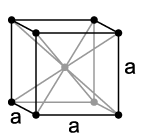
    At room temperature, strontium crystallizes in a face-centered cubic structure (space group Fm3m, No. 225; copper type) with a lattice parameter a = 608.5 pm and four formula units per unit cell.
    Two additional high-temperature modifications are known: Above 215 °C, it transforms into a hexagonal close-packed structure (magnesium type) with lattice parameters a = 432 pm and c = 706 pm. Above 605 °C, it adopts a body-centered cubic structure (tungsten type), which is the most stable phase at high temperatures.

    Chemical Properties

    Strontium is the third most reactive alkaline earth metal, following barium and radium. It reacts readily with halogens, oxygen, nitrogen, and sulfur, forming compounds in which it always appears as a divalent cation (Sr²⁺). When heated in air, strontium burns with a crimson-red flame, producing strontium oxide (SrO) and strontium nitride (Sr₃N₂).

    As a very electropositive metal, strontium reacts vigorously with water, releasing hydrogen gas and forming strontium hydroxide [Sr(OH)₂]. The same hydroxide also forms upon exposure to moist air. Strontium is soluble in liquid ammonia, producing blue-black ammoniates.

    In groundwater, strontium behaves similarly to calcium. Strontium compounds are generally insoluble under slightly acidic to basic conditions, but become soluble at lower pH values. During weathering processes, the removal of carbon dioxide (CO₂) promotes the precipitation of strontium together with calcium as strontium or calcium carbonates.
    Additionally, a high cation exchange capacity (CEC) in soils enhances the binding of strontium.

  • Isotopes

    A total of 34 isotopes and nine additional nuclear isomers are known. Of these, four—84Sr, 86Sr, 87Sr, and 88Sr—occur naturally. In the natural isotopic composition, the isotope 88Sr predominates with a proportion of 82.58%. 86Sr with 9.86%, 87Sr with 7.0%, and 84Sr with a proportion of 0.56% are less common.

    90Sr is a beta emitter with a decay energy of 0.546 MeV and decays with a half-life of 28.78 years to 90Y, which in turn rapidly (t1/2 = 64.1 h) with the emission of high-energy beta radiation (ZE = 2.282 MeV) and gamma radiation to form stable 90Zr. It usually occurs as a secondary fission product. It is produced within a few minutes by multiple beta decay from primary fission products with a mass number of 90, which occur in 5.7% of all nuclear fissions of 235U in nuclear power plants and atomic bomb explosions. This makes 90Sr one of the most common fission products of all.


    Large quantities of 90Sr are released into the environment during all nuclear disasters. Accidents in which 90Sr was released into the environment include the Windscale fire, in which 0.07 TBq of 90Sr was released, and the Chernobyl disaster, in which the released activity of 90Sr amounted to 800 TBq. After above-ground nuclear weapons tests, particularly in 1955–58 and 1961–63, the level of 90Sr in the atmosphere rose sharply. This, together with the contamination with 137Cs in 1963, led to the adoption of the Treaty Banning Nuclear Weapon Tests in the Atmosphere, in Outer Space, and Under Water, which prohibited such tests in the signatory states. As a result, the contamination of the atmosphere decreased significantly again in the following years. The total activity of 90Sr released by nuclear weapons was approximately 6 × 10¹⁷ Bq (600 PBq).

    The absorption of 90Sr, which can enter the body through contaminated milk, for example, is dangerous. The high-energy beta radiation of the isotope can alter cells in bones or bone marrow, thereby triggering bone tumors or leukemia. It is impossible to remove the strontium absorbed into the bones with chelating agents, as these prefer to complex calcium and the strontium remains in the bones. Decorporation with barium sulfate is only possible if it is carried out quickly after incorporation, before it can be incorporated into the bones. Degradation through biological processes is also very slow, with a biological half-life of 49 years in bones and an effective half-life of 90Sr of 18.1 years. It is possible that 90Sr binds to parathyroid cells. This would explain the high incidence of hyperparathyroidism among liquidators at the Chernobyl reactor.

    The beta radiation from 90Sr and 90Y can be used in radionuclide batteries, for example for remote lighthouses and radio beacons in the former Soviet Union, for long-lived isotope labeling, for measuring the thickness of materials, or for calibrating Geiger counters.

    87Sr is the decay product of the rubidium isotope 87Rb, which has a very long half-life of 48 billion years. The ratio of the different strontium isotopes can therefore be used in strontium isotope analysis to determine the age of rubidium- and strontium-containing rocks such as granite.

    Strontium is stored in bones and teeth in varying amounts under different conditions. At the same time, the isotope ratio of 86Sr and 87Sr depends on the surrounding rocks. Therefore, the isotope ratios of strontium can sometimes be used to draw conclusions about the migratory movements of prehistoric humans.

    According to the operator, the small German pebble bed reactor called AVR, located next to the research center in Jülich, is the most heavily contaminated nuclear facility in the world with 90Sr. There is also strontium in the soil under the reactor. This is to be removed at great expense during the decommissioning of the reactor by 2017[outdated].


  • Significance

    Biological Significance


    Only a few organisms use strontium in biological processes. These include Acantharia, single-celled eukaryotic organisms that belong to the radiolarians and are a common component of zooplankton in the sea. They are the only protists that use strontium sulfate as a building material for their skeletons. In doing so, they also cause changes in the strontium content in individual layers of the sea by first absorbing strontium and then sinking to deeper layers after they die, where they dissolve.

    Physiological and Therapeutic Significance

    Strontium is not essential, and only a few biological effects of the element are known. It is possible that strontium has an inhibitory effect on tooth decay.

    In animal experiments with pigs, a diet rich in strontium and low in calcium caused symptoms such as coordination disorders, weakness, and paralysis.


    Strontium has properties very similar to calcium. However, unlike calcium, it is only absorbed in small amounts through the intestines. This may be due to the larger ion radius of the element. The average strontium content in a 70-kilogram man is only 0.32 g, compared to about 1000 g of calcium in the body. Like calcium, the strontium absorbed is mainly stored in the bones, which is a treatment option for osteoporosis. A correspondingly high bioavailability is achieved through salt formation with organic acids such as ranelic acid or malonic acid.

    89Sr is used as chloride (under the trade name “Metastron”) for radionuclide therapy of bone metastases.

  • Safety Instructions

    Like other alkaline earth metals, strontium is combustible. It reacts with water or carbon dioxide, so these cannot be used as extinguishing agents. Metal fire extinguishers (class D) should be used for extinguishing, and dry sand, salt, and extinguishing powder can also be used. Furthermore, contact with water causes the formation of hydrogen, which is explosive. Small quantities of strontium can be disposed of by reacting it with isopropanol, tert-butanol, or octanol.


  • Compounds

    Like all alkaline earth metals, strontium occurs in stable compounds exclusively in the oxidation state +2. These are usually colorless salts that are often highly soluble in water.

    Halides

    Strontium forms halides with the halogens fluorine, chlorine, bromine, and iodine, each with the general formula SrX2. These are typical, colorless salts that are highly soluble in water, with the exception of strontium fluoride. They can be produced by reacting strontium carbonate with hydrohalic acids such as hydrofluoric acid or hydrochloric acid. Among other things, strontium chloride is used as an intermediate product for the production of other strontium compounds and in toothpaste, where it is intended to combat sensitive teeth.

    Salts of Oxygen Acids

    The strontium salts of oxygen acids such as strontium carbonate, strontium nitrate, strontium sulfate, and strontium chromate are particularly important in industry. Strontium carbonate is the most important commercial form of strontium compounds, with the majority of mined celestite being converted into strontium carbonate. It is mainly used in the manufacture of X-ray absorbing glass for cathode ray tubes, but also in the manufacture of strontium ferrite for permanent magnets or electroceramics. Strontium nitrate is mainly used in pyrotechnics for the red flame color typical of strontium, while yellow strontium chromate serves as a primer against corrosion of aluminum in aircraft and shipbuilding.

    Other Strontium Compounds

    Strontium(I) compounds have been detected as unstable intermediates in hot flames. Strontium(I) hydroxide, SrOH, similar to strontium(I) chloride, SrCl, is a strong emitter in the red spectral range and acts as the sole colorant in bright and deeply saturated red pyrotechnic flares.

    Organic Strontium Compounds

    Organic strontium compounds are only known and studied to a limited extent because they are very reactive and can also react with many solvents such as ethers. However, they are insoluble in nonpolar solvents. Among other things, a metallocene with pentamethylcyclopentadienyl anions (Cp*) was presented, which, unlike other metallocenes such as ferrocene, is angled in the gas phase.

Strontium, Sr, alkaline earth metal, atomic number 38, silvery-white metal, reactive metal, industrial uses, fireworks red color, glass and ceramics, ferrite magnets, metal properties, ISE AG strategic metals, ISE AG

Read more …Strontium

  • Hits: 582

Silicon

Si • Atomic Number 14

Silicon

Silicon is a metalloid belonging to the carbon group. Pure, elemental silicon is gray-black in color and exhibits a typical metallic luster, often with bronze or bluish hues. It is the second most abundant element in the Earth’s crust, surpassed only by oxygen. Similar to water, silicon shows a density anomaly—its liquid form is denser than its solid form.

In nature, pure silicon does not occur because it is too reactive, but it is present in nearly all rocks. The name silicon is derived from the Latin words silex or silicis, meaning “flint.”

Due to its atomic structure, silicon is the most important semiconductor in the electronics and technology sectors.

Silicon is also an essential trace element for the human body, primarily absorbed through plant-based foods, and plays an important role in connective tissue.

China is the leading producer of metallurgical-grade silicon, while Germany, the United States, and Japan are world leaders in the production of high-purity silicon for semiconductors.

Because of its critical role in the production of semiconductor chips, the electronics industry, and solar energy, silicon metal is classified by the European Union as a strategic raw material.

  • History

    Silicon compounds have played an important role as building materials throughout human history. Due to their sharp edges, silicon-containing rocks were already used as tools in the Stone Age. Obsidian, a particularly suitable material for tools, was mined and traded in prehistoric times.
    The production of glass from quartz sand began around 3500 BC in Mesopotamia and Egypt.

    As an element, silicon was probably first produced by Antoine Lavoisier in 1787 and independently by Humphry Davyin 1800, though both mistakenly believed it to be a compound.

    In 1811, the chemists Joseph Louis Gay-Lussac and Louis Jacques Thénard (cf. Thénard’s blue) obtained impure, amorphous silicon.
    The Swedish chemist Jöns Jakob Berzelius was the first to recognize the elemental nature of silicon and gave it its name.

    The English term “silicon” was introduced in 1831 by Thomas Thomson, who chose the suffix “-on” to indicate the chemical relationship to carbon.
    The first production of pure, crystalline silicon was achieved in 1854 by the French chemist Henri Étienne Sainte-Claire Deville through electrolysis.
    At the turn of the 20th century, the first industrial silicon production began, using the reduction of quartz sand with carbon in an electric arc furnace.

    In 1916, DuPont started large-scale production of silicon metal for steel alloys.

    By the mid-20th century, the demand for high-purity silicon for transistors led to the development of the Siemens process, which involves chemical vapor deposition of silane (SiH₄) and its thermal decomposition to ultra-pure silicon.
    This marked the beginning of the silicon age in semiconductor technology.

  • Applications and Uses

    Silicon is used industrially in various forms, depending on its purity and chemical structure.

    Silicon dioxide, i.e. quartz sand, is the basic material for glass.

    Ferrosilicon is widely used in iron metallurgy. It is a master alloy for the production of steel and cast iron, as well as a precursor for the production of high-purity silicon for the photovoltaic and semiconductor markets. Ferrosilicon is also used as a reducing agent for the extraction of metals.

    Metallurgical silicon, which is extracted from quartz sand, is used in aluminum alloys in lightweight construction (automotive industry). About half of the silicon metal produced goes to this sector.

    Silicon metal is used to produce high-purity polysilicon with a purity of over 99 percent (high-purity) and high-purity monocrystalline silicon. Polysilicon is used in solar cells and in the semiconductor industry. Monocrystalline silicon is used in computer chips, processors, and high-performance electronics.

  • Occurrence, Mining and Extraction

    Important silicate minerals include clays, feldspars, olivine, pyroxenes, amphiboles, micas, and zeolites.
    For silicon extraction, quartz sand is particularly suitable. As silicon is the second most abundant element in the Earth’s crust, it is widely distributed.

    Metallurgical-grade silicon with a purity of 98 to 99 percent is produced by reducing quartz sand with carbon in electric arc furnaces.

    High-purity silicon is obtained from metallurgical-grade silicon via the Siemens process or in a fluidized bed reactor.

    The production of silicon metal is extremely energy-intensive. China dominates the global market, accounting for 70 to 80 percent of total output, with major producers such as Hoshine Silicon and Tongwei.

    The annual global production of silicon metal is estimated at around 3.3 to 3.8 million tonnes.

  • Substitution

    Aluminum, silicon carbide, and silicomanganese can replace ferrosilicon in some applications.
    Gallium arsenide and germanium are the most important substitutes for silicon in semiconductor applications.

Silicon, Si, metalloid, semiconductor, element 14, industrial uses, electronics, solar cells, ferrosilicon, alloys, silicon metal, semiconductor industry, ISE AG metals, ISE AG

Read more …Silicon

  • Hits: 469

Selenium

Se • Atomic Number 34

Selenium

Selenium belongs to the oxygen group in the periodic table. Its properties are closely related to those of sulfur and tellurium. Like sulfur, selenium occurs in several allotropic forms.

Selenium is a rare element. It occasionally occurs in its native state together with elemental sulfur, but more commonly it is found in association with copper, mercury, lead, or silver in certain minerals.

It is an essential trace element for humans but becomes toxic at high concentrations.

The electrical conductivity of selenium increases when exposed to light, which is why its main application is in photovoltaics.

Selenium is obtained as a by-product during the refining of copper, lead, and other metals. The leading producer is China, with Jiangxi Copper being the world’s largest selenium producer.

  • History

    In 1817, Swedish chemist Jöns Jacob Berzelius, together with Johann Gottlieb Gahn, discovered a red substance derived from sulfide ores in the mines of Falun, Sweden. The following year, it was identified as an element similar to tellurium and was named selenium, after Selene, the Greek goddess of the Moon.

    Later, the different forms of selenium were studied — red amorphous selenium and gray metallic selenium.

    Selenium was first used in the glass industry for coloring and decolorizing glass. In 1873, Willoughby Smith discovered the photoconductivity of selenium.

    From the early 20th century, selenium rectifiers were developed for use in old radios, along with the first selenium-based solar cells. In 1938, Chester Carlson used selenium photoconductors to create the first modern photocopier. In 1957, selenium was recognized as an essential trace element for humans.

    Today, selenium plays an important role in photovoltaics and nanotechnology.

  • Applications and Uses

    The main applications of selenium are in photovoltaics and electronics. It is a key component of copper indium gallium selenide (CIGS) solar cells, an efficient thin-film photovoltaic technology.

    Selenium is also used in the glass industry for decolorizing as well as for producing red coloration in glass and ceramics.

    Selenium coatings protect metal surfaces from corrosion.

    In addition, selenium is used as an alloying element in copper and steel, improving machinability and reducing wear.

  • Occurrence, Mining and Extraction

    The largest selenium reserves are found in China, Russia, Canada, and Chile. There are no dedicated selenium mines; the element is obtained as a by-product during the refining of copper, lead, and other metals.

    China is the dominant producer, followed by Japan, Germany, and Russia as other major producing countries.

    The world’s largest selenium producer is Jiangxi Copper, located in Guixi, Jiangxi Province, China, with an annual output of several hundred tonnes. Tongling Nonferrous Metals Group is another key player in the global selenium market. In Japan, Mitsubishi Materials is the leading selenium producer, while Aurubis in Hamburg, Germany, is the largest selenium producer in Europe.

    The importance of recycling, particularly from old photocopiers and electronic waste, is increasing.

    Global selenium production amounts to approximately 3.500 tonnes per year.

  • Substitution

    The complete substitution of selenium in photovoltaics is unlikely, as copper indium gallium selenide (CIGS) solar cells offer high efficiency. Although CIGS cells can be replaced by perovskite, cadmium telluride, or kesterite solar cells, these alternatives often involve significant trade-offs in terms of efficiency or stability.

    Manganese and cobalt can partially replace selenium in decolorizing applications.

    The substitution of selenium–cadmium red (ruby glass) is possible with cerium sulfide, iron oxide–based pigments, or gold nanoparticles. However, selenium–cadmium red remains unmatched in terms of brilliance, heat resistance, and cost efficiency.

Selenium, Se, chemical element, chalcogen, metalloid, semiconductor, glass industry, photocells, industrial selenium, selenium properties, selenium uses, industrial applications, trace element, ISE AG metals, ISE AG

Read more …Selenium

  • Hits: 562

More Articles …