Holmium

Ho • Atomic Number 67

Holmium

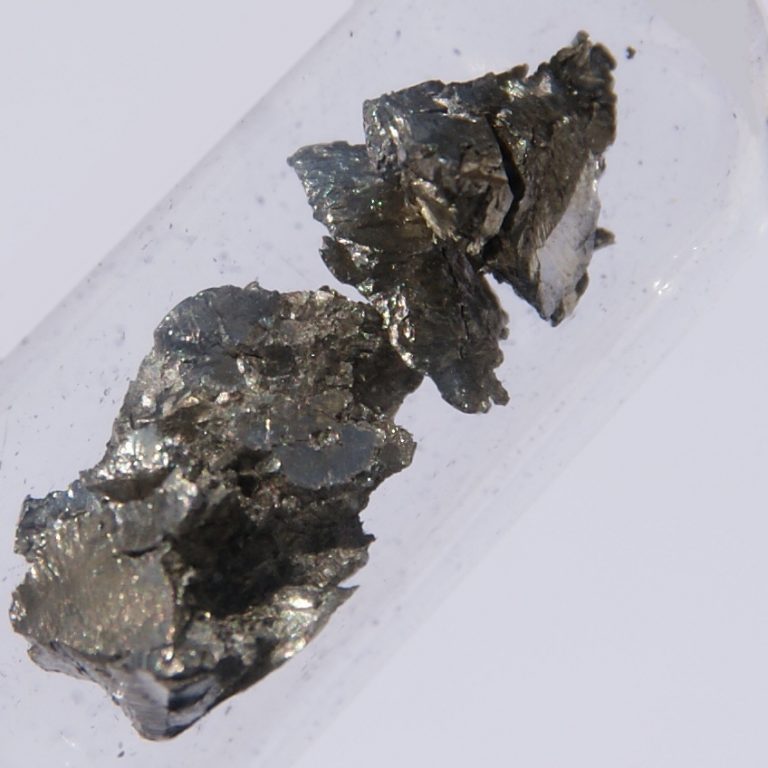
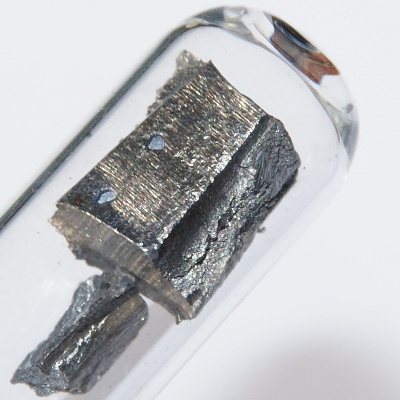
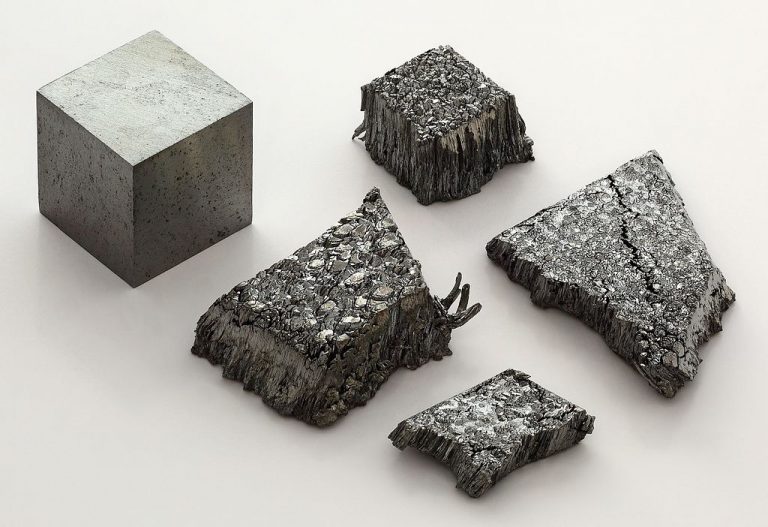
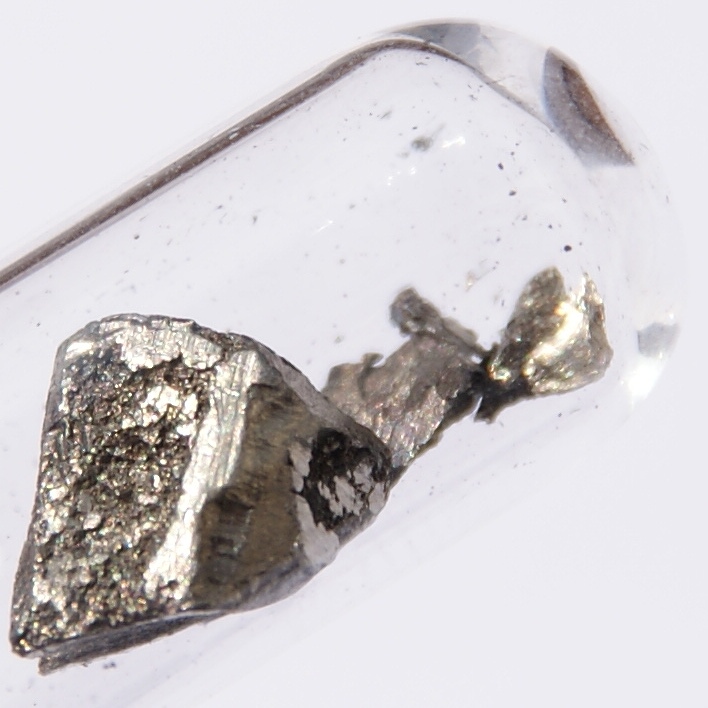
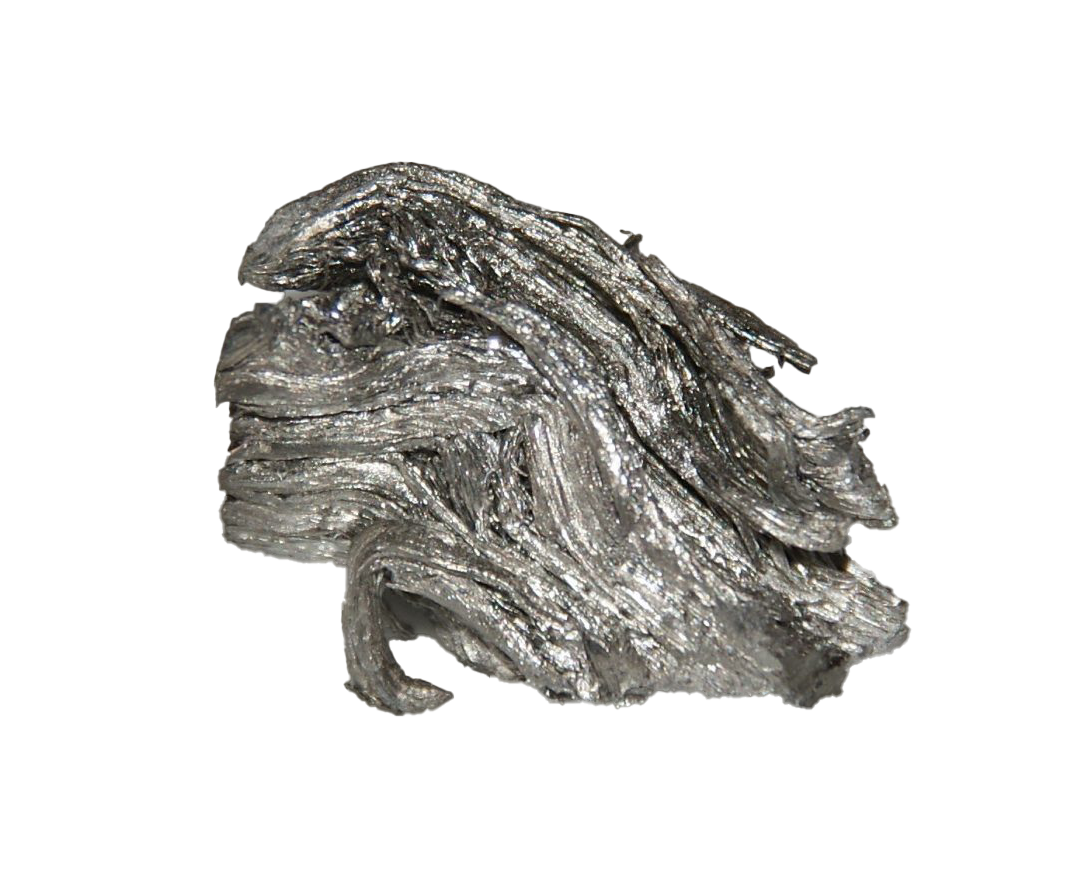
Holmium is a gray, soft, and ductile metal that is relatively corrosion-resistant. Its most outstanding property is that the holmium(III) ion (Ho³⁺) has the highest magnetic moment of all naturally occurring elements. It belongs to the heavy rare earth elements.

Its main application is in magnetic technologies, where it plays an important role as a performance enhancer in permanent magnets.

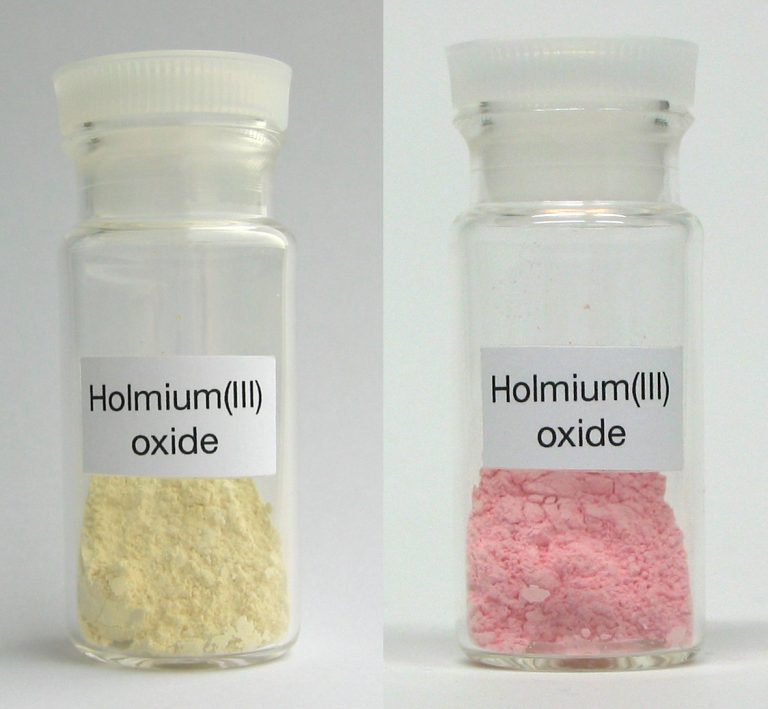
In 1878, Swiss chemists Marc Delafontaine and Jacques-Louis Soret discovered the element spectroscopically through its unique absorption lines and initially named it "X." In 1879, Swedish chemist Per Teodor Cleve independently discovered the element and isolated it as a yellow oxide from impure erbium (erbium oxide). Cleve used a method developed by Carl Gustav Mosander: he first removed all known impurities before attempting to separate the remainder. This resulted in a brown residue, which he named Holmia, and a green residue, called Thulia. It was not until 1911 that Swedish chemist Holmberg succeeded in producing pure holmium oxide. Whether he adopted the name Holmium, proposed by Cleve after the Swedish capital Stockholm, or derived it from his own name is unknown.

Metallic pure holmium was first produced in 1940. Naturally, holmium only occurs in compounds.

Holmium Oxides

  • Occurence

    Holmium (Ho) is another heavy rare earth element (HREE) and one of the least abundant elements. Holmium-containing minerals include xenotime, fergusonite, gadolinite, and ion adsorption clays.

    Economically significant deposits are ion adsorption clay deposits found in southern China (Jiangxi and Guangdong provinces) and Myanmar.

  • Extraction

    After a complex separation of other accompanying elements, the oxide is converted to holmium fluoride using hydrofluoric acid. It is then reduced to metallic holmium with calcium, forming calcium fluoride as a byproduct. Remaining calcium residues and impurities are removed through an additional vacuum remelting process.

  • Application

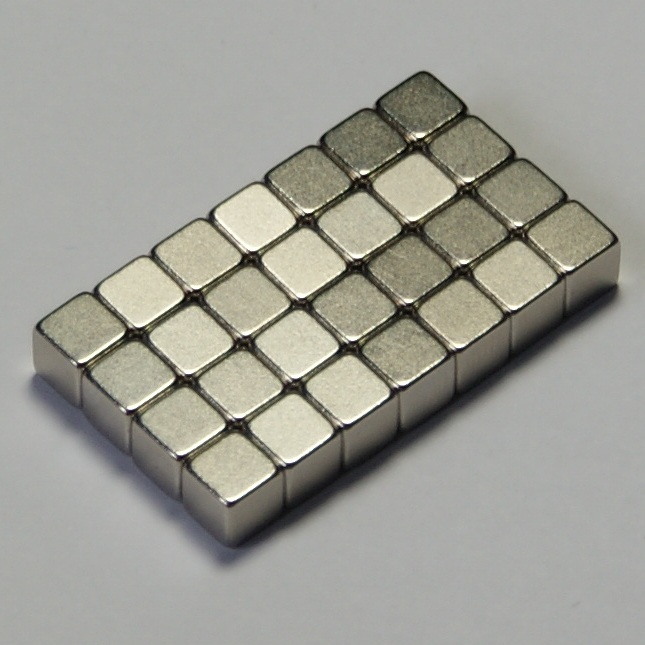
    The most important use of holmium is as a magnetic pole piece in (solid-state) magnets. Holmium is not used as a standalone magnet but as an additive in high-performance neodymium-iron-boron (NdFeB) permanent magnets. The addition of holmium (often together with dysprosium) enables these magnets to retain their magnetic strength (coercivity) even at very high temperatures. Without these additives, the magnets would become demagnetized when exposed to heat.

    These super-stable, heat-resistant magnets are absolutely essential for electric motors in hybrid and electric vehicles, as well as for generators in wind turbines.

    Holmium also finds applications in control rods for nuclear reactors and in medical lasers (holmium-doped yttrium-aluminum-garnet lasers – Ho:YAG lasers).

    General Information
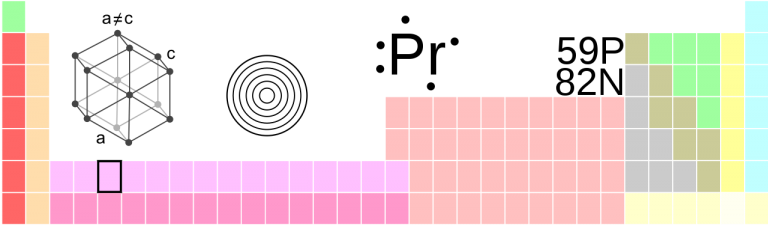
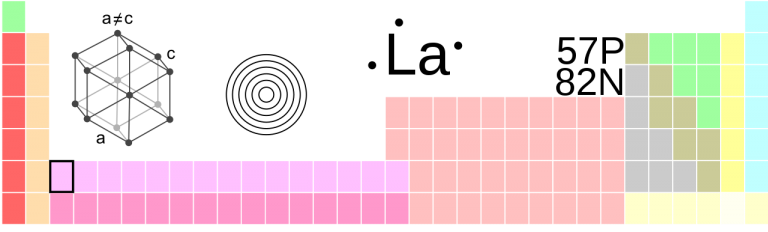
    Name, Symbol, Atomic Number Holmium, Ho, 67
    Series Lanthanoid
    Groupe, Periode, Block La, 6, f
    Appearance silvery-white
    CAS-Number 7440-60-0
    Mass Fraction in the Earth's Crust 1.1 ppm
    Atomic Properties
    Atomic Mass 164.93032 u
    Atomic Radius 175 pm
    Covalent Radius 192 pm
    Electron Configuration [Xe] 4f¹¹ 6s²
    1. Ionization Energy 581.0 kJ/moll
    2. Ionization Energy 1170 kJ/mol
    3. Ionization Energy 2204 kJ/mol
    4. Ionization Energy -
    Physical Properties
    State of Matter solid
    Crystal Structure Hexagonal
    Density 8.78 g/cm³ (at 25 °C)
    Magnetism

    Paramagnetic (χm = 0.049)

    Melting Point 1734 K (1431 °C)
    Boiling Point 2993 K (2720 °C)
    Molar Volume 18.74 * 10⁻⁶ m³/mol
    Heat of Vaporization 265 kJ/mol
    Heat of Fusion 17.0 kJ/mol
    Electrical Conductivity 1.23 * 10⁶ A/(V·m)
    Thermal Conductivity 16 W/(m*K)

  • Unique Properties

    The silver-white shining rare earth metal holmium is soft and malleable.

    Holmium exhibits remarkable magnetic properties. In terms of its ferromagnetic behavior, it surpasses iron by far. With a magnetic moment of 10.6 μB, it has the highest magnetic moment of any naturally occurring chemical element. It forms magnetic compounds with yttrium.

    In dry air, holmium is relatively stable, but in moist or warm air it tarnishes quickly, forming a yellowish oxide layer. At temperatures above 150 °C, it burns to holmium sesquioxide (Ho₂O₃). It reacts with water under hydrogen evolution to form the hydroxide. In mineral acids, it dissolves with hydrogen gas release.

    In its compounds, holmium predominantly occurs in the +3 oxidation state; Ho³⁺ cations form yellow solutions in water. Under special reducing conditions, the +2 oxidation state can also be realized in chlorides, for example in holmium(II,III) chloride (Ho₅Cl₁₁), although pure holmium(II) chloride does not exist.

    Holmium Periodensysstem 768x232

Read more …Holmium

  • Hits: 543

Gadolinium

GD • Atomic Number 64

Gadolinium

Gadolinium is a silvery-white to grayish-white shiny metal that is ductile and malleable. It belongs to the group of middle rare earth elements.

Its key property is its extremely high paramagnetic susceptibility, meaning it is strongly attracted by a magnetic field.

The most important application of gadolinium is in medicine, where it is used as a contrast agent in magnetic resonance imaging (MRI).

The element was first discovered spectroscopically in 1880 by Jean Charles Galissard de Marignac in didymium and gadolinite. In 1886, he isolated it as a white oxide from samarskite. That same year, Paul Émile Lecoq de Boisbaudran also produced gadolinium oxide and named the new element after the discoverer of the mineral gadolinite, Finnish chemist Johan Gadolin.

In nature, gadolinium only occurs in compound form. The most important industrial sources are the minerals monazite and bastnäsite.

  • Occurence

    Gadolinium is primarily found in the major rare earth ore minerals bastnäsite, monazite, and especially xenotime.

    Ion-adsorption clay deposits in southern China are particularly rich in gadolinium.

  • Extraction

    After a complex separation of other gadolinium-containing elements, the oxide is converted with hydrofluoric acid into gadolinium fluoride. This is then reduced to metallic gadolinium using calcium, producing calcium fluoride as a byproduct. Remaining calcium residues and impurities are removed by an additional vacuum remelting process.

  • Application

    Due to its extremely strong paramagnetism, the most important application of gadolinium is as an MRI contrast agent in modern medical diagnostics.

    Other properties of gadolinium make it highly relevant for niche applications.

    Because of its high neutron absorption cross-section, gadolinium is used in control rods in nuclear reactors.

    Gadolinium is also used in the production of phosphors for plasma displays and X-ray screens, as it activates green phosphorescence.

    General Information
    Name, Symbol, Atomic Number Gadolinium, Gd, 64
    Series Lanthanoid
    Groupe, Periode, Block La, 6, f
    Appearance silvery-white
    CAS-Number 7440-54-2
    Abundance in Earth's crust 5.9ppm
    Atomic Properties
    Atomic Mass 157.25 u
    Atomic Radius 188 pm
    Covalent Radius 196 pm
    Electron Configuration [Xe] 4f⁷ 5d¹ 6s²
    1. Ionization Energy 593.4 kJ/moll
    2. Ionization Energy 1170 kJ/mol
    3. Ionization Energy 1990 kJ/mol
    4. Ionization Energy -
    Physical Properties
    State of Matter solid
    Crystal Structure Hexagonal
    Density 7.886 g/cm³ (at 25 °C)
    Magnetism

    Paramagnetic (χm = 0.12)

    Melting Point 1585 K (1312 °C)
    Boiling Point 3523 K (3250 °C)
    Molar Volume 19.90 * 10⁻⁶ m³/mol
    Heat of Vaporization 305 kJ/mol
    Heat of Fusion 10.0 kJ/mol
    Electrical Conductivity 0.763 * 10⁶ A/(V·m)
    Thermal Conductivity 11 W/(m*K)


  • Unique Properties

    The silvery-white to grayish-white rare earth metal is ductile and malleable. Above 1508 K, its closest-packed crystal structure transforms into a body-centered cubic structure. In dry air, gadolinium is relatively stable, but in moist air it forms a non-protective, loosely adherent oxide layer that flakes off. It reacts slowly with water and dissolves in dilute acids.

    Gadolinium has the highest thermal neutron capture cross-section of all known stable elements at 49,000 barns, due to its isotope Gd-157, which has a cross-section of 254,000 barns (only the unstable Xe-135 surpasses Gd-157 by about a factor of 10). However, its high burn-out rate limits its use as a control rod material in nuclear reactors.

    Together with dysprosium, holmium, erbium, and terbium—also lanthanides—it is one of the few elements besides iron, cobalt, and nickel that exhibit ferromagnetism. However, this ferromagnetism only occurs below its Curie temperature of 292.5 K (19.3 °C).

    Gadolinium is not superconducting, but ceramic high-temperature superconductors of the type Ba₂GdCu₃O₇₋ₓ with a critical temperature between 80 and 85 K are known.

    Metallic gadolinium dust is fire and explosion hazardous.

Gadolinium, Gd, rare earth element, lanthanide metal, paramagnetic metal, MRI contrast agent, neutron absorption, industrial applications, silvery-white metal, ISE-AG Swiss metals, rare earth metals marketing, magnetic properties, ISE AG

Read more …Gadolinium

  • Hits: 527

Europium

EU • Atomic Number 63

Europium

Europium is a silvery, lustrous heavy metal and is classified among the middle rare earth elements.

Its most important property by far is its ability to emit light in very specific, pure, and intense colors. As a result, the primary application of europium is in the production of phosphors for display and lighting technologies.

In 1890, Paul Émile Lecoq de Boisbaudran discovered unknown spectral lines in a samarium–gadolinium concentrate. The discovery of europium is credited to Eugène-Anatole Demarçay, who in 1896 suspected the presence of another element within the recently discovered samarium. In 1901, he succeeded in isolating europium. Metallic europium was not produced until several years later.

  • Occurence

    Europium is a rare element on Earth, with an average abundance of about 2 ppm in the continental crust.

    It occurs as a minor constituent in various lanthanide-bearing minerals. Europium is found in monazite, bastnäsite, and xenotime.

    In some igneous rocks, the concentration of europium is either higher or lower than expected based on the relative abundance pattern of rare earth elements normalized to chondrites. This phenomenon is known as the europium anomaly and is caused by the fact that under reducing conditions in magma, Eu³⁺ can be reduced to Eu²⁺.


  • Extraction

    After breaking down the raw materials, such as monazite or bastnäsite, using sulfuric acid or sodium hydroxide, various separation methods can be applied.

    In addition to ion exchange, a process based on liquid–liquid extraction and the reduction of Eu³⁺ to Eu²⁺ is commonly used. When bastnäsite is the starting material, cerium is first removed as cerium(IV) oxide, and the remaining rare earth elements are dissolved in hydrochloric acid. A mixture of DEHPA (di(2-ethylhexyl)phosphoric acid) and kerosene is then used in liquid–liquid extraction to separate europium, gadolinium, and samarium from the other rare earth elements. These three are further separated by selectively reducing europium to Eu²⁺ and precipitating it as poorly soluble europium(II) sulfate, while the other ions remain in solution.

    Metallic europium can be produced by reacting europium(III) oxide with lanthanum or mischmetal. When this reaction is carried out under vacuum, europium distills off and can thus be separated from other metals and impurities.

  • Application

    The first major technical application of europium was the production of europium-doped yttrium vanadate. This red phosphor, discovered in 1964 by Albert K. Levine and Frank C. Palilla, soon played a key role in the development of color television. As a result, the first rare earth mine, operating since 1954 in Mountain Pass, California, was significantly expanded to meet demand.

    Europium continues to be used as a dopant in the production of phosphors for aircraft instrument displays and compact fluorescent lamps (CFLs). Phosphors containing both divalent and trivalent europium are used for different colors.

    For red phosphors, europium-doped yttrium oxide (Y₂O₃:Eu³⁺) is primarily used. Previously, yttrium oxysulfide and the first significant red phosphor, yttrium vanadate:Eu³⁺, were also used. Eu²⁺ is typically used as a blue phosphor in compounds like strontium chlorophosphate (Sr₅(PO₄)₃Cl:Eu²⁺, also known as strontium chloroapatite, SCAP) and barium magnesium aluminate (BaMgAl₁₁O₁₇:Eu²⁺, BAM).

    Plasma displays require phosphors that convert VUV radiation emitted by the noble gas plasma into visible light. Europium-doped phosphors are used here for both the blue and red parts of the spectrum — BAM for blue, and (Y,Gd)BO₃:Eu³⁺ for red.

    In mercury high-pressure lamps, such as those used in street lighting, europium-doped yttrium vanadate is applied to the glass to make the light appear whiter and more natural.

    Due to its ability to absorb neutrons, europium can also be used in control rods for nuclear reactors. Europium-containing control rods have been tested in various Soviet experimental reactors such as BOR-60 and BN-600.

    As europium hexaboride, it is also used as a coating for oxide cathodes in thermionic emission applications.

    Europium fluorescence is used as an anti-counterfeiting feature in euro banknotes.

    This fluorescence property is also useful in fluorescence spectroscopy. Europium can be bound in specific complexes that selectively react and accumulate at desired locations, such as with certain proteins.

    Soluble europium compounds are mildly toxic.

     
    1. Europium(III)-doped yttrium oxysulfide (Y₂O₂S:Eu³⁺) forms the red phosphor used in color CRTs (cathode ray tubes).
    2. Europium(II)-doped barium fluorobromide (BaFBr:Eu²⁺) is used in photostimulated luminescence (PSL) detectors.
    3. Eu³⁺-doped solids usually show red luminescence, while Eu²⁺ can emit across the entire optical spectrum (from UV to red), depending on the host lattice.
    4. Europium is used as a dopant in phosphors for light sources such as high-pressure mercury lamps and energy-saving lamps.
    5. Dopant in scintillation crystals (as an activator).
    6. Organic europium compounds are used as shift reagents in NMR spectroscopy.
    7. Europium-tetracycline complexes are used in fluorescence spectroscopy to detect hydrogen peroxide.
    8. TRFIA (time-resolved fluoroimmunoassay): Eu³⁺ ions fluoresce only briefly in water. Chelating agents are used to create a hydrophobic environment around Eu³⁺ ions, extending fluorescence duration. This makes it possible to distinguish europium fluorescence from other short-lived background signals in complex organic mixtures.

  • Unique Properties

    As a base metal, europium is one of the most reactive rare earth elements. When exposed to air, the silvery, shiny metal tarnishes immediately. At temperatures above 150 °C, it ignites and burns with a red flame to form the sesquioxide Eu₂O₃. In water, it reacts with the evolution of hydrogen to form the hydroxide.

    Europium reacts with the halogens fluorine, chlorine, bromine, and iodine to form the respective trihalides. When reacting with hydrogen, non-stoichiometric hydride phases are formed, with hydrogen occupying the interstitial spaces of the metal’s crystal lattice.

    Europium dissolves slowly in water but rapidly in acids, producing hydrogen gas and the colorless Eu³⁺ ion. The also colorless Eu²⁺ ion can be obtained via electrolytic reduction at the cathode in aqueous solution. It is the only divalent lanthanoid ion that is stable in aqueous solution. Europium also dissolves in liquid ammonia, forming a deep blue solution similar to alkali metals, in which solvated electrons are present.

    The Eu³⁺ cation, like Sm³⁺, Tb³⁺, and Dy³⁺, can emit visible light when coordinated in a suitable complex and excited at specific wavelengths. While Eu³⁺ is colorless in aqueous solution, coordination with organic ligands possessing extended π-electron systems greatly enhances its luminescent properties via the antenna effect. The π-electrons of the ligand absorb incoming light (approx. 355 nm) and transfer the energy to the 5d electrons of Eu³⁺, which are then excited to the 4f orbitals. When these electrons return to their ground state, visible light (approx. 610 nm) is emitted.

    With a density of 5.245 g/cm³, europium has an unusually low density — significantly lower than that of neighboring lanthanoids such as samarium or gadolinium, and even lower than lanthanum.

    This also applies to its comparatively low melting point (826 °C) and boiling point (1440 °C), in contrast to the typical trend among the lanthanoids (e.g., gadolinium melts at 1312 °C and boils at 3000 °C). These anomalies contradict the lanthanoid contraction and are attributed to europium’s electron configuration. Because its 4f shell is half-filled, only two valence electrons are available for metallic bonding, resulting in weaker bonding forces and a significantly larger atomic radius — a phenomenon also observed in ytterbium.

    Under normal conditions, europium crystallizes in a body-centered cubic (bcc) structure with a lattice parameter of a = 455 pm. Two additional high-pressure phases are known. Unlike other lanthanoids, europium (similar to ytterbium) does not exhibit a double-hexagonal or samarium-type structure. The first phase transition occurs at 12.5 GPa, above which europium crystallizes in a hexagonal close-packed (hcp) structure with lattice parameters a = 241 pm and c = 545 pm. At pressures above 18 GPa, a third phase (Eu-III), similar to the hcp arrangement, has been identified.

    At pressures of at least 34 GPa, europium’s oxidation state in the metal changes from divalent to trivalent. This allows the element to become superconducting at approximately 80 GPa and 1.8 K.

    Europium ions embedded in suitable host lattices show pronounced fluorescence. The emitted wavelength depends on the oxidation state. Eu³⁺ fluoresces intensely red, largely independent of the host lattice, emitting between 613 and 618 nm. In contrast, Eu²⁺ fluorescence is more sensitive to the host material. For example, emission occurs at 447 nm (blue) in barium magnesium aluminate (BaMgAl₁₁O₁₇:Eu²⁺), and at 520 nm (green) in strontium aluminate (SrAl₂O₄:Eu²⁺).

    While ¹⁵³Eu is stable, evidence suggests that ¹⁵¹Eu is an alpha emitter. The lower limit of its half-life is estimated at 1.7 trillion years. Europium and its compounds are considered toxic. Metal dusts are both flammable and explosive hazards.

Europium, Eu, rare earth element, lanthanide, phosphors, fluorescent materials, europium uses, TV and display phosphors, nuclear control rods, rare earth metals, ISE AG metals, ISE AG

Read more …Europium

  • Hits: 467

Erbium

Er • Atomic Number 68

Erbium

Erbium is a silvery-white metal that belongs to the heavy rare earth elements. It is malleable but also quite brittle.

The name is derived from the Ytterby mine near Stockholm.

Erbium was discovered in 1843 by Carl Gustav Mosander. However, the supposedly pure oxide was actually a mixture of oxides of erbium, scandium, holmium, thulium, and ytterbium.

The clarification of this mixture was later achieved by chemists Marc Delafontaine and Per Teodor Cleve. Pure erbium oxide was first produced in 1905 by the French chemist Georges Urbain and the American chemist Charles James.

Erbium Oxide
  • Occurrence

    As a heavy rare earth element (HREE), erbium is more commonly found in HREE-enriched minerals such as xenotime and euxenite. Additionally, erbium occurs in ion-adsorption clays (clay deposits), which, due to their relatively simple processing despite the low percentage of rare earth elements, represent the most important source of HREEs. The primary sources are ion-adsorption clay minerals from southern China (Jiangxi and Guangdong provinces) and Myanmar.

  • Extraction

    After an elaborate separation of other erbium-associated elements, the oxide is converted with hydrofluoric acid into erbium fluoride. It is then reduced to metallic erbium using calcium, producing calcium fluoride as a byproduct. Remaining calcium residues and impurities are removed through an additional vacuum remelting process.

  • Application

    Its unique interaction with light accounts for most of the element’s applications. Unlike cerium or lanthanum, its uses are more specialized but absolutely crucial for modern technologies.

    In fiber optic networks, erbium-doped glasses serve as optical amplifiers. These erbium-doped fiber amplifiers (EDFAs) form the backbone of the global internet. They enable data transmission over thousands of kilometers under the oceans without the need for electrical signal regeneration along the way.

    In medicine, erbium lasers (Er:YAG lasers — erbium-doped yttrium aluminum garnet) are used in dermatology and dentistry due to their precise and controlled effects.

    Besides medical lasers, erbium is also used in other high-precision lasers: erbium-doped crystals (such as Er:YAG, Er:YSGG) are employed in lasers for precise cutting, welding, and marking in industrial applications.

    Erbium oxide, which has a beautiful and distinctive pink to rose color, is used as a dye for glass, jewelry, and sunglasses.

    (Er₂O₃) exhibits a very attractive and characteristic pink to rose hue.

    Besides its optical properties, erbium is useful in nuclear power due to its ability to easily absorb free neutrons. This makes it suitable for use in control rods in nuclear reactors.

    Furthermore, erbium alloys are used in cryocoolers for applications at liquid helium temperatures because of their high specific heat capacity.

    Fiber Optics Using Erbium

    General Information

    Name, Symbol, Atomic Number Erbium, Er, 68
    Series Lanthanoid
    Group, Period, Block La, 6, f
    Appearance silvery-white
    CAS-Number 7440-52-0
    Abundance in Earth's crust 2.3 ppm
    Atomic Properties
    Atomic Mass 167.26 u
    Atomic Radius 175 pm
    Covalent Radius 189 pm
    Electron Configuration [Xe] 4f¹² 6s²
    1. Ionization Energy 589.3 kJ/mol
    2. Ionization Energy 1150 kJ/mol
    3. Ionization Energy 2194 kJ/mol
    4. Ionization Energy -
    Physical Properties
    State of Matter solid
    Crystal Structure Hexagonal
    Density 9.045 g/cm³ (at 25 °C)
    Magnetism

    Paramagnetic (χm = 1.4 × 10⁻³)

    Melting Point 1802 K (1529 °C)
    Boiling Point 3141 K (2868 °C)
    Molar Volume 18.46 * 10⁻⁶ m³/mol
    Heat of Vaporization 285 kJ/mol
    Heat of Fusion 19.9 kJ/mol
    Electrical Conductivity 1.16 * 10⁶ A/(V·m)
    Thermal Conductivity 15 W/(m*K)

Erbium, Er, rare earth element, lanthanide, heavy rare earth, silvery-white metal, malleable metal, optical amplifiers, fiber optics, lasers, nuclear applications, ISE AG metals, ISE AG

Read more …Erbium

  • Hits: 522

Dysprosium

Dy • Atomic Number 66

Dysprosium

Dysprosium is a silvery-gray, malleable and ductile metal that belongs to the heavy rare earth elements.

It is highly reactive. Together with holmium, dysprosium has the highest magnetic moment (10.6 μB) of all naturally occurring chemical elements.

The discovery of dysprosium traces back to studies of gadolinite (then still called ytterbite), a mineral from the Ytterby mine near Stockholm, Sweden.

In 1879, Per Theodor Cleve and Jacques-Louis Soret independently discovered through spectroscopic investigations that erbium contained additional elements. Following Cleve’s suggestion, these were named holmium and thulium.

In 1886, Paul Émile Lecoq de Boisbaudran conducted fractionation experiments on holmium and realized that another element must exist. Since the unknown element was experimentally very difficult to isolate and he was unable to obtain a pure fraction, he named it dysprosium, meaning “the inaccessible.”

In 1906, Georges Urbain succeeded in producing pure dysprosium oxide for the first time. In 1936, Wilhelm Klemm and Heinrich Bommer isolated metallic dysprosium for the first time. In 1950, Frank Harold Spedding developed an effective ion-exchange separation method for dysprosium and yttrium.

  • Occurrence

    The occurrence of dysprosium in the continental Earth’s crust is about 5.2 ppm. In terms of abundance, it ranks behind most of the light rare earth elements such as cerium, neodymium, and samarium, but ahead of most heavy rare earths like erbium, ytterbium, and holmium.

    Minerals with particularly high dysprosium content include xenotime and gadolinite-(Y). In contrast, ores important for extracting other lanthanides, such as monazite and bastnäsite, contain only small amounts of dysprosium.

    The main sources of dysprosium are ion-adsorption clay minerals (clay deposits) found in southern China (Jiangxi and Guangdong provinces) and Myanmar.

    In these clay deposits, the rare earth elements are not part of a crystal structure but are adsorbed as ions onto clay particles. This allows for their extraction via ion-exchange processes, which are especially simple and cost-effective. Crucially, these deposits are highly enriched with valuable heavy rare earth elements like dysprosium and terbium.

  • Extraction

    After an elaborate separation of other dysprosium-associated elements, the oxide is converted with hydrofluoric acid to dysprosium fluoride. It is then reduced with calcium to metallic dysprosium, producing calcium fluoride as a byproduct. Remaining calcium residues and impurities are removed through an additional vacuum remelting process. High-purity dysprosium is obtained after vacuum distillation.

    Commercial separation is performed by liquid-liquid extraction or ion-exchange methods. The metal is produced by metallothermic reduction of the anhydrous halides using alkali or alkaline earth metals. Further purification of the metal is achieved by vacuum distillation.

    Dysprosium exists in three allotropes (structural forms). The α-phase is hexagonally close-packed (HCP) with lattice parameters a = 3.5915 Å and c = 5.6501 Å at room temperature. Upon cooling to approximately 90 K (-183 °C / -297 °F), the ferromagnetic order is accompanied by an orthorhombic distortion of the HCP lattice. The β-phase has lattice parameters a = 3.595 Å, b = 6.184 Å, and c = 5.678 Å at 86 K (-187 °C / -305 °F). The γ-phase is body-centered cubic (BCC) with a = 4.03 Å at 1381 °C (2518 °F).

  • Application

    The main applications of dysprosium are as alloying additions to Nd₂Fe₁₄B permanent magnet materials (where part of the neodymium is replaced by dysprosium) to increase both the Curie temperature and especially the coercive field strength, thereby improving the high-temperature performance of the alloy. The metal is also a component of the magnetostrictive material Terfenol D (Tb₀.₃Dy₀.₇Fe₂).

    Due to its relatively high neutron absorption cross-section, dysprosium is used in control rods for nuclear reactors. Its compounds have been employed in the production of laser materials and phosphor activators, as well as in halogen metal vapor lamps.

    The economic and technical significance of dysprosium is relatively low. Its annual production is estimated at less than 100 tons. It is used in various alloys, specialty magnets, and, alloyed with lead, as shielding material in nuclear reactors. However, its use in magnets for wind turbines has contributed to making rare earth metals a scarce resource. Additionally, the world’s largest supplier, China, restricts exports to increase domestic value creation.

    Dysprosium oxide — Chemically, dysprosium behaves like a typical trivalent rare earth element and forms a series of pale yellow compounds in the +3 oxidation state.

Dysprosium, Dy, rare earth element, lanthanide, high-temperature magnets, permanent magnets, magnet alloys, wind turbines, electric vehicles, rare earth metals, element 66, ISE AG metals, strategic metal, ISE AG

Read more …Dysprosium

  • Hits: 515

More Articles …