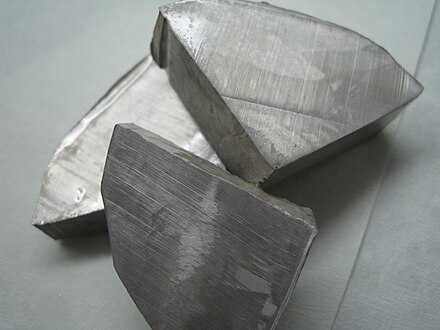
Large quantities of sodium chloride and other sodium compounds, such as sodium carbonate, are mined and processed. However, only a small portion of this is further processed into metallic sodium. The majority is used directly or converted into other compounds.
Sodium is the most widely used alkali metal. It is employed for technical, industrial, and laboratory purposes. In school experiments and demonstration lectures, sodium can be used — often with a sodium spoon — to generate hydrogen gas when reacted with water.
A portion of the sodium is used to produce various sodium compounds, such as sodium peroxide (used as a bleaching agent) and sodium amide, a strong base. These compounds do not occur naturally and cannot be obtained directly from sodium chloride. Sodium cyanide and sodium hydride are also synthesized from sodium. Because sodium influences the solidification structure of metals, it is used as an additive in aluminum–silicon alloys (a refinement process developed by Aladár Pácz).
Catalyst
Sodium catalyzes the polymerization of 1,3-butadiene and isoprene, which made it useful in the production of synthetic rubber. The synthetic rubber known as Buna (from Butadiene and Natrium) was the first artificial rubber in the world and was produced starting in 1937 at the Buna Works in Schkopau, Germany.
Coolant
Because sodium has a high thermal conductivity (140 W/(m·K)) — far higher than that of steel (15–58 W/(m·K)) — and combines a low melting point with a wide liquid temperature range, it is used as a coolant in several applications:
-
In internal combustion engines, sodium is used to cool exhaust valves. The valve stems are hollow and partially filled with sodium, which melts during operation and oscillates between the hot and cold ends, transferring heat away from the red-hot valve head.
-
Fast breeder reactors are cooled with liquid sodium. In these reactors, the fast neutrons produced during fission must not be slowed down, as water would do; therefore, sodium — which does not act as a moderator — is used instead. The heat is then transferred through a secondary sodium loop to a steam generator, which powers a turbine.
Light Production
Sodium vapor lamps utilize the characteristic yellow light emitted by sodium vapor in an electric discharge. Due to their high luminous efficiency, they are widely used for street lighting.
Reducing Agent
Some metals, such as titanium, zirconium, tantalum, and uranium, cannot be obtained by carbon reduction, as this would form stable, inseparable carbides. Instead, sodium is used as a reducing agent, along with aluminum and magnesium. Sodium is also used in the production of potassium, which cannot be extracted via carbon reduction or by electrolysis due to potassium’s high solubility in molten potassium chloride.
In organic synthesis, sodium serves as an important reducing agent. For many years, its most significant industrial use was in producing tetraethyllead from chloroethane, an antiknock additive for gasoline. Due to environmental concerns, the use of tetraethyllead has been banned or severely restricted, leading to a decline in sodium consumption. Sodium is also used in reactions such as the Birch reduction and pinacol coupling, though these are primarily of laboratory significance.
Drying Agent
Because sodium reacts even with traces of water, freshly cut or pressed sodium wire can be used to dry organic solvents, such as diethyl ether or toluene. However, this method is not suitable for halogenated solvents (e.g., methylene chloride, chloroform) due to their violent reaction with sodium.
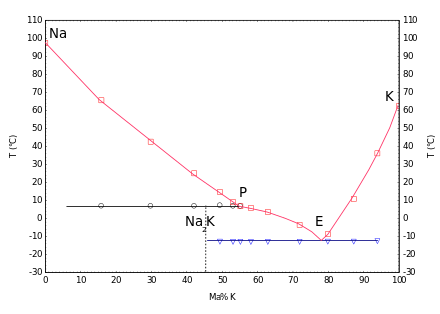
Sodium–potassium alloys (NaK) are liquid at room temperature and serve as heat transfer agents or dehalogenation reagents in organic synthesis. NaK is also effective for final drying of already pre-dried solvents to achieve extremely low residual water content.
Electrical Conductor
In the 1960s, experiments were conducted using sodium cables encased in polyethylene insulation. However, due to its lower electrical conductivity, a sodium-based cable would need to be approximately 75% larger in diameter than a conventional copper cable.
Detection
Here is the English translation of your text about sodium (Na), including its detection, physiology, biological roles, safety, and compounds:
Detection
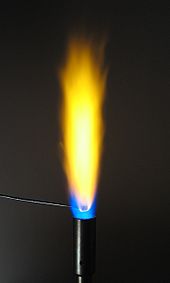
The qualitative detection and quantitative determination of sodium are performed atom-spectroscopically via its intense yellow flame coloration, or more precisely, through its sodium D-doublet lines at 588.99 nm and 589.59 nm.
The purely chemical detection of sodium is very difficult. Since nearly all sodium compounds are highly water-soluble, classical precipitation reactions and gravimetric determinations are hardly possible. Exceptions include yellow sodium magnesium uranyl acetate (NaMg(UO₂)₃(CH₃COO)₉·9H₂O) and colorless sodium hexahydroxoantimonate(Na[Sb(OH)₆]), both of which are sparingly soluble. A precipitation reaction using sodium–bismuth double sulfate(3Na₂SO₄·2Bi₂(SO₄)₃·2H₂O) is also possible.
Since sodium ions in aqueous solution are colorless, color reactions are rarely used. Therefore, besides ion chromatography, spectroscopic methods are the only practical means of detection.
Physiology
Sodium is an essential element for all animal organisms. In animals, sodium—together with chlorine—is the ninth most abundant element and the third most abundant inorganic ion after calcium and potassium, making it one of the macroelements. In living organisms, sodium occurs exclusively as Na⁺ ions.
In the human body, an average adult (70 kg) contains about 100 g of sodium as Na⁺ ions, with roughly two-thirdspresent as NaCl and one-third as NaHCO₃. As sodium accounts for 90% of the extracellular electrolytes, it determines the volume of interstitial fluid through its influence on the vascular volume.
Recommended and Actual Sodium Intake
According to D-A-CH reference values, the estimated minimum sodium intake for adults is 550 mg/day.
Various organizations provide recommendations for maximum intake, such as:
-
WHO: 2 g/day
-
AHA: 1.5 g/day
Actual sodium consumption often exceeds these limits due to high salt intake (2.5 g of salt ≈ 1 g of sodium).
The German National Nutrition Survey II (NVS II) found median intakes of:
-
3.2 g/day for men
-
2.4 g/day for women
However, actual intake may be even higher since questionnaire-based data are prone to error.
The gold standard for determining sodium intake is measuring sodium excretion in 24-hour urine samples.
According to the WHO, data from the INTERSALT study showed sodium excretion levels in Germany of:
-
4.1–4.5 g/day for men
-
2.7–3.5 g/day for women
Regulation of Sodium Balance
Sodium levels are tightly regulated and closely linked to water balance.
Normal serum sodium concentration ranges between 135–145 mmol/L.
-
Hyponatremia (low sodium): causes cell swelling, potentially leading to seizures or coma.
-
Hypernatremia (high sodium): causes cell shrinkage, with similar neurological effects.
Regulation involves:
-
the renin–angiotensin–aldosterone system,
-
antidiuretic hormone (ADH or vasopressin), and
-
atrial natriuretic peptide (ANP).
The kidney is the key organ in sodium regulation.
It retains water during sodium excess to dilute sodium, and excretes sodium when necessary.
Conversely, during sodium deficiency, it conserves sodium and excretes more water.
However, renal adjustment to sodium fluctuations takes time.
Distribution in Cells
Na⁺ ions are unevenly distributed across cell membranes.
Outside the cell, Na⁺ and Cl⁻ predominate; inside, K⁺ and organic anions are dominant.
These gradients generate the membrane potential, which is vital for cell survival.
To counter ion diffusion, the sodium–potassium pump (Na⁺/K⁺-ATPase) actively restores ion gradients by pumping Na⁺ out and K⁺ in, consuming energy in the process.
Functions in Nerve Cells
Na⁺ ions play a key role in the generation and propagation of nerve impulses.
At the postsynaptic membranes of neurons and at neuromuscular junctions, neurotransmitters bind to receptors that open sodium channels, allowing Na⁺ influx.
This causes depolarization, making the cell interior less negative.
If the depolarization threshold is reached, voltage-gated sodium channels in the axon open, producing a traveling action potential.
Afterward, the sodium–potassium pump restores resting potential.
Sodium in Plants
In plants, sodium plays a minor role.
While potassium is essential for all plants and most microorganisms, sodium is required only by certain C₄ and CAM plants, but generally not by C₃ plants.
However, some plants, called halophytes, thrive in saline environments (e.g., coasts or salt flats) and benefit from sodium uptake.
Examples: sugar beet, cabbage, and many C₄ grasses.
They can transport sodium into vacuoles of leaf cells, where it acts as an osmotic ion, maintaining turgor pressure and promoting cell elongation and leaf growth.
Plants that cannot compartmentalize sodium (e.g., bean and maize) are natrophobic.
If sodium accumulates in their cytosol, it displaces potassium, leading to potassium deficiency, photosynthesis inhibition, and reduced water transport.
Since most plants contain only small amounts of sodium, herbivores must obtain additional sodium chloride from natural salt deposits.
Safety Precautions
Small amounts of sodium are stored under petroleum, while larger quantities require handling systems under inert gas.
Even with protection, sodium surfaces are often covered by a layer of sodium hydroxide and sodium oxide.
Sodium fires can be extinguished with metal fire powder (salt), potassium chloride, cast-iron shavings, or, in emergencies, dry sand or cement.
However, sand and cement can react with sodium, reducing effectiveness.
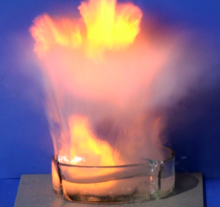
Water, foam, CO₂, or halons must never be used, as they react violently with sodium, causing explosions or intensified fires.
Compounds
In compounds, sodium always occurs in the +1 oxidation state.
All sodium compounds are strongly ionic and mostly water-soluble.
Sodium salts represent some of the most important industrial chemicals, as they are cheap to produce.
Halides
Sodium chloride (NaCl) — commonly known as table salt — is the most important and abundant sodium compound.
It serves as a primary raw material for producing sodium and other sodium compounds, and is essential for human nutrition.
It is also used for food preservation and as road salt.
NaCl crystallizes in the rock-salt (NaCl) structure, typical of many salts.
Other stable halides include sodium fluoride (NaF), sodium bromide (NaBr), and sodium iodide (NaI).
Oxygen Compounds
Five sodium oxides are known:
Na₂O, Na₂O₂, NaO₂, Na₂O₃, and NaO₃.
-
Sodium oxide (Na₂O) is present in many types of glass and forms during glassmaking from sodium carbonate.
-
Sodium peroxide (Na₂O₂) is the most important oxide, used as a bleaching agent and oxygen source in diving and submarines.
The other oxides are unstable and decompose quickly.
Sodium hydroxide (NaOH), or caustic soda, is a major industrial base used in soap and dye production and in alumina extraction from bauxite.
Sulfur Compounds
Sodium forms sulfides (Na₂S, NaHS) with hydrogen sulfide, used for heavy metal precipitation.
Sodium sulfate (Na₂SO₄) is used in detergents and the Kraft paper process.
Sodium thiosulfate (Na₂S₂O₃) serves as a photographic fixer.
Hydrides
In sodium hydride (NaH) and sodium borohydride (NaBH₄), hydrogen is in the −1 oxidation state.
NaH acts as a strong, non-nucleophilic base, while NaBH₄ is used for reductions of carbonyl compounds, such as ketones (selectively enhanced in the Luche reduction).
Both release hydrogen gas upon contact with water.
Other Compounds
Sodium carbonate (Na₂CO₃) and sodium bicarbonate (NaHCO₃) are major sodium salts of carbonic acid.
They are vital for glassmaking and baking powder production, respectively.
Sodium nitrate (NaNO₃), or Chile saltpeter, serves as a fertilizer and preservative.
Organic sodium compounds are highly reactive and unstable, unlike lithium analogs.
Stable forms, such as sodium cyclopentadienide, serve as reducing agents.
Soaps are sodium or potassium salts of fatty acids produced by saponification—boiling fats with lye.
Typical fatty acids used include lauric, myristic, palmitic, stearic, oleic, and ricinoleic acids.