Allgemein

Lutetium

LU • Atomic Number 71

Lutetium

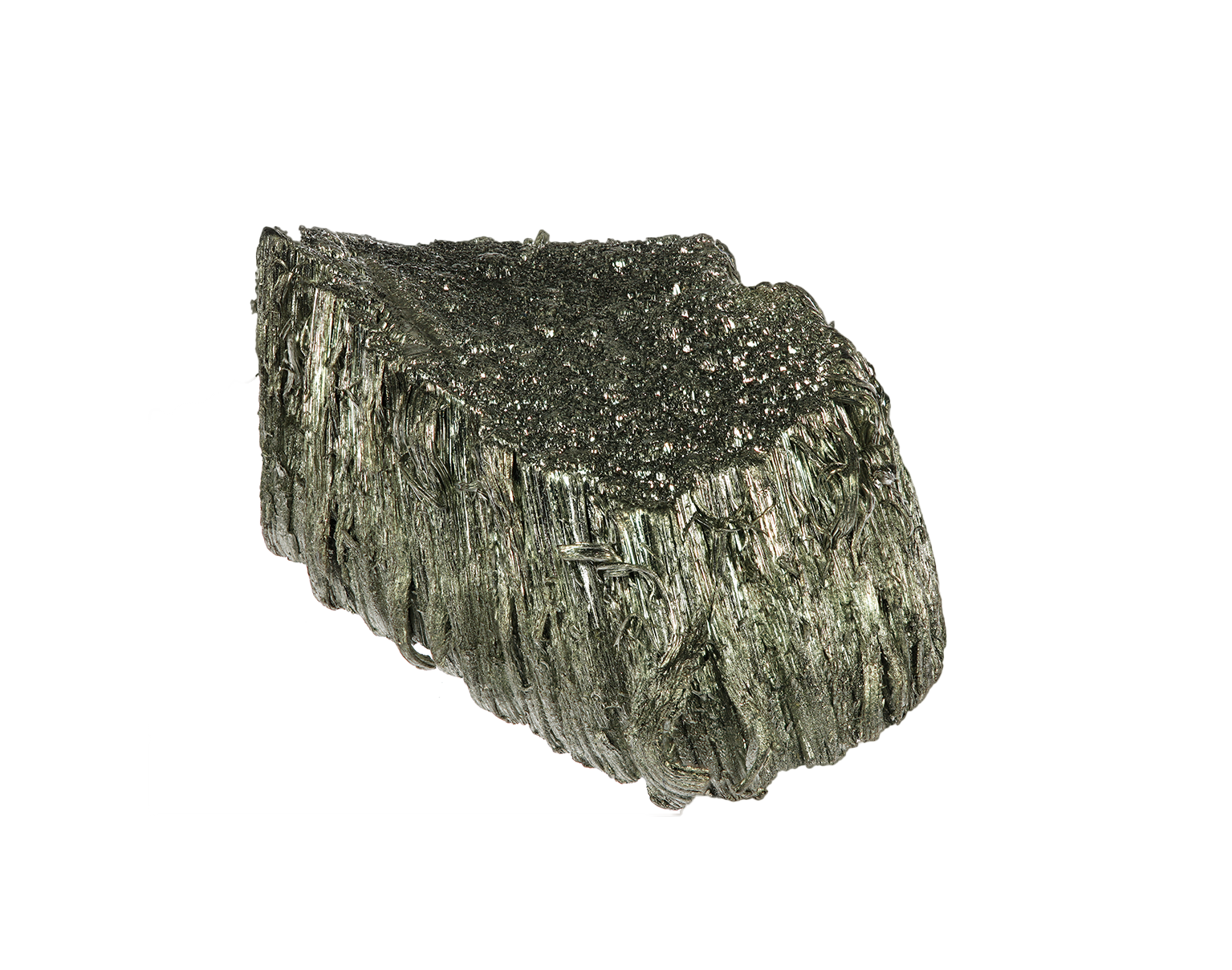
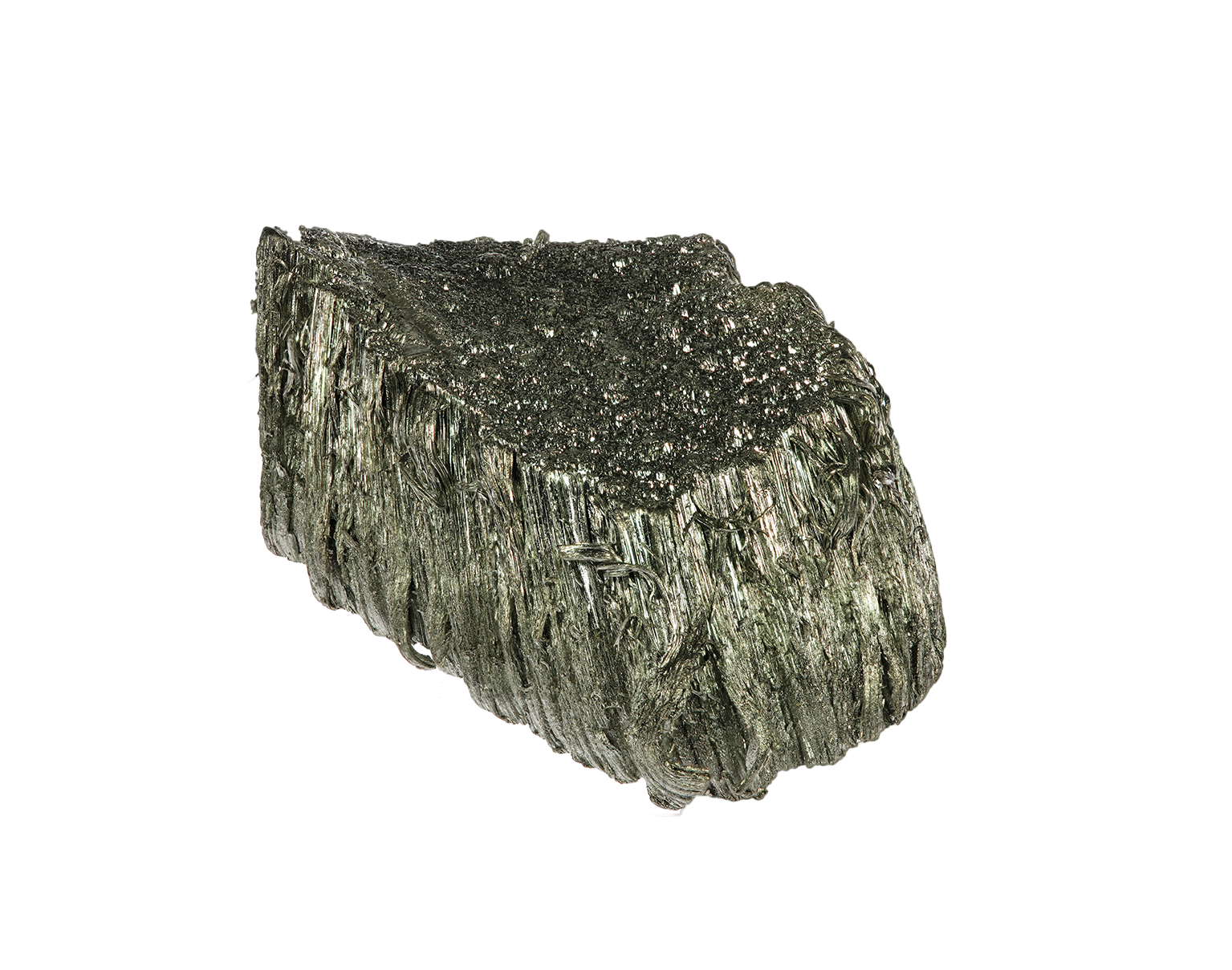
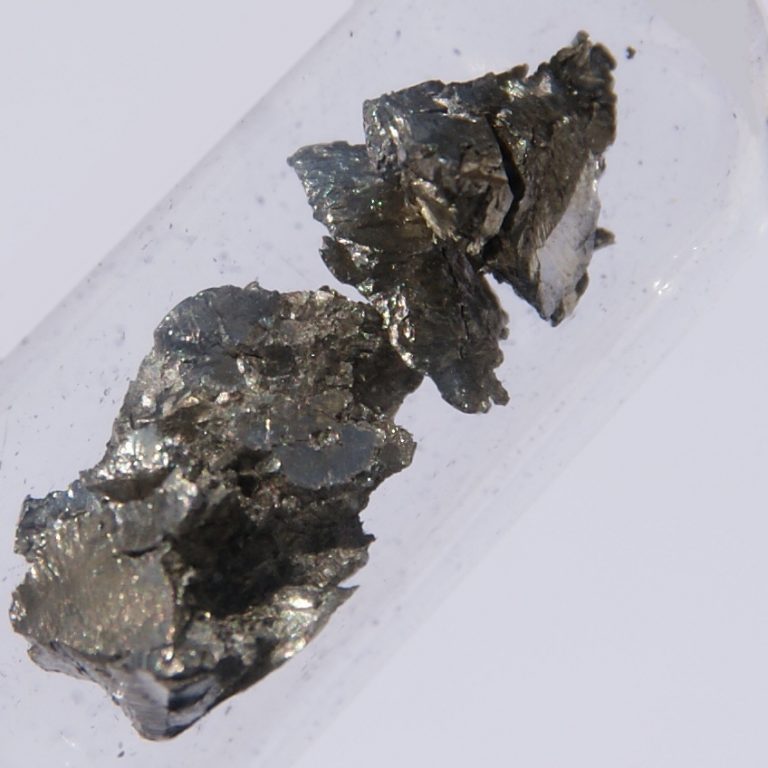
Lutetium is a silvery, lustrous metal and the last and heaviest element in the lanthanide series. It belongs to the group of heavy rare earth elements.

It is the rarest and most difficult-to-extract element among the rare earths. Pure lutetium oxide or metallic lutetium is one of the most valuable rare-earth materials.

One of the most notable properties of lutetium is its exceptionally high hardness and density for a rare-earth metal.

Its main application is in nuclear medicine.

Lutetium was discovered independently in 1905 by three scientists — Carl Auer von Welsbach, Charles James, and Georges Urbain — the latter naming it after Lutetia, the ancient Roman name for Paris.

In German-speaking countries, it was commonly known as Cassiopeium (chemical symbol Cp) until 1949.

  • Occurrence

    Xenotime is the most important mineral source of lutetium. It preferentially concentrates the heavy rare earth elements (including yttrium). In xenotime, lutetium is often present in higher concentrations than in other minerals.

    The main producing country is China.

  • Mining

    After an elaborate separation of the other accompanying rare-earth elements, the oxide is converted into lutetium fluoride using hydrofluoric acid. This fluoride is then reduced with calcium, forming calcium fluoride and metallic lutetium.
    Remaining calcium residues and impurities are removed by an additional vacuum remelting process.

  • Application

    The most important and significant use of lutetium is in modern medicine, particularly in cancer therapy.

    Lutetium-177 (¹⁷⁷Lu) is a radioactive isotope used as a theranostic agent — a term that combines therapy and diagnostics, describing a revolutionary approach in oncology.

    For diagnostic purposes, lutetium emits a small amount of gamma radiation, making tumors visible to physicians via a SPECT camera (Single-Photon Emission Computed Tomography).

    For therapy, ¹⁷⁷Lu emits beta radiation (β⁻ particles). These particles have precisely the right energy to selectively destroy cancer cells while leaving the surrounding healthy tissue largely unharmed.

    Special applications of lutetium include its use in scintillators (detectors) for cancer diagnostics. Lutetium orthosilicate (LSO) and lutetium yttrium orthosilicate (LYSO) are extremely efficient crystals used in medical PET scanners (Positron Emission Tomography).

    In addition, lutetium compounds serve as highly active catalysts in the petrochemical industry, for example in polymerization and petroleum cracking processes.

    General Information
    Name, Symbol, Atomic Number Lutetium, Lu, 71
    Series Lanthanide
    Groupe, Periode, Block La, 6, f
    Appearance Silvery white
    CAS-Number 7439-94-3
    Abundance in Earth's crust 0.7 ppm
    Atomic Properties
    Atomic Mass 174.967 u
    Atomic Radius 175 pm
    Covalent Radius 187 pm
    Electron Configuration [Xe] 4f¹⁴ 5d¹ 6s²
    1. Ionization Energy 523.5 kJ/mol
    2. Ionization Energy 1340 kJ/mol
    3. Ionization Energy 2022.3 kJ/mol
    4. Ionization Energy -
    Physical Properties
    State at 20 °C Solid
    Crystal Structure Hexagonal
    Density 9.84 g/cm³ (25 °C)
    Magnetism

    Paramagnetic (χm = 0.0)

    Melting Point 1925 K (1652 °C)
    Boiling Point 3675 K (3402 °C)
    Molar Volume 17.78 × 10⁻⁶ m³/mol
    Heat of Vaporization 415 kJ/mol
    Heat of Fusion 22.0 kJ/mol
    Electrical Conductivity 1.72 * 10⁶ A/(V·m)
    Thermal Conductivity 16 W/(m*K)
  • Unique Properties

    The silvery-gray metal is very soft, highly ductile, and malleable. In dry air, lutetium is relatively stable, but in moist air, it tarnishes to a gray color. At elevated temperatures, it burns to form the sesquioxide Lu₂O₃. It reacts very slowly with water, producing hydrogen gas and forming the hydroxide. Lutetium dissolves in mineral acids with the evolution of hydrogen.

    In its compounds, lutetium occurs exclusively in the oxidation state +3. The Lu³⁺ cations form colorless solutions in water.

Read more …Lutetium

  • Hits: 509

Lanthanum

LA • Atomic Number 57

Lanthanum

Lanthanum is a silver-white, ductile, and highly reactive metal. It exists in three metallic modifications. After cerium, lanthanum is the most abundant of the rare earth metals and belongs to the group of light rare earth elements.

Its most important property is its pronounced ability to absorb hydrogen, making lanthanum a key component in nickel-metal hydride (NiMH) batteries.

Lanthanum was discovered in 1839 by the Swedish chemist and surgeon Carl Gustav Mosander. Like most rare earth elements, lanthanum was initially identified only in the form of its oxide, known as cerium dioxide (cerium(IV) oxide), and was not isolated as a pure metal until decades after its discovery.

The most economically significant minerals for lanthanum extraction are bastnäsite and monazite. It is primarily mined in China, the USA (Mountain Pass), and Australia (Mount Weld).

  • Occurence

    The economically most important minerals for lanthanum are bastnäsite and monazite. It is primarily extracted in China, the USA (Mountain Pass), and Australia (Mount Weld).

    Lanthanum and cerium are the two most abundant light rare earth elements. They occur in large quantities in the most economically significant ores, bastnäsite and monazite.

    In a typical bastnäsite deposit, cerium and lanthanum together can make up more than 50 percent of the total rare earth content. As a result, there is a significant and ongoing overproduction of cerium and lanthanum relative to market demand. This overproduction is a fundamental characteristic of the rare earth industry and is known as the “balance problem.”

  • Extraction

    After an elaborate separation of other accompanying lanthanides, the oxide is converted into lanthanum fluoride using hydrofluoric acid. This is then reduced with calcium, producing calcium fluoride and metallic lanthanum. Remaining calcium residues and impurities are removed through an additional vacuum remelting process.

  • Application

    The by far most important application of lanthanum is in nickel–metal hydride (NiMH) batteries, where lanthanum-containing alloys serve as the central component of the negative electrode (anode). Rechargeable NiMH batteries were formerly widespread in laptops, cameras and—most notably—in hybrid vehicles such as the Toyota Prius.

    Together with cerium, lanthanum is an important constituent of mischmetal, an alloy of rare earth metals whose exact composition reflects the source ore, often with added iron.

    Because of its pyrophoricity—fine shavings of the metal can ignite spontaneously in air from frictional heat—mischmetal is used in lighter flints.

    Besides lighters, mischmetal is used as an ignition agent for combustible gases and explosive charges. It is found in gas igniters for household stoves, ovens, heaters and water heaters, in firework and pyrotechnic igniters, and in certain military and industrial applications as a primer or ignition charge.

    Due to its high reactivity, mischmetal can also be used as a reducing agent in specific metallurgical processes to reduce oxides.


    With Cobalt
    The cobalt–lanthanum alloy LaCo₅ is used as a magnetic material. Lanthanum-doped barium titanate is employed in the production of thermistors (temperature-dependent resistors). In combination with cobalt, iron, manganese, strontium, and others, it serves as a cathode material for high-temperature solid oxide fuel cells (SOFC). “Impure” lanthanum-nickel (LaNi₅) is used as a hydrogen storage material in nickel-metal hydride batteries. As an additive, lanthanum is also found in coal arc lamps for studio lighting and film projectors (historical application).

    With Titanium
    An alloy metal composed of lanthanum and titanium is known to reduce chip length during machining processes, which facilitates easier processing of the metal.

    In the medical field, this corrosion-resistant and easily sterilizable titanium–lanthanum alloy is used to manufacture surgical instruments. It is particularly suitable for surgical tools and devices due to its low allergy potential compared to other alloys.

    As Lanthanum Oxide

    • Used in the manufacture of optical glasses (lanthanum glass) with relatively high refractive index and low dispersion, ideal for camera lenses, telescope optics, and eyeglass lenses.

    • Used in crystal glass and porcelain glazes, replacing more toxic lead compounds while improving chemical resistance (enhancing alkali resistance, making them dishwasher safe).

    • Added as a catalyst additive to zeolites in fluid catalytic cracking during petroleum refining.

    • Used in the production of ceramic capacitor materials and silicate-free glasses.

    • Component in glass polishing agents.

    • Used for manufacturing cathodes in electron tubes (including lanthanum borides).

    As Lanthanum Carbonate:

    • Used as a medication to reduce phosphate levels in dialysis patients (phosphate binder).

    Lanthanum is considered to have low toxicity, and no toxic dose has been conclusively established. However, lanthanum powder is strongly corrosive because it readily reacts with moisture (e.g., skin moisture) to form basic lanthanum hydroxide (similar to calcium and strontium). The lethal dose for rats is approximately 720 mg.

    General Information
    Name, Symbol, Atomic Number Lanthanum, La, 57
    Series Transition metals
    Groupe, Periode, Block 3, 6, d
    Appearance silvery-white
    CAS-Number 7439-91-0
    Abundance in Earth's crust 17ppm
    Atomic Properties
    Atomic Mass 138.9055 u
    Atomic Radius 195 pm
    Covalent Radius 207 pm
    Electron Configuration [Xe] 5d¹ 6s²
    1. Ionization Energy 538.1 kJ/mol
    2. Ionization Energy 1067 kJ/mol
    3. Ionization Energy 1850 kJ/mol
    4. Ionization Energy -
    Physical Properties
    State of Matter solid
    Crystal Structure Hexagonal
    Density 6.17 g/cm³ (at 20 °C)
    Magnetism

    Paramagnetic (χm = 5.4 × 10⁻⁵)

    Melting Point 1193 K (920 °C)
    Boiling Point 3743 K (3470 °C)
    Molar Volume 22.39 * 10⁻⁶ m³/mol
    Heat of Vaporization 400 kJ/mol
    Heat of Fusion 6.2 kJ/mol
    Electrical Conductivity 1.626 * 10⁶ A/(V·m)
    Thermal Conductivity 13 W/(m*K)


  • Unique Properties

    The silver-white metal is malleable and ductile. It exists in three metallic modifications.

    Lanthanum is a reactive (non-noble) metal. In air, it quickly forms a white oxide layer, which further reacts to form a hydroxide in moist air.

    At temperatures above 440 °C, lanthanum burns to form lanthanum oxide (La₂O₃). It reacts slowly with cold water and rapidly with warm water to form the hydroxide with the release of hydrogen. In dilute acids, lanthanum dissolves with hydrogen evolution. It reacts directly with many elements when heated and with halogens even at room temperature. Lanthanum and hydrogen form a black, water-sensitive, non-stoichiometric hydride.

Read more …Lanthanum

  • Hits: 523

Holmium

Ho • Atomic Number 67

Holmium

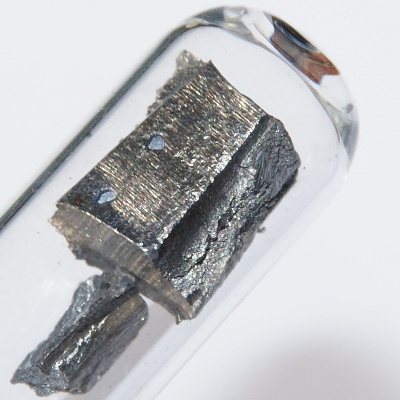
Holmium is a gray, soft, and ductile metal that is relatively corrosion-resistant. Its most outstanding property is that the holmium(III) ion (Ho³⁺) has the highest magnetic moment of all naturally occurring elements. It belongs to the heavy rare earth elements.

Its main application is in magnetic technologies, where it plays an important role as a performance enhancer in permanent magnets.

In 1878, Swiss chemists Marc Delafontaine and Jacques-Louis Soret discovered the element spectroscopically through its unique absorption lines and initially named it "X." In 1879, Swedish chemist Per Teodor Cleve independently discovered the element and isolated it as a yellow oxide from impure erbium (erbium oxide). Cleve used a method developed by Carl Gustav Mosander: he first removed all known impurities before attempting to separate the remainder. This resulted in a brown residue, which he named Holmia, and a green residue, called Thulia. It was not until 1911 that Swedish chemist Holmberg succeeded in producing pure holmium oxide. Whether he adopted the name Holmium, proposed by Cleve after the Swedish capital Stockholm, or derived it from his own name is unknown.

Metallic pure holmium was first produced in 1940. Naturally, holmium only occurs in compounds.

Holmium Oxides

  • Occurence

    Holmium (Ho) is another heavy rare earth element (HREE) and one of the least abundant elements. Holmium-containing minerals include xenotime, fergusonite, gadolinite, and ion adsorption clays.

    Economically significant deposits are ion adsorption clay deposits found in southern China (Jiangxi and Guangdong provinces) and Myanmar.

  • Extraction

    After a complex separation of other accompanying elements, the oxide is converted to holmium fluoride using hydrofluoric acid. It is then reduced to metallic holmium with calcium, forming calcium fluoride as a byproduct. Remaining calcium residues and impurities are removed through an additional vacuum remelting process.

  • Application

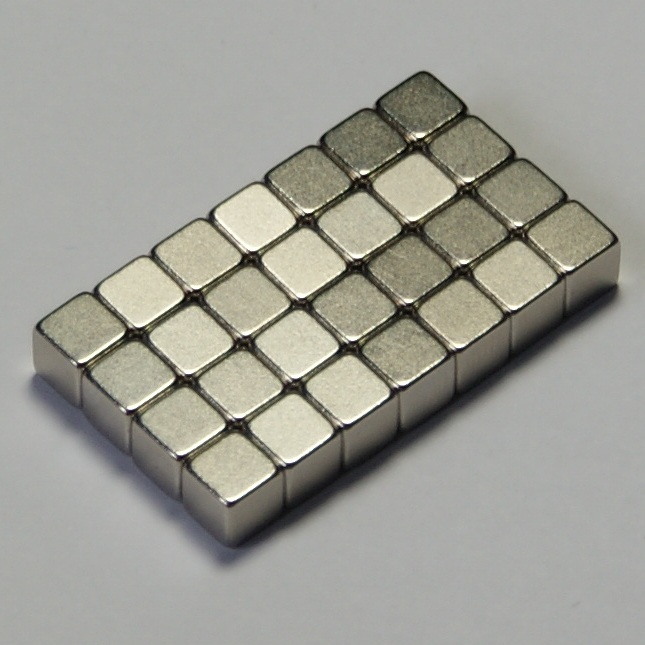
    The most important use of holmium is as a magnetic pole piece in (solid-state) magnets. Holmium is not used as a standalone magnet but as an additive in high-performance neodymium-iron-boron (NdFeB) permanent magnets. The addition of holmium (often together with dysprosium) enables these magnets to retain their magnetic strength (coercivity) even at very high temperatures. Without these additives, the magnets would become demagnetized when exposed to heat.

    These super-stable, heat-resistant magnets are absolutely essential for electric motors in hybrid and electric vehicles, as well as for generators in wind turbines.

    Holmium also finds applications in control rods for nuclear reactors and in medical lasers (holmium-doped yttrium-aluminum-garnet lasers – Ho:YAG lasers).

    General Information
    Name, Symbol, Atomic Number Holmium, Ho, 67
    Series Lanthanoid
    Groupe, Periode, Block La, 6, f
    Appearance silvery-white
    CAS-Number 7440-60-0
    Mass Fraction in the Earth's Crust 1.1 ppm
    Atomic Properties
    Atomic Mass 164.93032 u
    Atomic Radius 175 pm
    Covalent Radius 192 pm
    Electron Configuration [Xe] 4f¹¹ 6s²
    1. Ionization Energy 581.0 kJ/moll
    2. Ionization Energy 1170 kJ/mol
    3. Ionization Energy 2204 kJ/mol
    4. Ionization Energy -
    Physical Properties
    State of Matter solid
    Crystal Structure Hexagonal
    Density 8.78 g/cm³ (at 25 °C)
    Magnetism

    Paramagnetic (χm = 0.049)

    Melting Point 1734 K (1431 °C)
    Boiling Point 2993 K (2720 °C)
    Molar Volume 18.74 * 10⁻⁶ m³/mol
    Heat of Vaporization 265 kJ/mol
    Heat of Fusion 17.0 kJ/mol
    Electrical Conductivity 1.23 * 10⁶ A/(V·m)
    Thermal Conductivity 16 W/(m*K)

  • Unique Properties

    The silver-white shining rare earth metal holmium is soft and malleable.

    Holmium exhibits remarkable magnetic properties. In terms of its ferromagnetic behavior, it surpasses iron by far. With a magnetic moment of 10.6 μB, it has the highest magnetic moment of any naturally occurring chemical element. It forms magnetic compounds with yttrium.

    In dry air, holmium is relatively stable, but in moist or warm air it tarnishes quickly, forming a yellowish oxide layer. At temperatures above 150 °C, it burns to holmium sesquioxide (Ho₂O₃). It reacts with water under hydrogen evolution to form the hydroxide. In mineral acids, it dissolves with hydrogen gas release.

    In its compounds, holmium predominantly occurs in the +3 oxidation state; Ho³⁺ cations form yellow solutions in water. Under special reducing conditions, the +2 oxidation state can also be realized in chlorides, for example in holmium(II,III) chloride (Ho₅Cl₁₁), although pure holmium(II) chloride does not exist.

    Holmium Periodensysstem 768x232

Read more …Holmium

  • Hits: 544

Gadolinium

GD • Atomic Number 64

Gadolinium

Gadolinium is a silvery-white to grayish-white shiny metal that is ductile and malleable. It belongs to the group of middle rare earth elements.

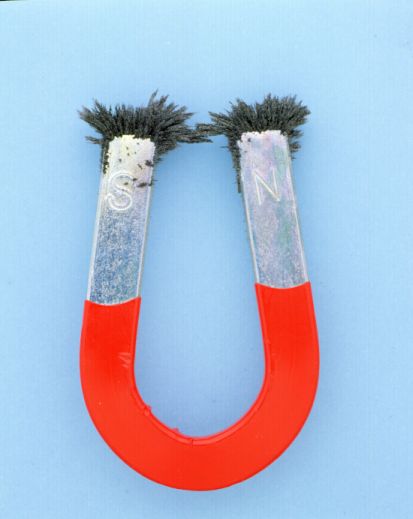
Its key property is its extremely high paramagnetic susceptibility, meaning it is strongly attracted by a magnetic field.

The most important application of gadolinium is in medicine, where it is used as a contrast agent in magnetic resonance imaging (MRI).

The element was first discovered spectroscopically in 1880 by Jean Charles Galissard de Marignac in didymium and gadolinite. In 1886, he isolated it as a white oxide from samarskite. That same year, Paul Émile Lecoq de Boisbaudran also produced gadolinium oxide and named the new element after the discoverer of the mineral gadolinite, Finnish chemist Johan Gadolin.

In nature, gadolinium only occurs in compound form. The most important industrial sources are the minerals monazite and bastnäsite.

  • Occurence

    Gadolinium is primarily found in the major rare earth ore minerals bastnäsite, monazite, and especially xenotime.

    Ion-adsorption clay deposits in southern China are particularly rich in gadolinium.

  • Extraction

    After a complex separation of other gadolinium-containing elements, the oxide is converted with hydrofluoric acid into gadolinium fluoride. This is then reduced to metallic gadolinium using calcium, producing calcium fluoride as a byproduct. Remaining calcium residues and impurities are removed by an additional vacuum remelting process.

  • Application

    Due to its extremely strong paramagnetism, the most important application of gadolinium is as an MRI contrast agent in modern medical diagnostics.

    Other properties of gadolinium make it highly relevant for niche applications.

    Because of its high neutron absorption cross-section, gadolinium is used in control rods in nuclear reactors.

    Gadolinium is also used in the production of phosphors for plasma displays and X-ray screens, as it activates green phosphorescence.

    General Information
    Name, Symbol, Atomic Number Gadolinium, Gd, 64
    Series Lanthanoid
    Groupe, Periode, Block La, 6, f
    Appearance silvery-white
    CAS-Number 7440-54-2
    Abundance in Earth's crust 5.9ppm
    Atomic Properties
    Atomic Mass 157.25 u
    Atomic Radius 188 pm
    Covalent Radius 196 pm
    Electron Configuration [Xe] 4f⁷ 5d¹ 6s²
    1. Ionization Energy 593.4 kJ/moll
    2. Ionization Energy 1170 kJ/mol
    3. Ionization Energy 1990 kJ/mol
    4. Ionization Energy -
    Physical Properties
    State of Matter solid
    Crystal Structure Hexagonal
    Density 7.886 g/cm³ (at 25 °C)
    Magnetism

    Paramagnetic (χm = 0.12)

    Melting Point 1585 K (1312 °C)
    Boiling Point 3523 K (3250 °C)
    Molar Volume 19.90 * 10⁻⁶ m³/mol
    Heat of Vaporization 305 kJ/mol
    Heat of Fusion 10.0 kJ/mol
    Electrical Conductivity 0.763 * 10⁶ A/(V·m)
    Thermal Conductivity 11 W/(m*K)


  • Unique Properties

    The silvery-white to grayish-white rare earth metal is ductile and malleable. Above 1508 K, its closest-packed crystal structure transforms into a body-centered cubic structure. In dry air, gadolinium is relatively stable, but in moist air it forms a non-protective, loosely adherent oxide layer that flakes off. It reacts slowly with water and dissolves in dilute acids.

    Gadolinium has the highest thermal neutron capture cross-section of all known stable elements at 49,000 barns, due to its isotope Gd-157, which has a cross-section of 254,000 barns (only the unstable Xe-135 surpasses Gd-157 by about a factor of 10). However, its high burn-out rate limits its use as a control rod material in nuclear reactors.

    Together with dysprosium, holmium, erbium, and terbium—also lanthanides—it is one of the few elements besides iron, cobalt, and nickel that exhibit ferromagnetism. However, this ferromagnetism only occurs below its Curie temperature of 292.5 K (19.3 °C).

    Gadolinium is not superconducting, but ceramic high-temperature superconductors of the type Ba₂GdCu₃O₇₋ₓ with a critical temperature between 80 and 85 K are known.

    Metallic gadolinium dust is fire and explosion hazardous.

Gadolinium, Gd, rare earth element, lanthanide metal, paramagnetic metal, MRI contrast agent, neutron absorption, industrial applications, silvery-white metal, ISE-AG Swiss metals, rare earth metals marketing, magnetic properties, ISE AG

Read more …Gadolinium

  • Hits: 528